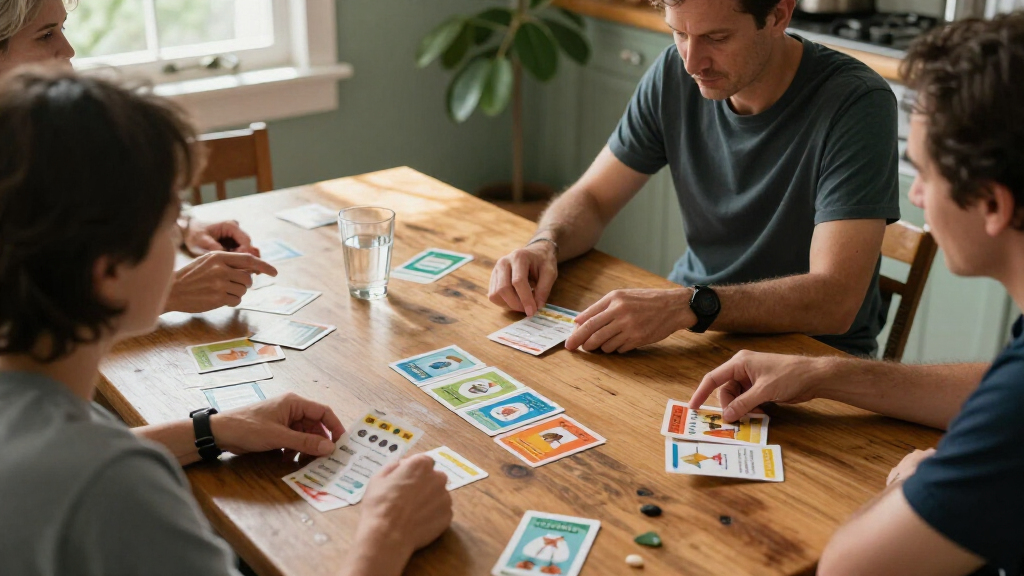

The best psychology card games for adults depend on whether you want practical coping prompts, guided conversation, or humor rather than therapy-style exercises. The Group Therapy Card Deck is my best overall pick for its range of CBT, DBT, ACT, and positive psychology tools, while Mind Brain Emotion stands out for focused self-care exercises and Tell Me More for low-pressure conversation. The main tradeoff is between structured reflection and easy social play: a skills deck can feel useful but serious, while a party-style game may be more entertaining than therapeutic. Read on for the full breakdown of all eight options and how to choose one that suits your group.

Turn your wind-down time into listening time
- Thousands of audiobooks, podcasts and originals
- Listen on your phone, tablet or Echo — also offline
- Cancel anytime
Key Takeaways
- The Group Therapy Card Deck ranks first for breadth: its CBT, DBT, ACT, and positive psychology framing offers more varied approaches than a deck focused only on coping exercises.
- Mind Brain Emotion is the more direct choice when the goal is stress and anxiety self-care, while the broader Group Therapy deck better suits people who want several kinds of reflection prompts.
- Tell Me More and You Know serve a different purpose from coping decks: they prioritize conversation and social skills, so they may work better in groups that want interaction without a self-help format.
- Horrible Therapist and its Holiday Edition favor irreverent party humor over practical mental-health guidance; the joke-first approach can be a poor fit for sensitive groups.
- 100 Coping Skills Cards for Teens & Adults and the trauma- and diagnosis-specific coping deck both offer focused support, but buyers should check whether their intended audience will welcome that level of mental-health language.
| The Group Therapy Card Deck: CBT, DBT, ACT, and Positive Psychology Tips and Tools | 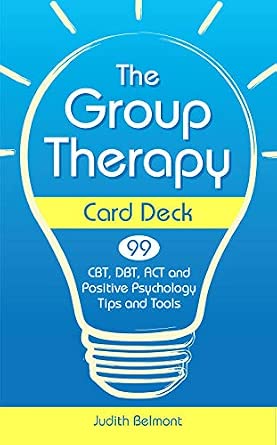 | Best for Therapy-Style Variety | Approaches: CBT, DBT, ACT, and positive psychology | Format: Card deck | Intended use: Group therapy or individual use | VIEW LATEST PRICE | See Our Full Breakdown |
| Mind Brain Emotion 52 Essential Coping Skills Cards – Self Care Exercises for Stress and Anxiety Relief |  | Best Structured Coping-Skills Pick | Card set: 52 Essential Coping Skills Set | Card count: Over 50 cards | Included components: Cards, online coping assessment, sturdy tin case | VIEW LATEST PRICE | See Our Full Breakdown |
| Tell Me More: A Conversation Starter Game |  | Best for Low-Pressure Connection | Brand: Compendium | Number of cards: 52 | Included components: Cards | VIEW LATEST PRICE | See Our Full Breakdown |
| You Know Social Skills Games and Therapy Games |  | Best for Facilitated Group Play | Players: 2–6 | Age range: 7+ | Material: Cardstock | VIEW LATEST PRICE | See Our Full Breakdown |
| Coping Skills Cards for Anxiety & Stress Relief – Mindfulness, Meditation & Self-Care Tools for Trauma, BPD, DID, PTSD |  | Best Compact, Durable Pick | Included components: Cards | Listed card count: 10 cards | Techniques described: Over 20 multisensory techniques | VIEW LATEST PRICE | See Our Full Breakdown |
| Horrible Therapist: Extra Horrible Edition Card Game |  | Best for Large Adult Game Nights | Players: 3–8 | Recommended age: 17 years and up | Edition: Extra Horrible Edition | VIEW LATEST PRICE | See Our Full Breakdown |
| Exploding Kittens Horrible Therapist – Holiday Edition |  | Best for Holiday Party Humor | Players: 2–5 | Age range: 17+ | Edition: Holiday Edition | VIEW LATEST PRICE | See Our Full Breakdown |
| 100 Coping Skills Cards for Teens & Adults – Mindfulness, Self-Care, and Stress Management Activities |  | Best for Practical Self-Reflection | Number of cards: 100 | Age range: 12+ | Material: Paper | VIEW LATEST PRICE | See Our Full Breakdown |
| psychology card games for adult | ASIN | Age range | Material |
|---|---|---|---|
| The Group Therapy Card Deck: C | 1683732952 | — | — |
| Mind Brain Emotion 52 Essentia | B08L6WTBDR | Teens and adults | — |
| Tell Me More: A Conversation S | B0BNK3FJTX | Adult | — |
| You Know Social Skills Games a | B07FNTN9RP | 7+ | Cardstock |
| Coping Skills Cards for Anxiet | B0DQD5JBYV | — | Waterproof PVC |
| Horrible Therapist: Extra Horr | — | — | Cardstock |
| Exploding Kittens Horrible The | — | 17+ | — |
| 100 Coping Skills Cards for Te | — | 12+ | Paper |
More Details on Our Top Picks
The Group Therapy Card Deck: CBT, DBT, ACT, and Positive Psychology Tips and Tools
Four therapeutic approaches in one deck give this option a broad focus on emotional well-being rather than casual party play. Its CBT, DBT, ACT, and positive psychology tools may suit adults who want prompts for a group session or an individual reflection practice. Compared with Mind Brain Emotion 52 Essential Coping Skills Cards, which specifies coping exercises and an online assessment, this deck’s appeal is its range of named approaches, but the available product details offer less guidance about how to use the cards. That makes it a flexible supplement for someone already comfortable choosing reflection activities, not a clearly structured self-guided program. I would skip it if you need step-by-step instructions, a defined card count, or detailed information about what each tool involves.
Pros:- Draws on several therapeutic approaches rather than a single method
- Can be used in group therapy or for individual reflection
- Portable card-deck format supports use in different settings
Cons:- No specific instructions are listed for choosing or using the tools
- Product details do not specify card count or the full contents
- May be less structured for independent beginners than Mind Brain Emotion’s assessment-supported format
Best for: Adults or group facilitators seeking a mix of CBT, DBT, ACT, and positive psychology prompts to supplement existing therapy or self-reflection.
Not ideal for: First-time users who want a guided sequence, detailed instructions, or clear information about the deck’s contents before choosing exercises.
- Approaches:CBT, DBT, ACT, and positive psychology
- Format:Card deck
- Intended use:Group therapy or individual use
- Focus:Mental health and emotional well-being
- ASIN:1683732952
- Instructions:No specific instructions listed
Our verdict“Choose this deck if you want varied therapy-informed prompts and can supply your own structure; skip it if you need a guided program.”
Mind Brain Emotion 52 Essential Coping Skills Cards – Self Care Exercises for Stress and Anxiety Relief
Practical skills take priority over conversation in this deck, which offers more than 50 cards drawing on CBT, meditation, mindfulness, and somatic exercises. That makes it a more directly action-oriented choice than Tell Me More: A Conversation Starter Game, whose prompts are meant to build connection rather than teach coping practices. The included online coping assessment adds a way to connect the cards with personal needs, while the tin supports discreet use outside the home. The tradeoff is that some of the online material requires internet access, and the product is focused on stress and mental health rather than light game-night entertainment. I’d choose it for self-care or a therapy activity, not as a general adult party game.
Pros:- More than 50 coping and resilience activities
- Uses CBT, meditation, mindfulness, and somatic exercises
- Includes an online coping assessment
- Sturdy tin makes the cards convenient to carry
Cons:- Online assessment and library access require an internet connection
- The mental-health focus may feel too serious for casual game nights
- May not hold the interest of very young children
Best for: Teens and adults who want portable, therapy-informed exercises for practicing stress management alone, in a group, or alongside professional support.
Not ideal for: Buyers seeking a social party game, a fully offline resource, or activities designed to entertain very young children.
- Card set:52 Essential Coping Skills Set
- Card count:Over 50 cards
- Included components:Cards, online coping assessment, sturdy tin case
- Age range:Teens and adults
- Methods:CBT, meditation, and somatic exercises
- Material type:Cards
- Manufacturer part number:52Coping
- ASIN:B08L6WTBDR
Our verdict“Pick this for a portable, structured coping-skills resource rather than a conversation-focused game like Tell Me More.”
Tell Me More: A Conversation Starter Game
Conversation is the activity here, not a set of clinical coping exercises. With 52 prompts and an optional points-based format, Tell Me More gives adults a way to move beyond small talk at dinner, during a road trip, or at a game night. Compared with You Know Social Skills Games and Therapy Games, it is framed more broadly for casual connection and does not specify a therapy or social-skills curriculum. That simplicity makes it easier to bring out with mixed groups, but its value depends on people being willing to answer personal questions. It also offers less direct support for anxiety management than Mind Brain Emotion 52 Essential Coping Skills Cards. I’d pick this for social reflection, not for therapeutic skill practice or anyone who prefers a competitive game with firm rules.
Pros:- 52 prompts encourage conversation and connection
- Can be played casually or with a points-based format
- Suitable for gatherings, family time, and road trips
- Questions can be revisited as conversations change
Cons:- Play depends on participants being comfortable answering personal questions
- Offers conversation prompts rather than specific therapeutic exercises
- The points-based option may not appeal to people who prefer unstructured discussion
Best for: Adults who want an easy-to-explain prompt game for dinner parties, friends, family gatherings, or road trips.
Not ideal for: Players looking for evidence-based coping exercises, a structured therapy tool, or a game that avoids personal disclosure.
- Brand:Compendium
- Number of cards:52
- Included components:Cards
- Age range:Adult
- Recommended age:12 months and up (as listed)
- Number of packs:1
- Model year:2022
- ASIN:B0BNK3FJTX
Our verdict“Choose Tell Me More for adult gatherings where conversation is the goal, not for targeted coping-skills practice.”
You Know Social Skills Games and Therapy Games
Social skills and relationship-building make You Know a better fit for facilitated play than for solo self-care. Its stated range of two to six players gives a therapist, educator, or family a manageable group size for guided conversation, while its focus on communication and self-esteem distinguishes it from The Group Therapy Card Deck, which draws on several named therapeutic approaches. The broader age range may also help adults use one activity with teens or children. That flexibility comes with limits: groups larger than six need another format, and younger players may need adult support. Compared with Tell Me More, this option has a more explicit social-skills purpose, but the listed details do not specify the number of cards, so repeat-play variety is harder to judge.
Pros:- Targets communication, self-esteem, and positive relationships
- Designed for therapy, classroom, family, and group settings
- Works with two to six players
- Age range can support mixed-age play
Cons:- Player limit makes it a poor fit for larger groups
- Younger children may need adult facilitation
- Card count and detailed prompt contents are not specified
Best for: Therapists, teachers, and families who want a guided conversation activity for two to six players across age groups.
Not ideal for: Adults seeking solo coping exercises, large-group facilitation, or a deck with a clearly listed card count and detailed content outline.
- Players:2–6
- Age range:7+
- Material:Cardstock
- Item weight:7 ounces
- Item dimensions:3.54 x 2.68 x 1.42 inches
- Brand:Therapy U
- Model number:YouKnow
- ASIN:B07FNTN9RP
Our verdict“Choose You Know for a small, facilitated group that needs social-skills conversation rather than individual coping practice.”
Coping Skills Cards for Anxiety & Stress Relief – Mindfulness, Meditation & Self-Care Tools for Trauma, BPD, DID, PTSD
Waterproof PVC and compact dimensions set this deck apart for people who want coping prompts close at hand during daily routines or travel. It offers more than 20 multisensory techniques and names mindfulness, meditation, and self-care as part of its approach. Compared with Mind Brain Emotion 52 Essential Coping Skills Cards, this set is more compact and described as waterproof, but the listed quantity is only 10 cards. That smaller format can make it easier to carry, though it also limits the range of techniques available in the pack. The product description mentions several mental-health conditions, but these cards are not a replacement for professional care. I’d favor it for portability and durability over breadth or a substantial guided program.
Pros:- Waterproof PVC is suited to frequent carrying
- Compact 65 x 100 mm card size
- Includes multisensory coping techniques
- Focuses on mindfulness, meditation, and self-care
Cons:- Listed as a 10-card set, limiting the range of prompts
- Offers less breadth than Mind Brain Emotion’s 52-card set
- Not a substitute for professional therapy
Best for: Adults who want a small, water-resistant set of coping prompts to keep in a bag for quick self-care practice.
Not ideal for: Buyers who want a large exercise library, detailed clinical guidance, or a substitute for professional mental-health care.
- Included components:Cards
- Listed card count:10 cards
- Techniques described:Over 20 multisensory techniques
- Size:65 x 100 mm
- Material:Waterproof PVC
- Recommended age:18 months and up (as listed)
- Manufacturer:Deyl cavier
- ASIN:B0DQD5JBYV
Our verdict“Pick this for a durable pocket-size coping aid, but choose Mind Brain Emotion if you want a much larger exercise selection.”
Horrible Therapist: Extra Horrible Edition Card Game
Horrible Therapist: Extra Horrible Edition is the pick for adults who want therapy-themed humor rather than a self-care exercise. Players pair Question, Answer, and Treatment cards to build comic scenarios, then compete over which treatment is funniest. Its 438-card mix gives a larger group plenty of combinations to draw from, while the simple play pattern makes it easier to bring to a party than a discussion-led deck such as Tell Me More: A Conversation Starter Game. The tradeoff is that the psychology angle is satirical, not educational or therapeutic; the jokes can also miss with groups that prefer gentler humor. It supports 3–8 players, so it suits bigger gatherings better than the Holiday Edition, but it cannot accommodate a two-player session. Choose it for irreverent entertainment, not practical mental-health guidance.
Pros:- Three card types create varied comic scenarios and encourage replay.
- Rules are quick to learn, making it accessible at casual gatherings.
- Original illustrations by The Oatmeal give the cards a distinctive visual style.
- Supports up to eight players, more than the Holiday Edition.
Cons:- Adult humor may not work for every group.
- Requires at least three players, so it is not suited to solo or two-player use.
- Therapy is used as a comedic theme; the game does not teach coping skills.
Best for: Adult hosts who want a quick, humorous therapy-parody game for groups of three to eight at parties or game nights.
Not ideal for: People seeking evidence-based coping tools, groups uncomfortable with adult humor, or couples who need a two-player game.
- Players:3–8
- Recommended age:17 years and up
- Edition:Extra Horrible Edition
- Question cards:80
- Answer cards:158
- Treatment cards:200
- Material:Cardstock
- Brand:Exploding Kittens
Our verdict“Choose this edition for larger adult groups seeking irreverent therapy-themed comedy, rather than a reflective or therapeutic card activity.”
Exploding Kittens Horrible Therapist – Holiday Edition
Horrible Therapist – Holiday Edition brings the franchise’s therapy-parody format to festive gatherings, with holiday-themed prompts and adult humor. Its listed 2–5 player range makes it a better fit for a small gift-exchange group than the Extra Horrible Edition, which can seat up to eight. That smaller ceiling is a real limitation for a crowded family gathering, and the mature jokes make this an adults-only choice despite the seasonal packaging. The 200-card set includes Question, Answer, and Treatment cards, offering variety within its holiday theme, but it is less suited to year-round use than a general-purpose deck. Unlike 100 Coping Skills Cards for Teens & Adults, this is for comic party play, not reflection or stress management. Pick it when the occasion and the group’s humor both fit.
Pros:- Holiday-themed cards give the game a seasonal party focus.
- Three card categories offer variation across rounds.
- Original art from The Oatmeal adds a recognizable illustration style.
- A listed two-player minimum allows smaller groups than the Extra Horrible Edition.
Cons:- The maximum of five players excludes larger party groups.
- Mature humor makes it unsuitable for children and some mixed-age gatherings.
- The holiday theme may make it less appealing for regular play outside the season.
Best for: Adults planning a small holiday game night or gift exchange who enjoy irreverent, seasonal party games.
Not ideal for: Large gatherings, mixed-age family events, or buyers looking for year-round coping prompts and mental-wellness activities.
- Players:2–5
- Age range:17+
- Edition:Holiday Edition
- Total cards:200
- Treatment cards:90
- Question cards:40
- Answer cards:70
- Model number:HOTH-HOL-3
Our verdict“Choose this for a small adult holiday gathering that welcomes edgy comedy, but skip it for large groups or practical psychology activities.”
100 Coping Skills Cards for Teens & Adults – Mindfulness, Self-Care, and Stress Management Activities
100 Coping Skills Cards for Teens & Adults is the most directly useful option here for buyers who want psychology-inspired prompts rather than a party game. Its 100 activities focus on stress management, mindfulness, gratitude, and emotional awareness, and the compact paper deck can support solo reflection or small-group use without a device. That makes it a very different choice from Horrible Therapist: Extra Horrible Edition, where therapy is a comic premise rather than a source of practical exercises. The tradeoff is less game-like play: there is no described scoring system or app support, and the card format may wear with frequent handling. Its age range begins at 12, so adult guidance may help younger teens use prompts appropriately. Choose this deck for calm, structured reflection—not competitive entertainment.
Pros:- Offers 100 prompts centered on coping, mindfulness, and emotional awareness.
- Can be used for solo reflection as well as group activities.
- Compact dimensions make it easy to carry and store.
- The age range includes teens as well as adults.
Cons:- Paper cards may wear with repeated handling.
- Younger users may need adult guidance with some activities.
- No app or digital features are listed, and the deck is not described as a scored game.
Best for: Adults, caregivers, or facilitators seeking portable prompts for individual stress-management practice or small-group wellness activities.
Not ideal for: Buyers looking for a competitive party game, digital support, or a durable deck for frequent rough handling.
- Number of cards:100
- Age range:12+
- Material:Paper
- Dimensions:4 x 3 x 0.1 inches
- Theme:Health
- Style:Coping Activity Cards
- Language:English
- Number of players:2–6
Our verdict“Choose this deck for practical, portable reflection and coping activities, not for the adult comedy or competition offered by the Horrible Therapist games.”
How We Picked
I ranked these games by how well their stated format fits common adult use cases: learning coping strategies, prompting reflection, building conversation, practicing social skills, or playing a humor-led party game. I also weighed clarity of purpose, ease of starting, apparent flexibility across settings, and how likely the format is to suit a mixed group. The Group Therapy Card Deck leads because its named therapeutic approaches give it a broader toolkit; more specialized decks place higher when their focus is a clear match, while conversation and comedy games rank lower for buyers seeking direct coping support.
This is a comparison of product descriptions and intended formats, not a clinical assessment or a claim that any deck replaces professional care. A game’s subject matter does not guarantee that its prompts are suitable for every person, diagnosis, or setting. I treated sensitive content, audience fit, and the difference between therapeutic tools and entertainment as real selection factors, rather than assuming every product labeled for therapy serves the same purpose.
| psychology card games for adult | Material |
|---|---|
| The Group Therapy Card Deck: C | — |
| Mind Brain Emotion 52 Essentia | — |
| Tell Me More: A Conversation S | — |
| You Know Social Skills Games a | Cardstock |
| Coping Skills Cards for Anxiet | Waterproof PVC |
| Horrible Therapist: Extra Horr | Cardstock |
| Exploding Kittens Horrible The | — |
| 100 Coping Skills Cards for Te | Paper |
Factors to Consider When Choosing Psychology Card Games For Adults
Before choosing, decide what you want the cards to do in the room. A coping deck, a conversation game, and a therapy-themed party game can all touch on psychology but create very different experiences. These broader factors can help you avoid buying a product whose tone or structure does not fit your group.
Match the deck to the outcome you want
Start with the result you want after a session: a usable coping idea, a more open conversation, or simply a fun shared activity. These goals are not interchangeable, even when product descriptions use similar mental-health language. For skill practice, look for cards that give an action or exercise rather than only asking a reflective question. For group connection, prompts should invite discussion without requiring anyone to disclose personal history. A common mistake is choosing by theme alone and expecting a party game to provide structured self-help. If the group wants more than one outcome, favor a format that can be used in short, optional rounds.
Check the emotional intensity before playing
Psychology-themed prompts can range from light icebreakers to questions about stress, trauma, or personal relationships. Think about who will be present and whether they can comfortably pass on a question. In a workplace, classroom, or casual gathering, low-disclosure prompts are usually easier to use than cards centered on difficult experiences. For a close group, deeper questions may feel welcome, but no game can predict how a participant will respond. Avoid treating a deck as a substitute for a therapist or as a way to diagnose someone at the table. A clear opt-out rule can make even thoughtful prompts feel safer.
Separate practical tools from clinical support
A deck may borrow language from CBT, DBT, mindfulness, or other approaches, but that does not make it a treatment program. Check whether the cards offer concrete activities, general encouragement, or discussion prompts; those formats support different needs. If someone is using a deck alongside professional care, they can ask their clinician whether the activity fits their goals. Buyers supporting a person with a specific diagnosis should not assume that a deck naming that condition has been tailored or clinically reviewed for them. The tradeoff is straightforward: broad wellness prompts are easier to share, while specialized language may feel more relevant but less suitable for a mixed audience. Choose the format for its stated use, not for implied medical authority.
Think about group size and facilitation
Some card games work best when everyone takes a turn, while others can be used alone or as a prompt selected by a facilitator. Before buying, picture the actual setting: a couple at home, a small friend group, a support group, or a larger gathering. Open-ended discussion can stall without someone willing to guide the pace, while a simple draw-and-answer format may be easier for casual play. Check whether the game appears to rely on scoring, rounds, or a moderator, since extra structure can help one group and feel restrictive to another. A mistake many buyers make is choosing a deck for its topic without checking how it will flow with their number of players. If attendance changes often, flexible turn-taking is a practical advantage.
Prioritize usability over a large card count
A larger deck can offer variety, but quantity alone does not tell you whether the prompts are clear, distinct, or easy to use. Look for a description that explains how to begin and whether cards can be used in any order. If instructions are sparse, the group may need to invent its own routine, which suits some buyers and frustrates others. Also think about portability and handling if the deck will travel between home, a counselor’s office, or group meetings. Paying more may make sense when a product offers a format or range of uses that your group will return to, but extra cards are not useful if the tone feels wrong. Choose ease of use over an impressive-sounding count.
Choose humor with the audience in mind
Therapy-themed comedy can make a gathering lively, but jokes about mental health do not land equally well for everyone. Consider whether the group enjoys irreverent humor and can distinguish satire from actual guidance. Holiday or themed editions may suit a specific event, yet their appeal can be narrower than a general-purpose game. If you want a deck that can move between family, work, and close-friend settings, a less edgy tone is usually easier to reuse. A frequent buying error is assuming that a therapy label means a game is suitable for a therapy session. Treat comedy-first games as entertainment, and pick a different format when participants are seeking coping support.
Frequently Asked Questions
Can a psychology card game replace therapy or counseling?
No. These games can offer prompts, conversation starters, or self-care exercises, but they are not a diagnosis or a substitute for professional support. A deck that references a therapy approach does not necessarily provide guided treatment or clinician oversight. If someone is dealing with persistent distress, safety concerns, or a complex mental-health need, a qualified professional is the better source of care. The cards may still be useful as an optional activity if they suit that person’s preferences. Let the participant decide what feels comfortable, and do not use a game to pressure someone into disclosure.
Which type of deck works best for a group with mixed comfort levels?
For a mixed group, choose a format centered on light conversation or practical, low-disclosure activities rather than prompts that ask people to recount difficult experiences. Tell Me More and You Know are conversation- and social-skills-oriented options in this lineup, while coping decks may invite more personal reflection. Even a light game can touch on sensitive topics, so agree that anyone may pass without explanation. It also helps to preview a few cards before the group begins. If you are unsure how people will respond, keep the first session short and let the group choose its depth.
Are coping-skill cards useful if I already know common stress-management techniques?
They can still help by putting several ideas in one place and making it easier to choose a small activity in the moment. Their value may be less about introducing a new method and more about prompting consistent practice or giving a group a shared starting point. If you already have a routine that works, a deck may add little unless its exercises suit your goals or make practice easier. Read the stated focus carefully: stress relief, mindfulness, and broader therapeutic approaches are not identical. Choose based on whether you want reminders, fresh prompts, or a structured activity rather than expecting every card to teach something new.
Should I choose a deck that names a specific diagnosis or one with general coping prompts?
A diagnosis-specific title may signal a narrower intended audience, but it does not prove that every card is appropriate for every person with that diagnosis. General coping prompts tend to be easier to share with a mixed group, though they may feel less tailored. Consider the user’s own language and preferences, and check whether the deck’s description explains what the cards actually ask participants to do. If the person is receiving care, a clinician can help judge whether the material fits their needs. Avoid choosing a specialized deck on someone else’s behalf without involving them.
Is a therapy-themed comedy game suitable for a support group?
It depends on the group’s purpose, established boundaries, and taste in humor. Horrible Therapist and its Holiday Edition are positioned as comedy-first games, so they are a different choice from decks designed around coping exercises or reflective prompts. Humor can reduce formality for some groups, but jokes about therapy or distress may feel dismissive to others. Ask participants before bringing a comedy game into a support setting, and do not treat it as a therapeutic activity. For groups with varied experiences, a neutral conversation game is often easier to accommodate.
Conclusion
For the broadest mix of psychology-based tools, I recommend The Group Therapy Card Deck as best overall; its range of named approaches gives it the clearest all-purpose role in this lineup. Mind Brain Emotion is my best value-style pick for focused coping practice, while 100 Coping Skills Cards suits buyers who want a larger set of general self-care and stress-management activities. For beginners or groups that prefer a lighter entry point, start with Tell Me More for conversation or You Know for social-skills play rather than opening with more personal coping prompts. For specific needs, choose the trauma- and diagnosis-focused deck only when its subject matter fits the intended user; choose Horrible Therapist or its Holiday Edition only when the group wants irreverent entertainment, not mental-health guidance. The best match is the one whose purpose, tone, and level of personal disclosure suit the people who will actually play.