

Mastering internal auditor interviews means knowing what key questions to expect. You'll likely face inquiries about your motivation for joining the company and how you prepare for audits. Be ready to discuss the significance of internal audits and post-audit actions. It's essential to align your answers with the company's values. Highlight your organizational skills, critical thinking, and adaptability, as these are important traits in an auditor. Anticipate questions about your strengths and weaknesses to show self-awareness. With the right prep, you'll demonstrate your fit for the role and impress your interviewers. Stick around to uncover more insights!
Key Takeaways
- Understand the importance of internal audits and articulate how they enhance organizational efficiency and compliance during the interview.
- Prepare for common questions about your motivations, audit preparation steps, and post-audit actions relevant to the company's objectives.
- Familiarize yourself with auditing standards and the specific internal audit needs of the organization to demonstrate your knowledge.
- Utilize the STAR method to structure your responses, showcasing your skills in critical thinking and problem-solving effectively.
- Develop insightful questions to ask the interviewer, reflecting your genuine interest in the company and the internal audit role.
Importance of Internal Audits
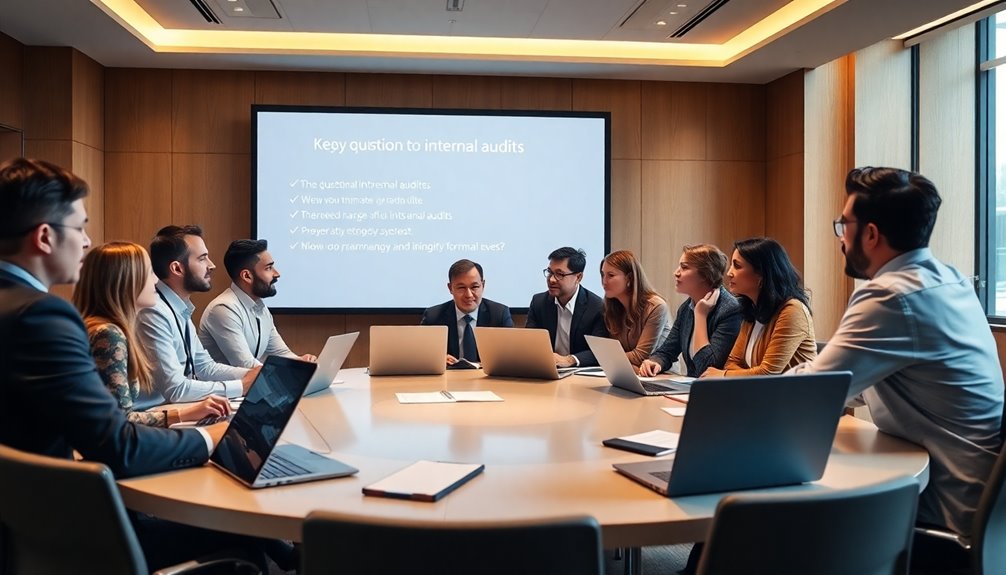
In today's fast-paced business environment, internal audits play an essential role in ensuring an organization runs smoothly and efficiently. They assist you in planning and controlling operations, helping identify both successful areas and those needing improvement.
By ensuring compliance with laws and regulations, internal audits reduce risks and enhance accountability. You'll find that they can also help cut costs while increasing profits, making your organization more appealing to investors.
Additionally, internal audits provide independent evaluations, supporting management decision-making with reliable data. Ultimately, these audits strengthen your organization's governance, ensuring it meets its objectives and operates effectively in a competitive landscape.
Embracing internal audits can lead to significant long-term benefits for your organization.
Skills for Internal Auditors

Mastering the skills required for internal auditors is fundamental for maximizing the benefits of internal audits.
You'll need strong organizational skills to manage multiple tasks and deadlines efficiently. Critical thinking is essential, enabling you to analyze complex data and identify inefficiencies or risks. Understanding risk management and compliance auditing is also important, as it helps guarantee the company adheres to regulations.
Employers often seek adaptability and problem-solving abilities, allowing you to navigate challenges effectively. Communication skills are equally crucial; you must articulate findings clearly to various stakeholders.
Finally, pursuing certifications like CIA or CRMA can enhance your credibility and demonstrate your commitment to professional growth, setting you apart in the competitive field of internal auditing.
Typical Interview Questions

Preparing for internal auditor interviews involves anticipating typical questions that can showcase your skills and fit for the role. Understand that these questions aim to evaluate your knowledge and experience.
Here are some common inquiries you might encounter:
- "Why do you want to work here?"
- "Can you explain the steps to prepare for an internal audit?"
- "What should you do after an internal audit?"
- "Why are internal audits necessary?"
When responding, focus on aligning your answers with the company's values and demonstrating your understanding of the audit process.
Tailor your responses to reflect personal experiences and insights, ensuring they resonate with your interviewers and highlight your qualifications effectively.
Effective Interview Preparation

Effective interview preparation sets you apart as a strong candidate for an internal auditor position. Start by researching the company's mission, values, and specific audit needs. Familiarize yourself with common auditing standards and key areas that require internal audits.
Review your qualifications and relevant experiences, and anticipate typical interview questions so you can articulate confident responses. Utilize structured formats, like the STAR method, to organize your thoughts and practice your answers.
Consider how your strengths align with the role, and be ready to discuss your weaknesses along with improvement strategies. Finally, prepare insightful questions to engage the interviewer, showing your genuine interest in the position and the organization.
This thorough preparation will greatly enhance your interview performance.
Conducting an Internal Audit

After you've laid the groundwork for a successful interview, it's time to focus on the practical aspects of conducting an internal audit.
You need to systematically approach the audit to guarantee effectiveness. Start by defining the audit scope and objectives, then gather relevant data. During fieldwork, prioritize testing controls and documenting findings.
Consider these key steps:
- Establish a clear audit plan and timeline.
- Engage with stakeholders to gather insights and expectations.
- Analyze data to identify trends, risks, and areas for improvement.
- Prepare a thorough audit report with actionable recommendations.
Understanding Substantive Tests

Substantive tests are essential in internal audits because they directly assess the accuracy and completeness of financial statements. These tests help you validate assertions regarding completeness, validity, and accuracy, reassuring stakeholders about financial integrity. Here's a quick overview of key aspects:
| Aspect | Description |
|---|---|
| Purpose | Validate financial statement assertions |
| Types of Tests | Analytical procedures and tests of details |
| Importance | Prevents fraud and identifies discrepancies |
| Standards | Governed by ISA and INTOSAI guidelines |
Discussing Strengths and Weaknesses

Often, candidates underestimate the importance of discussing strengths and weaknesses during interviews. This conversation reveals your self-awareness and growth mindset, key traits for internal auditors.
When you talk about strengths, remember to include context and examples. For weaknesses, frame them constructively, showing how you're working to improve. Here are some tips to reflect upon:
- Highlight a strength relevant to auditing, like analytical skills.
- Provide a specific story that illustrates your strength in action.
- Choose a weakness that won't undermine your candidacy, such as time management.
- Discuss what you're doing to address that weakness, like setting priorities.
Ultimately, this dialogue showcases your readiness for the role and your commitment to personal growth.
Closing the Interview

Closing an interview effectively is essential for leaving a lasting impression on your potential employer. As you wrap up, take a moment to reiterate your enthusiasm for the position and how your skills align with the company's goals.
Prepare thoughtful questions that show your interest in the role and the organization—this demonstrates your proactive nature. Make sure to express gratitude, thanking the interviewer for their time and insights shared during the conversation.
A friendly demeanor goes a long way in solidifying a positive impression. Finally, don't forget to follow up with a thank-you email. This not only reinforces your interest but also keeps you fresh in their minds as they make their decision.
Frequently Asked Questions
What Qualities Make a Successful Internal Auditor?
To be a successful internal auditor, you need strong analytical skills and attention to detail.
You've got to communicate effectively with various stakeholders and adapt to changing environments.
Problem-solving abilities are essential, along with a solid understanding of risk management and compliance.
A commitment to continuous learning and self-improvement will enhance your effectiveness.
Finally, integrity and ethical judgment are vital, as they build trust and credibility within the organization.
How Do You Prioritize Audit Tasks?
Picture yourself in a bustling office, surrounded by stacks of files and reports.
To prioritize audit tasks, you'll first identify critical areas that directly impact compliance and risk. Next, assess deadlines and stakeholder needs, organizing tasks like pieces of a puzzle.
Use a risk-based approach, focusing on high-risk areas first. Regularly communicate with your team to stay aligned and adapt as needed.
This structured method guarantees you tackle the most pressing tasks efficiently.
Describe Your Experience With Audit Software
When you describe your experience with audit software, highlight specific tools you've used, like ACL or IDEA.
Share how you leveraged these programs to streamline data analysis and improve accuracy in your audits.
You might mention any training you've received and how it enhanced your efficiency.
Emphasize your adaptability in learning new software and how it positively impacted your team's performance, demonstrating your commitment to staying current with technology in auditing.
How Do You Handle Tight Deadlines During Audits?
Imagine you're a ship captain steering through a storm. When tight deadlines hit during audits, you prioritize tasks like adjusting sails and charting a clear course.
You break down the workload into manageable pieces and delegate responsibilities to your crew, ensuring everyone knows their role.
Communication becomes your compass, guiding the team toward efficiency.
What Is Your Approach to Teamwork in Audits?
When it comes to teamwork in audits, you prioritize open communication and collaboration.
You actively engage with team members to share insights and tackle challenges together. You value each person's strengths, ensuring everyone contributes to the audit process.
By fostering a supportive environment, you encourage feedback and ideas, which leads to more thorough evaluations.
You believe that a united team enhances the audit's effectiveness and drives better results for the organization.
Conclusion
In the world of internal auditing, your interview is more than just a conversation; it's your chance to shine. By anticipating key questions and showcasing your skills, you can transform nerves into confidence. Remember, every question is an opportunity to demonstrate your value and alignment with the organization's goals. So, as you step into that interview room, ask yourself: Are you ready to turn this moment into a stepping stone for your career?