
TL;DR

Turn your wind-down time into listening time
- Thousands of audiobooks, podcasts and originals
- Listen on your phone, tablet or Echo — also offline
- Cancel anytime
SINTEF researcher Sandra Klonteig says neurotechnology could help identify brain activity patterns linked to anxiety and depression, with the long-term aim of supporting earlier diagnosis and more targeted treatment. These are research possibilities, not established clinical tools; the source does not describe a new trial or demonstrate that the methods improve patient outcomes.
SINTEF research scientist Sandra Klonteig says neurotechnology could help researchers measure brain activity associated with anxiety and depression, potentially supporting earlier assessment and more targeted treatment. The work remains at the research stage: the report describes approaches being studied, not a clinically validated system or evidence that these technologies improve treatment outcomes.
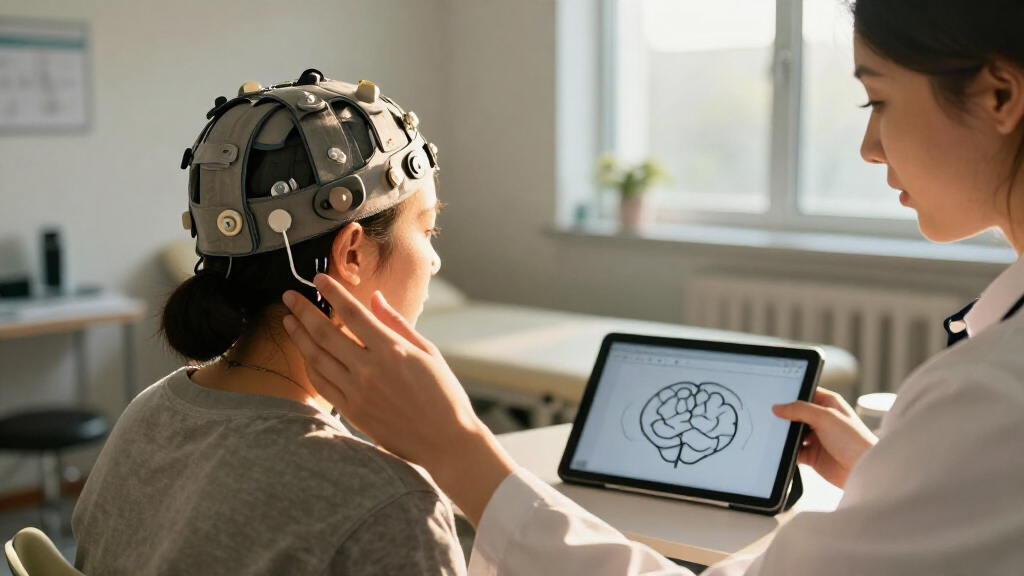
Klonteig, who works at SINTEF Digital and has a background spanning technology, neuroscience and health, studies the brain using sensors and neurotechnology. One method discussed in the report is functional near-infrared spectroscopy (fNIRS), which measures changes in blood flow in the brain. Those measurements can provide information about which brain areas are active, although the report does not establish that fNIRS can diagnose anxiety or depression on its own.
The research approaches described include eye-tracking, which records where a person looks, and analysis of functional brain networks, or patterns in how different brain areas communicate. Eye-tracking may be used to study attentional bias: the tendency to focus on negative aspects of a situation. Klonteig uses the example of people interpreting shadows in a forest differently after watching a frightening film to illustrate how attention and interpretation might relate to emotional responses.
The report says researchers are also examining whether brain measurements could help show if a treatment is having an effect before a patient notices a change in symptoms. In principle, that could inform a decision to continue or reconsider a treatment. No patient results, accuracy figures, clinical recommendations or approved diagnostic applications are provided in the report.
Could Brain Measures Guide Treatment?
Anxiety and depression affect a large number of people and can require repeated attempts to find an appropriate treatment. The World Health Organization, as cited in the report, says more than one billion people worldwide are living with mental health disorders; anxiety and depression are among the most common. If research can establish reliable measures of brain activity related to these conditions, clinicians might eventually gain additional information when evaluating symptoms or treatment response.
The practical promise Klonteig describes is less time spent waiting to learn whether a treatment is helping. A biological signal that changes before symptoms do could, if validated, help researchers and clinicians study response earlier. But a measurable brain change would not automatically mean a patient is improving, and the report does not show that sensor readings can currently select the right treatment. The value for patients will depend on future evidence that measurements are reliable and useful in real clinical care.
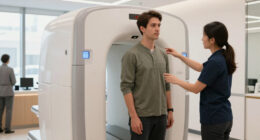
functional near-infrared spectroscopy device
As an affiliate, we earn on qualifying purchases.
As an affiliate, we earn on qualifying purchases.
From Sensors to Brain Patterns
Neurotechnology includes methods used to measure, assess or influence brain activity. The News-Medical report presents Klonteig’s work as part of a wider research field that also includes implantable chips tested in mice, studies of drugs for neurodegenerative diseases, research into the brain-gut connection, non-invasive brain measurements and artificial intelligence applications such as stroke detection. These examples involve different goals and stages of research; they do not establish a single treatment platform for anxiety or depression.
Klonteig says her interest in neurotechnology developed during her PhD at OsloMet. At SINTEF Digital, she now studies the brain with sensors and related methods. The report describes non-invasive sensor-equipped headgear as one area of focus, reflecting the practical limits of invasive procedures for routine mental health assessment. It does not provide a timeline for clinical use or identify a particular device ready for patients.
“The potential within neurotechnology is too significant to ignore. This is where the solutions of the future lie.”
— Sandra Klonteig, research scientist at SINTEF
Clinical Evidence Is Still Missing
The report does not identify a completed clinical trial testing these methods as tools for diagnosing anxiety or depression, nor does it provide evidence that they can predict which treatment will work for an individual. It gives no performance measures, patient numbers, comparison with standard assessment, or regulatory status for a clinical product. It is also unclear which brain patterns would be sufficiently consistent to guide care across different people and conditions.
Brain activity measurements are not the same as a diagnosis or a patient’s own account of how they feel. Whether a signal changes before symptoms, and whether that change predicts meaningful improvement, remain questions for research. The source also does not specify when the approaches under study might be ready for routine clinical use.
Validation Before Routine Use
The next step is to test whether the measurements researchers are studying can reliably identify relevant patterns and track changes over time. For treatment guidance, studies would also need to show that sensor-based information adds useful value to existing clinical assessment and leads to better decisions or outcomes for patients. The report does not announce a trial date, a launch schedule or a specific upcoming milestone.
For now, Klonteig’s work is presented as research into mechanisms and measurement, rather than a new treatment option available to patients. Further findings will determine whether non-invasive sensors or other neurotechnology can move from laboratory research into mental health care.
Key Questions
Is neurotechnology now used to diagnose anxiety or depression?
The report does not say that the methods described are established diagnostic tools. It discusses research into brain activity and related measurements, including eye-tracking and fNIRS.
What is fNIRS?
Functional near-infrared spectroscopy measures changes in blood flow in the brain. The report says this can provide information about which brain areas are active; it does not present fNIRS as a stand-alone diagnosis.
Could brain measurements show whether a treatment is working?
That is a possibility Klonteig says researchers are investigating. The report does not provide clinical evidence that these measurements can currently determine treatment response for individual patients.
When could these approaches be available to patients?
The report gives no timeline. Research would need to establish that measurements are reliable and useful in clinical care before routine use could be assessed.
Source: rss
Halloween Picks
halloween
As an affiliate, we earn on qualifying purchases.