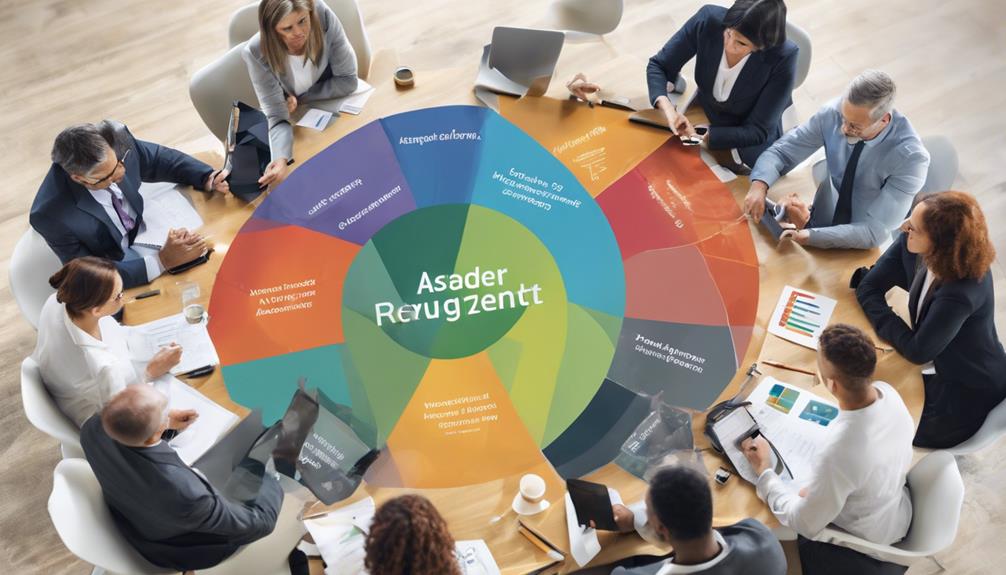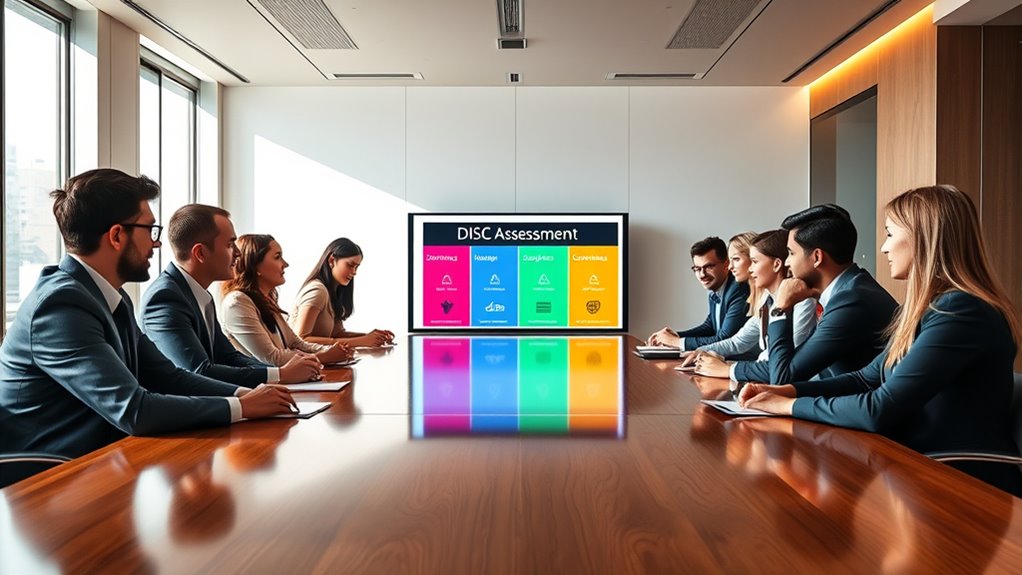

Using DISC assessment in the workplace helps you understand your team members’ personality styles, allowing you to tailor your leadership approach and improve communication. By recognizing whether someone is results-driven, social, stable, or detail-oriented, you can better motivate, manage, and resolve conflicts. This fosters a more collaborative environment where everyone feels valued. Keep exploring how DISC can transform your team dynamics and workplace culture for sustained success.
Key Takeaways
- DISC assessments help tailor leadership and communication strategies to individual personality styles.
- They improve team collaboration by understanding diverse behavioral preferences.
- Using DISC insights reduces conflicts and enhances conflict resolution effectiveness.
- DISC profiles enable managers to assign roles aligned with team members’ strengths.
- Implementing DISC fosters a positive workplace culture by promoting appreciation and inclusivity.
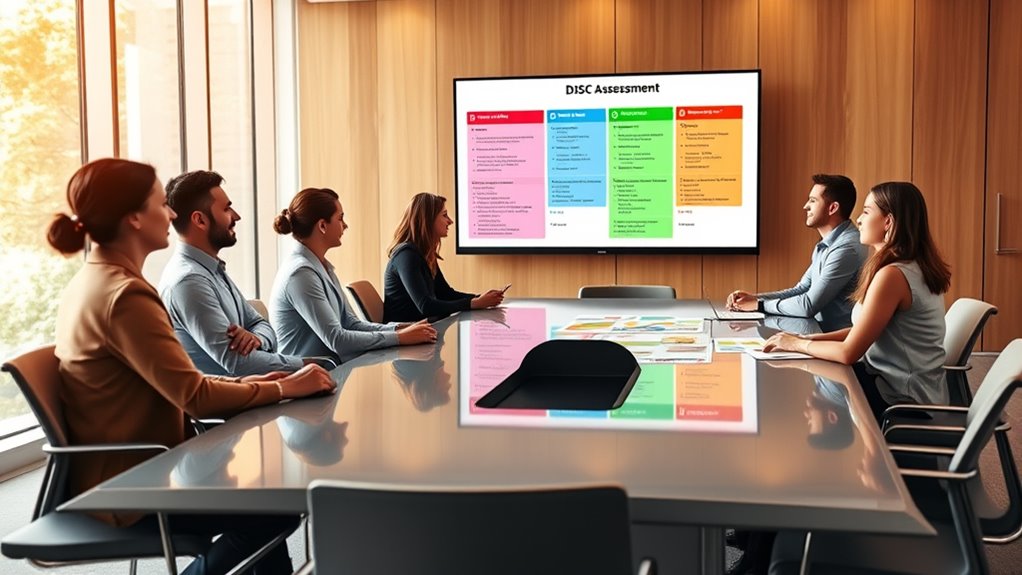
Have you ever wondered how understanding personality styles can boost workplace productivity and harmony? The DISC assessment offers valuable insights into how people behave, communicate, and collaborate, making it a powerful tool for enhancing team dynamics. When you grasp the different DISC profiles—Dominance, Influence, Steadiness, and Conscientiousness—you can tailor your leadership strategies to meet each team member’s unique needs. This understanding allows you to foster a work environment where everyone feels valued, understood, and motivated to contribute their best.
In the sphere of team dynamics, knowing each person’s DISC style helps you predict how they’ll respond to challenges and interact with others. For example, a Dominance-oriented individual tends to be results-driven and assertive, often pushing for quick decisions. Recognizing this allows you to set clear goals and provide autonomy, which keeps them engaged and focused. On the other hand, someone with a Steadiness profile values stability and harmony. You can support them by creating a predictable environment and encouraging open, empathetic communication. By aligning tasks and communication styles with DISC profiles, you reduce misunderstandings and conflicts, leading to a more cohesive team.
Leadership strategies become more effective once you understand these personality differences. Instead of applying a one-size-fits-all approach, you can adapt your management style to resonate with each team member’s DISC profile. For instance, influence-oriented individuals thrive on recognition and social interaction, so praising their efforts publicly can boost their morale. Conversely, conscientious team members prefer facts and precision; providing detailed information and clear expectations helps them perform at their best. This tailored approach not only increases individual productivity but also builds trust and loyalty within your team.
Furthermore, using DISC assessments in the workplace promotes better communication. When everyone understands their own style and those of their colleagues, it becomes easier to navigate conflicts and deliver feedback constructively. You learn to speak in ways that resonate with different personalities, reducing misunderstandings and building stronger working relationships. Additionally, understanding behavioral styles can encourage curiosity about other perspectives, fostering a more inclusive and collaborative environment. As you integrate DISC insights into your leadership strategies, you’ll notice a more motivated, engaged, and harmonious team that works together more efficiently.
Ultimately, leveraging DISC assessments transforms how you lead and collaborate. It empowers you to create a work environment where diverse personality styles are appreciated and harnessed for collective success. By understanding team dynamics through DISC and adjusting your leadership strategies accordingly, you set the stage for sustained productivity, improved morale, and a positive workplace culture.

LSD Surface Residue Forensic Drug Test Kit (Pro Kit)
- LSD Detection: Detects LSD on paper and liquid
- Adulterant Detection: Identifies dangerous cuts and analogs
- Includes Reagents: Multiple reagents for broad detection
As an affiliate, we earn on qualifying purchases.
As an affiliate, we earn on qualifying purchases.
Frequently Asked Questions
How Often Should DISC Assessments Be Administered?
You should administer DISC assessments every 6 to 12 months, depending on your team’s needs. Assessment frequency helps track personality shifts and improves team dynamics. Consider scheduling considerations like significant role changes, onboarding new employees, or team restructuring, which may warrant more frequent assessments. Regular evaluations guarantee you stay updated on individual strengths and communication styles, fostering a more effective and adaptable workplace environment.
Can DISC Assessments Predict Job Performance?
Think of DISC assessments as a weather vane—they don’t predict exact outcomes but show personality compatibility. While they offer valuable insights into behavior tendencies, their assessment accuracy varies and can’t definitively forecast job performance. You can use DISC results to better understand team dynamics, but don’t rely solely on them for hiring decisions. Instead, combine DISC with other evaluations to get a clearer picture of potential job success.
Are DISC Assessments Culturally Unbiased?
You might wonder if DISC assessments are culturally unbiased. While they aim for fairness, cultural sensitivity is essential, as some behaviors or traits may be interpreted differently across cultures. To reduce bias, organizations implement bias mitigation strategies, ensuring the assessment considers diverse backgrounds. This approach helps create a more inclusive environment, making DISC assessments a useful tool when used thoughtfully with cultural awareness in mind.
How Do DISC Profiles Influence Team Dynamics Long-Term?
Personality profiles profoundly influence team dynamics long-term by fostering familiarity and understanding. As you leverage DISC profiles, you promote personality evolution, encouraging growth and better collaboration. Cultural considerations are essential, ensuring diverse perspectives are respected and integrated. By embracing these profiles, you cultivate cohesive communities, creating a confident, connected, and cooperative team. This ongoing process nurtures trust and transparency, ultimately transforming team interactions into a productive, positive powerhouse.
What Training Is Required to Interpret DISC Results Effectively?
To interpret DISC results effectively, you need strong interpretation skills, which come from participating in specialized training programs. These programs teach you how to analyze profiles accurately, recognize behavioral patterns, and apply insights to improve team dynamics. By completing relevant training, you’ll gain confidence in understanding DISC profiles, enabling you to use the assessment as a tool for better communication, leadership, and collaboration in your workplace.
Conclusion
Think of the workplace as a vibrant garden, where each DISC personality is a unique flower. By understanding and nurturing these different blooms, you create a harmonious landscape where everyone flourishes. When you use DISC assessment, you’re not just tending to individual plants—you’re cultivating a thriving ecosystem. Embrace this tool, and watch your team blossom into a beautiful, balanced garden of productivity and collaboration. Together, you’ll cultivate success.