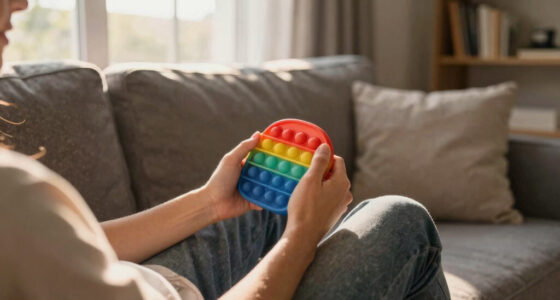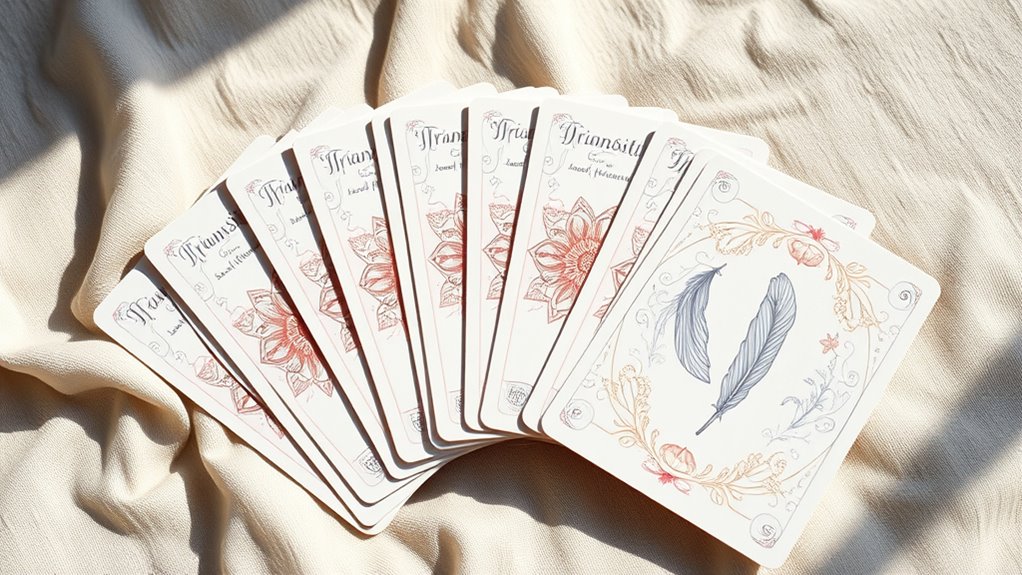

Choosing a self-reflection deck comes down to how you want to think: guided exercises, open-ended questions, or prompts that connect reflection to a daily practice. I rank Self-Reflection Cards first for their explicit individual and group instructions, and put {THE AND} Self Love Edition close behind for its larger prompt collection. Holstee Reflection Cards are my pick for conversation-led reflection, while Quokka is better suited to short grounding and breathing exercises.

Turn your wind-down time into listening time
- Thousands of audiobooks, podcasts and originals
- Listen on your phone, tablet or Echo — also offline
- Cancel anytime
The tradeoff is between structure and openness. Some decks tell you what to do with a prompt; others give you questions and leave the format to you. I also weigh whether a set supports solo use, group discussion, practical exercises, or an easy daily routine. The rankings favor usefulness for reflection rather than card count alone, so the best choice depends on the kind of engagement you will actually return to.
Key Takeaways
- Self-Reflection Cards is the strongest all-round choice when you want instructions for both solo and group activities.
- {THE AND} Self Love Edition offers the broadest prompt pool here, with 199 questions and prompts for journaling, meditation, or discussion.
- Holstee Reflection Cards suit people who prefer open-ended questions and conversation over step-by-step exercises.
- Quokka’s 52-card deck focuses on breathing, grounding, and relaxation, making it a practical fit for brief mindfulness routines rather than extended personal inquiry.
- Virtues Reflection Cards stand apart by pairing each virtue with a description, quote, practice suggestion, and affirmation.
| Self-Reflection Cards |  | Best Overall | Brand: Wellness Reproductions & Publishing | Manufacturer: The Guidance Group | Model number: 337714 | VIEW ON AMAZON | See Our Full Breakdown |
| Quokka Self-Care and Anxiety Relief Mindfulness Cards, 52-Card Deck |  | Best for Brief Mindfulness Routines | Brand: Quokka | Card count: 52 | Material: Cardboard | VIEW ON AMAZON | See Our Full Breakdown |
| Holstee Reflection Cards – 100+ Questions to Spark Meaningful Conversations |  | Best for Conversation and Journaling | Card count: 52 cards | Questions: 104 | Themes: Gratitude, Wellness, Intention, and more | VIEW ON AMAZON | See Our Full Breakdown |
| {THE AND} Self Love Edition Reflection Card Deck |  | Best for a Large Prompt Collection | Brand: {THE AND} | Edition: Self Love Edition | Number of cards: 199 | VIEW ON AMAZON | See Our Full Breakdown |
| Virtues Reflection Cards |  | Best for Values-Based Practice | Brand: The Virtues Project | Card count: 100 | Age range: Adult | VIEW ON AMAZON | See Our Full Breakdown |
| selfreflection card set | Brand | Dimensions | Card count | Material |
|---|---|---|---|---|
| Self-Reflection Cards | Wellness Reproductions & Publishing | 3.8 x 2.8 x 1.2 inches | — | — |
| Quokka Self-Care and Anxiety R | Quokka | 3.94 x 3.15 inches | 52 | Cardboard |
| Holstee Reflection Cards | — | — | 52 cards | Sustainably forested paper with vegetable-based inks |
| {THE AND} Self Love Edition Re | {THE AND} | — | — | Cards |
| Virtues Reflection Cards | The Virtues Project | 5 x 4 x 5 inches | 100 | — |
More Details on Our Top Picks
Self-Reflection Cards
This is my strongest all-round pick because it combines reflection topics with activity suggestions and instructions for both individual and group use. The description names feelings, attitudes, beliefs, and behaviors, giving the deck broader subject matter than Quokka’s specific focus on grounding, breathing, and relaxation. That breadth makes it a sensible option when you want a set that can prompt different kinds of discussion rather than a single routine.
Its advantage over Holstee is the stated guidance: Holstee offers open-ended questions, but no included instructions or guidelines for using them. The Guidance Group deck may suit someone who appreciates a suggested activity or wants to facilitate a group without inventing a format from scratch. At the same time, the available details do not state a card count or explain the full activity range, so I would not choose it based on a promise of extensive content. It is also less specifically tailored than {THE AND}’s Self Love edition or Virtues’ values-based approach.
The recommended age begins at 12, which distinguishes it from adult-only {THE AND} and the 16-and-up Quokka deck. That wider age guidance may make it easier to use with mixed-age groups, though buyers should still judge whether the topics suit their participants. The compact listed dimensions are handy, but this is a working deck built around use, not an accessory-rich set like Virtues. I rank it first for versatility, while recognizing that its broad framing may feel less focused than a deck centered on self-love, mindfulness, or virtues.
Pros:- Supports both individual and group use.
- Includes activity suggestions and instructions.
- Covers feelings, attitudes, beliefs, and behaviors.
- Recommended for ages 12 and up.
Cons:- The available product details do not state the number of cards.
- Its broad scope may feel less focused than the self-love, virtue, or mindfulness decks.
- No storage accessories are listed.
Best for: Individuals, facilitators, or mixed-age groups who want guided activities covering several areas of self-reflection.
Not ideal for: Buyers who need a clearly stated large prompt count, a narrowly focused theme, or a deck designed specifically for mindfulness exercises.
- Brand:Wellness Reproductions & Publishing
- Manufacturer:The Guidance Group
- Model number:337714
- Theme:Self-reflection
- Educational objective:Social skills
- Recommended age:12 years and up
- Dimensions:3.8 x 2.8 x 1.2 inches
- Item weight:4.16 ounces
Our verdict“I recommend this as the most flexible starting point for buyers who want a guided deck that can work alone or with a group.”
Quokka Self-Care and Anxiety Relief Mindfulness Cards, 52-Card Deck
Quokka takes a different route from the question-driven decks: its 52 cards offer grounding, breathing, and relaxation exercises. That makes it the clearest match here for someone who wants a short, actionable practice rather than a prompt that may lead to a long journal entry or conversation. The compact format is suited to keeping a deck nearby at home, work, or while traveling, so it can fit into a repeatable routine.
Compared with Self-Reflection Cards, Quokka is more focused but less expansive. The Guidance Group set addresses feelings, beliefs, attitudes, and behaviors and includes activity instructions; Quokka’s stated scope is mindfulness practice. Compared with Holstee, it asks for less improvisation: Holstee gives open-ended questions, while Quokka points toward concrete exercises. That specificity is useful for buyers who want an activity to follow, but less appealing if self-reflection means examining personal values, relationships, or life experiences in depth.
The product is listed for ages 16 and up and made from cardboard. Its dimensions support portability, but the description does not list a protective case or additional materials. I would choose this over the larger {THE AND} prompt collection when the main goal is a manageable grounding or breathing routine; I would skip it if you want discussion prompts or a wide-ranging inquiry deck. The product title mentions anxiety relief, but I treat the cards as general mindfulness activities, not a clinical treatment.
Pros:- Includes grounding, breathing, and relaxation exercises.
- Compact cards suit use at home, work, or while traveling.
- A defined mindfulness focus makes the intended routine clear.
- 52 cards provide a simple deck size to work through.
Cons:- Cardboard construction may be less suited to heavy handling than a more substantial format.
- Recommended for ages 16 and up.
- Its exercise-based approach is narrower than the question and activity decks.
Best for: Adults seeking portable prompts for brief grounding, breathing, and relaxation practices during a daily routine.
Not ideal for: People looking for deep journaling questions, group discussion prompts, or a deck with a stated focus on exploring beliefs and personal experiences.
- Brand:Quokka
- Card count:52
- Material:Cardboard
- Language:English
- Recommended age:16 years and up
- Dimensions:3.94 x 3.15 inches
- Thickness:0.04 inches
- Warranty:30 days against manufacturer defects
Our verdict“I would choose Quokka for portable, practical mindfulness exercises, not as a substitute for a broad self-inquiry deck.”
Holstee Reflection Cards – 100+ Questions to Spark Meaningful Conversations
Holstee is the best fit for people who prefer a question to an instruction. Its 52 cards contain 104 open-ended questions, organized by color-coded themes such as gratitude, wellness, and intention. The same prompt-led format can work in a conversation with someone close or as a starting point for solo journaling, giving the deck a flexible, social character that Quokka’s exercise-focused cards do not share.
That flexibility comes with a clear compromise: there are no included instructions or guidelines. Buyers comfortable choosing a question, discussing it, or writing freely can make the deck their own. People who want a defined sequence or a suggested activity may find the Guidance Group set easier to use, since it explicitly includes activity suggestions. The {THE AND} deck also offers more prompts and names solo reflection, journaling, meditation, and group discussion as uses, so it may be a stronger choice for someone seeking a larger pool of material.
Holstee distinguishes itself through its conversation-first design and sustainably forested paper with vegetable-based inks. Those details may matter to buyers who value materials as well as prompt style. Its listed portability supports carrying the deck to a gathering or keeping it beside a journal, but the questions remain open-ended, which will not suit every preference. I rank it below the more guided or larger collections because its strength is a particular format, not breadth of instruction.
Pros:- 52 cards provide 104 open-ended questions.
- Color-coded themes include gratitude, wellness, and intention.
- Can support conversation or solo journaling.
- Made with sustainably forested paper and vegetable-based inks.
Cons:- The format is limited to open-ended questions.
- No instructions or guidelines are included.
- Less exercise-led than Self-Reflection Cards or Quokka.
Best for: People who want themed, open-ended questions for meaningful conversations, paired reflection, or solo journaling.
Not ideal for: Buyers who prefer step-by-step exercises, built-in facilitation guidance, or a large collection of varied prompt formats.
- Card count:52 cards
- Questions:104
- Themes:Gratitude, Wellness, Intention, and more
- Material:Sustainably forested paper with vegetable-based inks
- Made in:USA
- Use:Conversation or solo journaling
Our verdict“I recommend Holstee when questions and conversation are the point, but not when you need the deck to supply a structured activity.”
{THE AND} Self Love Edition Reflection Card Deck
For buyers who want plenty of material to return to, {THE AND} offers 199 questions and prompts focused on feelings, beliefs, and personal experiences. The stated uses—solo reflection, journaling, meditation, or group discussion—make it broader in format than Holstee, whose strength is open-ended conversation questions. It also gives more prompts than the 52-card Holstee and Quokka decks, which may appeal to someone who wants a substantial pool without limiting each session to one type of exercise.
There is less explicit guidance than in the Guidance Group deck. {THE AND} supplies prompts, but the product description does not say that it includes activity instructions; Self-Reflection Cards are a better fit if you want suggestions for how to work with the material. The {THE AND} edition is also specifically oriented around self-love, so its theme has more focus than the broad emotional and behavioral territory described for the Guidance Group cards. That focus can help buyers seeking reflection about their relationship with themselves, but it may be too narrow for anyone who wants mindfulness exercises or a values-and-action framework like Virtues Reflection Cards.
This set is listed for adults 18 and up and requires a willingness to reflect or discuss personal material. That is not a flaw in the format, but it does mean it is less suited to casual, quick use than Quokka’s short practice approach. I place it second because its large prompt collection and flexible solo or group use are strong advantages, while its adult audience and less guided format limit its fit for some buyers.
Pros:- Includes 199 questions and prompts.
- Can be used for solo reflection, journaling, meditation, or group discussion.
- Explores feelings, beliefs, and personal experiences.
- The self-love theme gives the deck a clear focus.
Cons:- Designed for adults ages 18 and up.
- Requires active personal reflection or discussion.
- The product details do not describe included activity instructions.
Best for: Adults who want a large collection of self-love prompts for journaling, meditation, personal reflection, or group discussion.
Not ideal for: Younger users, buyers who want guided exercises, or anyone seeking a deck centered on grounding, breathing, or virtues.
- Brand:{THE AND}
- Edition:Self Love Edition
- Number of cards:199
- Players:1 or more
- Age range:18 years and up
- Material:Cards
- Package type:Box
- Manufacturer:The Skin Deep
Our verdict“I would pick this for prompt variety and self-love-focused inquiry, while choosing Self-Reflection Cards for more explicit activity guidance.”
Virtues Reflection Cards
Virtues Reflection Cards give self-reflection a clear structure: each card pairs a virtue description with an inspirational quote, a practice suggestion, and an affirmation. That combination moves beyond simply asking what someone feels or believes; it also offers a way to consider how a quality might show up in action. For buyers who want reflection connected to everyday practice, this is more concrete than Holstee’s open-ended questions and more values-centered than Quokka’s breathing and grounding activities.
The 100-card deck is described for individuals, couples, and groups, and it includes an activity card and a word list. A cloth carrying bag and acrylic display stand add practical options for storage and keeping a selected card visible. Compared with Self-Reflection Cards, Virtues offers a more specific framework and more listed components, while the Guidance Group deck is broader in its focus on feelings, attitudes, beliefs, and behaviors. If broad personal exploration matters more than a virtue-based lens, I would choose the Guidance Group set instead.
This focused framework is also the main limitation. Buyers who do not want reflection organized around virtues may find the approach less natural, and the set is listed for adults. Its display stand and accessories make it less minimalist than Quokka’s compact travel-oriented format, while the full card and accessory set may suit a home or group setting better. I rank it fifth not because it lacks substance, but because its values-led method is more specialized than the flexible guided, conversation, and prompt-heavy picks above it.
Pros:- Each card includes a virtue description, quote, practice suggestion, and affirmation.
- Designed for individual, couple, and group use.
- Includes an activity card and word list.
- Comes with a cloth carrying bag and acrylic display stand.
Cons:- Its virtues-based framework may not suit every reflection style.
- Listed for adults.
- The display stand and accessories make it less streamlined for travel than Quokka.
Best for: Adults, couples, and groups who want to reflect on virtues and connect them with practical actions and affirmations.
Not ideal for: People seeking open-ended emotional questions, a portable minimalist deck, or mindfulness exercises focused on breathing and grounding.
- Brand:The Virtues Project
- Card count:100
- Age range:Adult
- Educational objective:Social skills
- Included content:Virtue descriptions, quotes, practice suggestions, affirmations, activity card, and word list
- Accessories:Cloth carrying bag and acrylic display stand
- Dimensions:5 x 4 x 5 inches
- Item weight:16 ounces
Our verdict“I recommend Virtues Reflection Cards for buyers who want values translated into actions, rather than a general-purpose prompt deck.”

How We Picked
I compared these five sets by how directly they support self-reflection, not by assuming that more cards automatically make a better deck. I looked at prompt depth, the kind of activity a card invites, whether instructions are included, and whether the set can work for one person as well as a group. These differences matter: a reflective question deck can be flexible, but someone who wants a ready-made exercise may find it too open-ended.
I also weighed each set’s intended focus. Quokka centers on mindfulness techniques such as grounding and breathing; Virtues Reflection Cards frame reflection around qualities and actions; and the other three offer broader exploration through questions or activities. Portability, age guidance, materials, and included accessories helped distinguish practical use cases, but did not outweigh how well the deck’s format fits a buyer’s preferred way to reflect.
The order reflects those priorities. I placed the Guidance Group’s Self-Reflection Cards first because the stated instructions support individual and group activities without narrowing the deck to one theme. The {THE AND} set follows for prompt range, while Holstee earns a distinct place for conversation and journaling. Virtues and Quokka are more specialized: the former is structured around values and practice, and the latter around short mindfulness exercises. Product descriptions do not establish clinical benefits, so I treat these as reflection tools, not substitutes for professional care.
| selfreflection card set | Brand | Material |
|---|---|---|
| Self-Reflection Cards | Wellness Reproductions & Publishing | — |
| Quokka Self-Care and Anxiety R | Quokka | Cardboard |
| Holstee Reflection Cards | — | Sustainably forested paper with vegetable-based inks |
| {THE AND} Self Love Edition Re | {THE AND} | Cards |
| Virtues Reflection Cards | The Virtues Project | — |
Factors to Consider When Choosing Selfreflection Card Sets
I would choose a self-reflection deck by matching its format to the way I want to engage: following an activity, answering questions, practicing mindfulness, or connecting values to action.Choose between instructions and open-ended prompts
If I want the deck to tell me how to begin, I would start with Self-Reflection Cards, which list activity suggestions and instructions for individual and group use. That support can be useful when I am leading a discussion or do not want to design a process myself. Holstee is the opposite kind of tool: its questions invite a response but do not prescribe how to answer. That can feel freeing for journaling or conversation, though it asks me to create my own structure. {THE AND} also offers a large prompt collection, but the product details do not list activity guidelines.
Match the deck’s subject to your goal
Broad self-inquiry, mindfulness, and values-based practice are different jobs. The Guidance Group deck names feelings, attitudes, beliefs, and behaviors; {THE AND} centers on self-love and personal experience; Holstee’s themes include gratitude, wellness, and intention. Quokka focuses on grounding, breathing, and relaxation, so I would choose it for short mindfulness activities, not a wide-ranging exploration of relationships or beliefs. Virtues Reflection Cards tie reflection to a set of qualities and ways to practice them. The right theme is the one I will find relevant enough to revisit.
Think about solo, paired, and group use
Not every deck handles different settings in the same way. Self-Reflection Cards explicitly include individual and group instructions, while Virtues Reflection Cards are described for individuals, couples, and groups. Holstee can serve conversation or solo journaling, and {THE AND} lists solo reflection, meditation, journaling, and group discussion. If I plan to use a deck with other people, I would prioritize prompts that feel appropriate for the group and decide whether I want built-in facilitation. Quokka’s description centers on adult personal use rather than group conversation.
Use card count as a clue, not the whole decision
More cards can provide variety, but count does not tell me whether the format fits. {THE AND} lists 199 prompts, compared with 104 questions across Holstee’s 52 cards and 52 cards in Quokka’s deck. Virtues provides 100 cards, each with several pieces of content. The Guidance Group listing does not specify a card count, so I would judge it by its stated activities instead. I would also ask whether I prefer a large question pool, repeated short exercises, or one focused value and practice on each card.
Check age guidance, materials, and portability
Age recommendations vary: Self-Reflection Cards are listed for ages 12 and up, Quokka for 16 and up, and {THE AND} and Virtues are adult-oriented. I would use those as product guidance, then consider whether the topics and group setting are appropriate for the actual users. For portability, Quokka’s compact dimensions suit a bag or desk, while Holstee also describes its deck as portable. Virtues includes a cloth bag and display stand, which favor keeping cards together or displaying one at home. Holstee specifies sustainably forested paper and vegetable-based inks; Quokka lists cardboard construction.
Set realistic expectations for reflection tools
A card deck can offer prompts, activities, or mindfulness exercises, but the format cannot promise a particular personal outcome. I would treat these sets as tools for reflection and conversation, not clinical treatment. If a question feels uncomfortable, I can pause or choose another card; no deck requires sharing private material with a group. Buyers who want therapeutic support should seek an appropriate professional resource rather than relying on cards alone.
Frequently Asked Questions
Which self-reflection card set is the best all-around choice?
I rank Self-Reflection Cards first for buyers who want one deck that can support individual and group use. Its activity suggestions and instructions offer more guidance than Holstee’s open-ended question format, while its subject matter spans feelings, attitudes, beliefs, and behaviors. If I cared more about having a large prompt collection than instructions, I would choose {THE AND} instead.
Which deck is best for solo journaling?
Holstee and {THE AND} both suit solo reflection and journaling, but they differ in scale and style. Holstee provides 104 open-ended questions across 52 cards, with themes such as gratitude and wellness; {THE AND} offers 199 prompts focused on self-love and personal experience. I would pick Holstee for a conversation-friendly question deck and {THE AND} for a broader pool of self-love prompts.
Are any of these decks designed for mindfulness exercises?
Quokka is the clearest mindfulness-focused option, with grounding, breathing, and relaxation exercises intended for a daily routine. That makes it distinct from question-led decks such as Holstee and {THE AND}. I would choose Quokka for brief practical activities, while choosing another set if I want to examine personal beliefs, write about experiences, or discuss prompts with others.
Can these self-reflection card sets be used with a group?
Several are described for group use: Self-Reflection Cards include group instructions, Virtues Reflection Cards are listed for groups as well as individuals and couples, and both Holstee and {THE AND} can prompt discussion. Quokka’s description focuses on personal mindfulness practice, so it is a less direct fit for group conversation. I would review the topics and agree on boundaries before using personal prompts with others.
How should I choose between a guided deck and a question deck?
I would pick a guided set if I want suggested activities or a ready-made way to begin; Self-Reflection Cards explicitly provide activity suggestions and instructions. I would choose a question deck if I prefer to decide how to answer, discuss, or journal, as with Holstee. {THE AND} supplies a larger collection of prompts, while Virtues adds practice suggestions and affirmations to a values-based format. The key difference is whether I want the cards to provide a process or mainly a starting point.
Conclusion
My recommendation depends on the kind of reflection you want. For the most flexible guided option, choose Self-Reflection Cards; for the largest stated prompt collection, choose {THE AND} Self Love Edition. Holstee is the better match for conversation and journaling through open questions, Quokka for portable mindfulness exercises, and Virtues Reflection Cards for values translated into practice. I would start with the format that feels easiest to use repeatedly: a prompt only helps if you are willing to spend time with it.
Fall Picks
fall essentials
As an affiliate, we earn on qualifying purchases.