
Love map activity books help couples learn more about each other through questions, shared prompts, and activities. My best overall pick is Developing Your Love Map: 365 Questions to Ask Before and After Marriage, thanks to its focused question-a-day format. Celebrate Our Love Couple’s Journal stands out for varied connection activities, while The Ultimate Fun Book for Couples suits couples who prefer quizzes and games. The main tradeoff is structure versus variety: a steady prompt routine can build conversation habits, while a broader activity mix may feel more playful but less focused. Read on for the full breakdown and guidance on choosing a book that fits your relationship.

Turn your wind-down time into listening time
- Thousands of audiobooks, podcasts and originals
- Listen on your phone, tablet or Echo — also offline
- Cancel anytime
Key Takeaways
- Developing Your Love Map is the clearest match for the love-map idea: its 365 questions create a repeatable way to learn about a partner over time.
- Celebrate Our Love and The Ultimate Fun Book for Couples lean toward variety and play, making them stronger fits for couples who want activities rather than a daily question habit.
- Me, You, Us offers a fill-out-together format, which may appeal to couples who want a shared keepsake as well as conversation prompts.
- The 5 Love Languages Workbook and How We Love Workbook focus more on relationship frameworks and reflection than on light activity-book entertainment.
- The lineup spans structured questions, guided relationship work, and games; choosing by the kind of conversation you want matters more than choosing the book with the largest activity count.
| The 5 Love Languages Workbook |  | Best for Guided Reflection | Product type: Workbook | Subject: The 5 Love Languages | Intended focus: Love languages | VIEW ON AMAZON | See Our Full Breakdown |
| Celebrate Our Love Couple’s Journal: 120 Activities to Make Connecting Fun |  | Best for Activity Variety | Product type: Couple’s journal | Activity count: 120 | Intended audience: Couples | VIEW ON AMAZON | See Our Full Breakdown |
| Me, You, Us: A Book to Fill Out Together |  | Best for a Simple Shared Keepsake | Product type: Book | Intended use: Fill out together | Intended audience: Two people | VIEW ON AMAZON | See Our Full Breakdown |
| How We Love Workbook, Expanded Edition: Making Deeper Connections in Marriage | 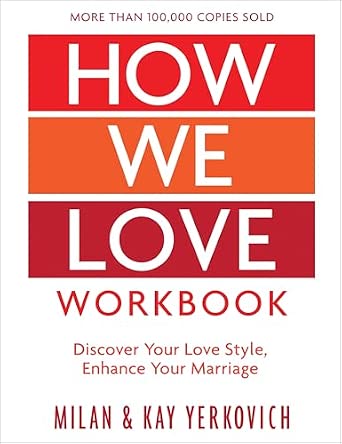 | Best for Marriage-Focused Reflection | Product type: Workbook | Edition: Expanded Edition | Intended audience: Married couples | VIEW ON AMAZON | See Our Full Breakdown |
| The Ultimate Fun Book for Couples: 60 Quizzes, Games, and Challenges |  | Best for Playful Couple Time | Product type: Book | Activity count: 60 | Activity types: Quizzes, games, and challenges | VIEW ON AMAZON | See Our Full Breakdown |
| The Big Activity Book for Couples |  | Best for Activity Variety | Title: The Big Activity Book for Couples | ASIN: 1936806118 | Category: Activity book for couples | VIEW ON AMAZON | See Our Full Breakdown |
| Developing Your Love Map: 365 Questions to Ask Before and After Marriage |  | Best for Structured Couple Conversations | Title: Developing Your Love Map: 365 Questions to Ask Before and After Marriage | ASIN: 1686594879 | Format: Book | VIEW ON AMAZON | See Our Full Breakdown |
| love map activity book | Product type | Activity count | Intended audience |
|---|---|---|---|
| The 5 Love Languages Workbook | Workbook | Not specified | — |
| Celebrate Our Love Couple’s Jo | Couple’s journal | 120 | Couples |
| Me | Book | Not specified | Two people |
| How We Love Workbook | Workbook | Not specified | Married couples |
| The Ultimate Fun Book for Coup | Book | 60 | Couples |
| The Big Activity Book for Coup | — | — | — |
| Developing Your Love Map: 365 | — | — | — |
More Details on Our Top Picks
The 5 Love Languages Workbook
The 5 Love Languages Workbook is the most structured pick here for couples who want to reflect on how they express and receive care, rather than start with a large menu of games. Its workbook format and connection to the 5 Love Languages framework suggest a guided, topic-centered approach; the supplied details do not specify particular exercises, so I would not choose it expecting a certain activity count. Compared with Celebrate Our Love Couple’s Journal, which lists 120 activities, this is the better fit for a focused framework, not sheer variety. It may also feel more guided than Me, You, Us, whose description only says two people fill it out together. The tradeoff is that the available information gives little detail about its prompts or structure, and the framework may not suit couples who prefer open-ended or playful activities.
Pros:- Workbook format points to guided reflection rather than an unstructured journal.
- Centers the activities on the 5 Love Languages framework.
- A focused alternative to the 120 listed activities in Celebrate Our Love Couple’s Journal.
Cons:- No activity count or prompt examples are provided.
- The framework-centered approach may feel limiting to couples who want broader topics.
- The available details do not clarify how partners work through the workbook together.
Best for: Couples who want a workbook organized around discussing how each partner gives and receives care.
Not ideal for: Couples seeking a clearly specified set of games, a high activity count, or playful prompts; the available product details do not establish those features.
- Product type:Workbook
- Subject:The 5 Love Languages
- Intended focus:Love languages
- Activity count:Not specified
- Format details:Not specified
- Edition:Not specified
Our verdict“Choose this workbook if you want a guided, love-language-centered starting point and do not need a documented activity count.”
Celebrate Our Love Couple’s Journal: 120 Activities to Make Connecting Fun
For couples who would rather choose from a range of prompts than follow one relationship framework, Celebrate Our Love Couple’s Journal makes its appeal clear: it lists 120 activities designed to make connecting enjoyable. That stated quantity gives buyers a stronger sense of the journal’s scope than the sparse descriptions for Me, You, Us or The 5 Love Languages Workbook. It is the most obvious pick in this group for varied, activity-led connection, though the product details do not identify the activities or say how they are organized. That leaves some uncertainty about whether the prompts build sustained insight into a partner’s inner world—the core appeal of a love map—or favor lighter shared fun. I would rank it ahead of single-framework workbooks for variety, but not for a clearly documented method or depth.
Pros:- Lists 120 activities, the clearest stated activity count in this group.
- Designed to make connection enjoyable through shared participation.
- Activity-led format offers more stated variety than Me, You, Us.
- Couples can choose from a collection rather than rely on a single framework.
Cons:- The supplied description does not identify the activities or their topics.
- No details show whether the activities build progressively or support deeper relationship reflection.
- The journal’s structure and format specifics are not provided.
Best for: Couples who want a substantial selection of shared activities and prefer variety over a single relationship framework.
Not ideal for: Partners who want detailed information about specific prompts, a clearly described love-map method, or a workbook focused on one relationship topic.
- Product type:Couple’s journal
- Activity count:120
- Intended audience:Couples
- Stated purpose:Make connecting fun
- Activity topics:Not specified
- Format details:Not specified
Our verdict“Pick this journal if a large stated range of couple activities matters more to you than knowing the exact prompts in advance.”
Me, You, Us: A Book to Fill Out Together
Me, You, Us: A Book to Fill Out Together is the straightforward choice for partners who want to answer and record things side by side, without needing a named relationship framework or a stated activity quota. Its clearest distinction is the shared fill-in format. Compared with Celebrate Our Love Couple’s Journal, which specifies 120 activities, this book offers less certainty about how much content or variety it includes. That may suit couples who value a simple collaborative book, but buyers looking for a clearly structured love-map program will find less to go on than with The 5 Love Languages Workbook, whose subject is explicitly identified. The main tradeoff is the limited product information: no prompts, themes, or activity count are supplied. I would treat it as a flexible shared-book option, not a confirmed deep-dive workbook.
Pros:- Explicitly designed for two people to fill out together.
- Simple shared-book concept can suit couples who do not want a specified framework.
- Offers a different, less activity-count-driven option than Celebrate Our Love Couple’s Journal.
Cons:- No activity count or prompt examples are provided.
- The supplied description does not explain its themes or how the book is structured.
- Less evidence of a guided love-map approach than the framework-centered 5 Love Languages Workbook.
Best for: Couples who want a simple book to complete together and are comfortable choosing without a listed activity count or described prompt set.
Not ideal for: Buyers who want a defined sequence of relationship exercises, a stated number of activities, or a named framework for exploring a partner’s preferences.
- Product type:Book
- Intended use:Fill out together
- Intended audience:Two people
- Activity count:Not specified
- Topics:Not specified
- Format details:Not specified
Our verdict“Choose this if you want a shared fill-in book and are comfortable with limited detail about its prompts and scope.”
How We Love Workbook, Expanded Edition: Making Deeper Connections in Marriage
Among these options, How We Love Workbook, Expanded Edition is the clearest match for married couples seeking reflection aimed at deeper connection, rather than a general collection of couple activities. That marriage-specific focus separates it from Me, You, Us, which is described broadly as a book for two people to fill out, and from The Ultimate Fun Book for Couples, which centers quizzes, games, and challenges. For readers using a love map to learn how a spouse thinks and feels, a focused workbook may be more fitting than light entertainment. Still, the supplied description does not detail its exercises, sequence, or method, so I cannot judge how directly it explores a partner’s day-to-day inner world. The tradeoff is focus over known variety: choose it for a marriage-centered workbook, not a documented activity count.
Pros:- Explicitly focuses on deeper connections in marriage.
- Workbook format signals a more guided approach than a general fill-in book.
- Offers a marriage-centered alternative to the game-focused Ultimate Fun Book for Couples.
Cons:- No specific exercises or prompts are described in the supplied details.
- Activity count and workbook structure are not provided.
- Marriage-specific framing may be a poor fit for couples who are dating or want casual shared entertainment.
Best for: Married couples who want a workbook framed around building deeper connection and are less interested in games or a large listed activity collection.
Not ideal for: Dating couples, or spouses who want a clearly described set of prompts, a stated activity count, or lighthearted challenges.
- Product type:Workbook
- Edition:Expanded Edition
- Intended audience:Married couples
- Stated focus:Making deeper connections in marriage
- Activity count:Not specified
- Exercise details:Not specified
Our verdict“Choose this workbook if you are married and want a focused connection resource, while accepting that its specific activities are not detailed here.”
The Ultimate Fun Book for Couples: 60 Quizzes, Games, and Challenges
The Ultimate Fun Book for Couples is the strongest fit for partners who want their connection activity to feel like entertainment first. Its 60 quizzes, games, and challenges make the format more clearly playful than How We Love Workbook, Expanded Edition, which is framed around deeper connection in marriage. It also gives buyers a stated activity count, though less volume than the 120 activities listed for Celebrate Our Love Couple’s Journal. For a love-map roundup, that distinction matters: games can prompt conversation, but the supplied details do not show whether these challenges explore personal history, preferences, or emotional needs. The book’s variety is appealing, yet the specific activities remain unknown. I would choose it for light shared fun, not as the most clearly documented route to learning a partner’s inner world.
Pros:- Lists 60 activities across quizzes, games, and challenges.
- Lighthearted format can make shared participation feel less like structured relationship work.
- Activity types are more clearly named than in Me, You, Us.
Cons:- Specific quizzes, games, and challenges are not identified in the supplied details.
- The listed 60 activities are fewer than Celebrate Our Love Couple’s Journal’s 120.
- The playful framing does not establish how much the activities explore deeper relationship knowledge.
Best for: Couples who want a playful shared activity book with a defined collection of quizzes, games, and challenges.
Not ideal for: Partners seeking a guided marriage workbook, a documented love-map sequence, or more listed activities than the 120 in Celebrate Our Love Couple’s Journal.
- Product type:Book
- Activity count:60
- Activity types:Quizzes, games, and challenges
- Intended audience:Couples
- Stated tone:Lighthearted
- Stated purpose:Encourage connection and shared fun
Our verdict“Choose this for a playful, defined set of couple activities, but look elsewhere if your priority is a clearly described path to deeper love-map conversations.”
The Big Activity Book for Couples
The Big Activity Book for Couples earns a place for readers seeking a couples activity book rather than a clearly defined program of love-map questions. The available product details do not specify its activities, format, or structure, so I would not choose it on the assumption that it offers a particular kind of prompt or exercise. Compared with Developing Your Love Map: 365 Questions to Ask Before and After Marriage, whose question-based focus is explicit, this title is the less predictable option based on the information provided. That broader framing may suit couples who want to explore an activity-book format, but it also makes fit harder to judge before buying. I’d pick it only if you are comfortable with limited content details; couples who want a known number of conversation prompts have a clearer match in the 365-question book.
Pros:- Identified as an activity book for couples
- A possible alternative to question-led books for couples seeking activities
- Could suit buyers who are comfortable choosing without detailed content information
Cons:- The provided description does not identify the activities or explain how they support love-map conversations
- No format, length, or activity count is supplied, making it difficult to judge fit
- Less clearly defined than Developing Your Love Map, which specifies 365 questions
Best for: Couples open to an activity-book approach who do not need a specified prompt count or a clearly described structure before choosing.
Not ideal for: Couples specifically seeking a documented set of love-map questions, a stated activity count, or details about how the book is organized.
- Title:The Big Activity Book for Couples
- ASIN:1936806118
- Category:Activity book for couples
- Stated activity count:Not provided
- Format:Not provided
- Detailed contents:Not provided
Our verdict“Choose this if you want a couples activity book and can accept limited detail, but pick Developing Your Love Map if a known question-based format matters more.”
Developing Your Love Map: 365 Questions to Ask Before and After Marriage
Developing Your Love Map is the clearest fit here for couples who want a defined question-led way to talk: its title specifies 365 questions and names use both before and after marriage. That makes its purpose easier to judge than The Big Activity Book for Couples, whose available description does not identify its activities. The stated question count suggests a substantial prompt collection, but the provided details do not say how questions are grouped, whether there is one for each day, or how the book handles different relationship stages. Compared with Celebrate Our Love Couple’s Journal, which advertises 120 activities, this title signals a larger question set, not necessarily more variety or a better fit. I’d favor it for couples who want conversation prompts; those seeking games or varied hands-on activities should look for clearer evidence of that format.
Pros:- Specifies a substantial set of 365 questions
- Explicitly intended for use before and after marriage
- Question-led format gives couples a clear conversation focus
Cons:- The available description does not explain how the questions are organized
- No details establish whether the 365 questions correspond to a daily schedule
- The provided information does not describe activities beyond discussion questions
Best for: Engaged or married couples who want a substantial set of questions to guide conversations across different stages of their relationship.
Not ideal for: Couples looking primarily for games, creative activities, or a clearly explained daily schedule, since those details are not provided.
- Title:Developing Your Love Map: 365 Questions to Ask Before and After Marriage
- ASIN:1686594879
- Format:Book
- Question count:365
- Intended users:Couples
- Stated use stages:Before and after marriage
Our verdict“Choose this for a defined, question-centered conversation resource spanning courtship and marriage, rather than for a varied games-and-activities format.”

How We Picked
I compared the seven books by how directly they support learning about a partner, how easy their format is to use together, and whether their prompts encourage conversation, reflection, or play. I also considered the kind of commitment each format asks for: a question-a-day book supports steady use, while a collection of activities may work better for occasional shared time.
The ranking prioritizes fit with the love map activity book search: books centered on discovering a partner’s thoughts, preferences, experiences, and hopes rank ahead of titles focused mainly on a relationship framework or general entertainment. The remaining order reflects differences in structure, variety, and intended mood, not a claim that one style suits every couple. Since the titles offer distinct approaches, I call out who may prefer each format and what they give up by choosing it.
| love map activity book | Product type | Intended audience |
|---|---|---|
| The 5 Love Languages Workbook | Workbook | — |
| Celebrate Our Love Couple’s Jo | Couple’s journal | Couples |
| Me | Book | Two people |
| How We Love Workbook | Workbook | Married couples |
| The Ultimate Fun Book for Coup | Book | Couples |
| The Big Activity Book for Coup | — | — |
| Developing Your Love Map: 365 | — | — |
Factors to Consider When Choosing Love Map Activity Books
Before choosing a title, decide what you want the book to change about your shared time. A useful match depends on your preferred pace, comfort with personal questions, and whether you want a playful activity, a guided conversation, or a record you can keep.
Choose a pace you can keep
Books built around a large set of questions can support a small recurring habit, but they may feel like homework if you expect to complete them quickly. Activity collections are often easier to dip into when you have time, though that flexibility can make regular use less likely. Pick a pace that fits your actual week rather than an ambitious routine you may abandon. Couples with busy schedules may prefer one prompt at a time; couples who set aside a regular date night may enjoy longer activities. A book does not need to be finished to be useful. Agreeing to try one page or prompt together can make starting feel easier.
Match the depth of questions to your comfort
Not every couple wants to begin with vulnerable topics, and a prompt that feels too personal can shut down conversation rather than open it. Look for a format that lets you skip questions or move at your own pace if you are unsure how deep you want to go. Light quizzes and games can help couples warm up, while reflective workbooks may suit people ready to discuss patterns and expectations. A common mistake is choosing for the most serious conversation you hope to have instead of the conversations you can comfortably start today. You can always move toward deeper topics later. If the book is a gift, consider whether its tone will feel inviting to both partners.
Decide whether you want a keepsake or a conversation tool
Some couples enjoy writing answers into a shared book and revisiting them later; others prefer prompts that spark a talk without preserving personal details. A fill-in format can become a meaningful record, but it asks both people to write and may feel less appealing to anyone who dislikes journaling. Question collections can be easier to use aloud, though they may leave less of a shared record. Think about whether you want to remember your answers or simply use them to start a discussion. If privacy matters, check how the book is meant to be completed and stored before making it part of your routine. Choose the format both partners are likely to use, not just the one that looks most giftable.
Separate relationship learning from relationship instruction
A love map activity book is usually most useful when its prompts help partners discover what the other thinks, feels, enjoys, or hopes for. Workbooks based on relationship concepts can offer a more guided route into reflection, but they are not the same as a light question game. Decide whether you want to learn new details about each other, discuss communication patterns, or practice a shared activity. Buying a framework-focused book when you want playful date-night prompts can create a mismatch. Likewise, a game book may not offer the structure you want for examining recurring relationship habits. Identify your goal first, then judge the book by how directly its format serves it.
Look at variety without chasing a big activity count
A high number of prompts or activities can offer choice, but quantity alone does not tell you whether the material suits your relationship. A focused set of questions may serve couples better than a broader assortment if the aim is to build a steady picture of one another. A mix of quizzes, challenges, and conversation prompts can help keep shared time lively, though not every activity will fit every mood. Consider whether you want one consistent experience or the freedom to choose among different kinds of interaction. If you tend to lose momentum with repetitive formats, variety may matter more than a daily structure. If you prefer clarity and routine, a focused format may be easier to stick with.
Pay for fit, not a promise of instant change
A book can provide prompts and structure, but it cannot make either partner participate openly or solve every relationship concern. Paying more only makes sense when the format, guidance, or intended depth offers something you will actually use. For a low-pressure introduction, a playful or straightforward question format may be a better starting point than a workbook with a more reflective focus. Couples seeking deeper conversations may value a guided approach, provided both partners are willing to engage. Avoid treating a book as a substitute for professional support when serious or ongoing difficulties need more help. The best choice is the one that makes a realistic shared habit easier to begin.
Frequently Asked Questions
What makes a love map activity book different from a couples journal?
A love map activity book centers on learning about a partner through questions or shared activities, while a couples journal may focus more broadly on recording memories, thoughts, or relationship milestones. The formats can overlap, especially when a book invites both partners to fill in answers. For a stronger love-map focus, look for prompts about preferences, experiences, goals, and what matters to each person. If you mainly want a keepsake, a journal-style format may be the better fit. The distinction is less about the label and more about what you will do together on each page.
Should we choose a question book or a games-and-activities book?
Choose a question-led book if you want a direct route into learning new details about each other and are comfortable talking through prompts. A games-and-activities book may fit better if conversation feels easier when it is playful or guided by a challenge. Neither format is automatically more meaningful; the better choice depends on how you both like to connect. Some couples may prefer a structured question routine, while others are more likely to return to a book that offers different activities. If you are unsure, choose the format that feels easiest to try together for the first time.
Can these books work for couples who have been together for years?
Yes. Long-term partners can still discover new preferences, memories, and hopes, particularly as their lives and priorities change. A book with repeated questions may feel familiar in places, so it can help to treat answers as a chance to learn what is true now rather than test how well you remember each other. Activity collections may offer a more playful way to spend time together if you already know one another well. Couples who want to revisit earlier answers may prefer a format that leaves room to write. The book works best as an invitation to talk, not a measure of how well a couple knows each other.
Is a love map activity book a good gift for a couple?
It can be a thoughtful gift when you know the couple is open to doing a shared activity or answering personal questions together. A playful book is generally a lower-pressure choice for partners who enjoy games, while a reflective workbook may suit couples who already like guided discussions. Avoid assuming that every pair wants to write down private answers or talk about sensitive subjects. If you are uncertain, choose a format with varied prompts or a light tone rather than one that asks for sustained reflection. A short note explaining why you picked it can make the gift feel personal without putting pressure on the couple to finish it.
Can a workbook replace couples counseling?
No. A workbook can give partners a shared structure for conversation and reflection, but it does not provide individualized guidance from a trained professional. It may be a useful supplement for couples who want prompts between conversations or a way to discuss topics at their own pace. If conflict feels unsafe, persistent, or too difficult to address together, a book alone may not be enough. The relationship-focused titles in this roundup differ in approach, but none should be treated as a guarantee of resolving serious problems. Choose a book for shared learning, and seek professional support when the situation calls for it.
Conclusion
For a balanced starting point, I recommend Developing Your Love Map as the best overall choice and the most direct fit for couples who want regular partner-focused questions. For best value in practical variety, consider Celebrate Our Love Couple’s Journal; its range of activities suits couples who want several ways to connect. As a best premium-style pick for guided relationship reflection, How We Love Workbook is better suited to couples seeking more than light entertainment, though beginners may find a playful format easier to start. For beginners, The Ultimate Fun Book for Couples offers a low-pressure route through quizzes, games, and challenges. If your specific need is a shared written keepsake, choose Me, You, Us; if you want a relationship-framework workbook, compare The 5 Love Languages Workbook with How We Love. Pick the book that matches the conversations you both want to have, not the one that asks you to become a different kind of couple.
Halloween Picks
halloween
As an affiliate, we earn on qualifying purchases.