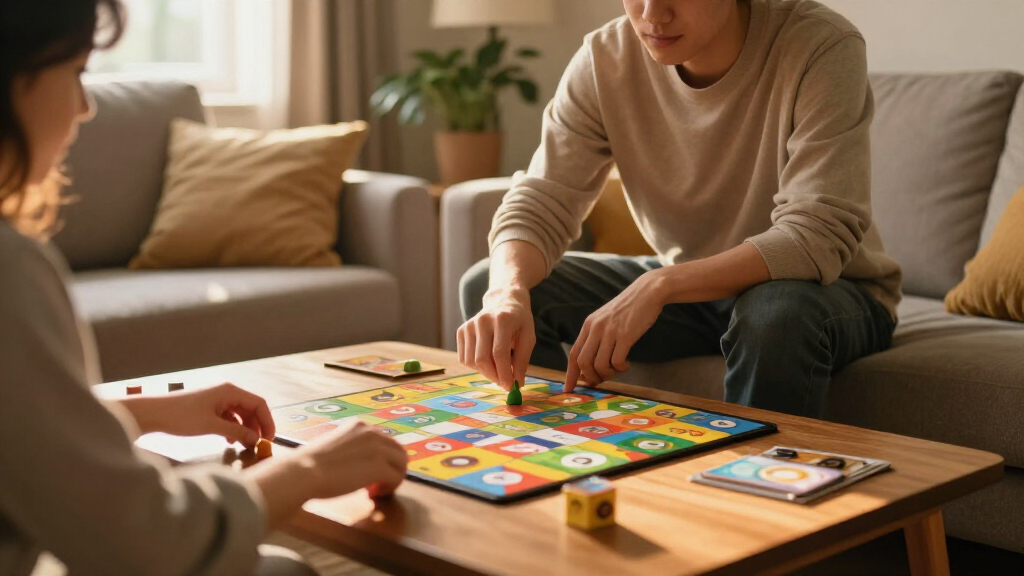

Psychology-themed board games split into two very different families: therapeutic card games designed to build emotional skills, and social deduction and party games that turn how minds work into the actual gameplay. My overall pick is CMYK Wavelength, because it best captures the theme as play — reading minds and finding shared mental reference points — while staying fun for mixed groups. If the goal is emotional learning for kids and teens, CBT 123 delivers the clearest skill-building structure, and Unconscious Mind is the standout pick for dedicated hobby gamers who want a deep strategy experience rooted in the history of psychoanalysis. The main tradeoff in this category is depth versus accessibility: clinical-style games teach real skills but can feel like homework, while pure party games are fun but only loosely psychological. Read on for the full breakdown of who each game suits and who should skip it.

Turn your wind-down time into listening time
- Thousands of audiobooks, podcasts and originals
- Listen on your phone, tablet or Echo — also offline
- Cancel anytime
Key Takeaways
- The category divides sharply into therapeutic skill-builders (CBT 123, Mindfulness Therapy, ARTAGIA, You Know) and genuine games about minds (Wavelength, Chameleon, Unconscious Mind) — no single product does both well.
- Wavelength earned the top spot because its mind-reading mechanic makes psychology the gameplay itself rather than a theme painted on top.
- Unconscious Mind is the only heavyweight strategy option here; buyers wanting a multi-hour eurogame experience should go straight to it and skip the card decks.
- Most therapeutic options in this lineup are card-based, which keeps them portable and affordable but limits replayability once the deck feels familiar.
- Moves in Mind is a book about the psychology of board games, not a playable game — it was kept on the list only for theory-minded readers, not game night.
- Age fit matters more in this category than in most: several therapy games are built for kids and teens and fall flat with adult groups, and vice versa.
| PlayTherapySupply CBT 123 |  | Best for Therapy Settings | Players: 2-4 | Ages: 7-16 | Play Time: 15-20 minutes | VIEW LATEST PRICE | See Our Full Breakdown |
| The Empathy Game |  | Best for Couples and Close Friends | Format: Card-based conversation activity | Focus: Empathy and emotional connection | Group Size: Small groups | VIEW LATEST PRICE | See Our Full Breakdown |
| Moves in Mind: The Psychology of Board Games |  | Best for Designers and Researchers | Format: Academic book | Subject: Psychology of board games | Topics: Cognition, memory, strategic decision-making, social interaction | VIEW LATEST PRICE | See Our Full Breakdown |
| Mindfulness Therapy Game |  | Best for Mixed-Age Groups | Cards: 50 | Card Types: True/False, Mindful Practices, Visualizations, Social Skills, Self Care | Players: Up to 5 | VIEW LATEST PRICE | See Our Full Breakdown |
| ARTAGIA Social Skills Therapy Game |  | Best Value for Families | Decks: 3 (CHILL, CHAT, CHALLENGE) | Cards: 150 question cards | Age Range: 14+ | VIEW LATEST PRICE | See Our Full Breakdown |
| You Know Social Skills Games and Therapy Games |  | Best for Therapy and Classroom Settings | Number of Cards: 108 | Players: 2-6 | Ages: 7+ | VIEW LATEST PRICE | See Our Full Breakdown |
| CMYK Wavelength – A Mind Reading Party Game |  | Best Group Party Pick | Number of Players: 2+ | Setup Time: 5 seconds | Learning Time: 1 minute | VIEW LATEST PRICE | See Our Full Breakdown |
| The Chameleon Social Deduction Board Game |  | Best for Game Nights with Friends | Brand: Big Potato | Genre: Word / social deduction | Number of Players: 3-8 | VIEW LATEST PRICE | See Our Full Breakdown |
| Unconscious Mind |  | Best Premium Strategy Experience | Brand: Lucky Duck Games | Genre: Strategy (euro, worker placement) | Number of Players: 1-4 | VIEW LATEST PRICE | See Our Full Breakdown |
| Psychological Board Game for Friends |  | Best for Personality Insights and Connection | Number of Players: 3-6 | Ages: 8 and up | Cards: 250 | VIEW LATEST PRICE | See Our Full Breakdown |
| psychology-themed board game | Format |
|---|---|
| PlayTherapySupply CBT 123 | Card game |
| The Empathy Game | Card-based conversation activity |
| Moves in Mind: The Psychology | Academic book |
| Mindfulness Therapy Game | — |
| ARTAGIA Social Skills Therapy | Card game |
| You Know Social Skills Games a | Card-based conversation game |
| CMYK Wavelength | Cooperative party game with spectrum dial |
| The Chameleon Social Deduction | — |
| Unconscious Mind | — |
| Psychological Board Game for F | Personality-matching guessing game |
More Details on Our Top Picks
PlayTherapySupply CBT 123
CBT 123 is the most clinically grounded pick in this lineup, built directly around Cognitive Behavioral Therapy’s core triangle of thoughts, feelings, and behaviors. Compared with the Mindfulness Therapy Game, which spreads its focus across five card types, this option stays tightly on one framework — a real advantage when a counselor wants structured, repeatable sessions. The 15-20 minute play time fits neatly into a therapy hour, and the expanded card deck plus downloadable worksheet gives facilitators take-home material that conversation games like ARTAGIA simply don’t offer. The tradeoff is scope: this is a guided tool, not a party game. It needs adult facilitation to land therapeutically, and the 2-4 player cap makes it awkward for larger group settings.
Pros:- Teaches real CBT concepts through play rather than lectures
- Short 15-20 minute sessions fit therapy and classroom schedules
- Expanded card deck plus downloadable worksheet extends learning beyond the game
- Wide 7-16 age range works for siblings and mixed therapy groups
Cons:- Requires adult facilitation for genuine therapeutic benefit
- Limited to 2-4 players, restricting larger group use
- Kids outside the 7-16 range may find prompts off-target
Best for: Therapists, school counselors, and parents working with kids ages 7-16 on emotional regulation
Not ideal for: Families wanting a casual game night pick — it requires facilitation and a narrow 2-4 player count
- Players:2-4
- Ages:7-16
- Play Time:15-20 minutes
- Format:Card game
- Includes:Expanded card deck (80% more cards)
- Extras:Downloadable worksheet
- Therapeutic Basis:Cognitive Behavioral Therapy
Our verdict“If you’re a professional or parent using CBT techniques with kids and teens, this is the most purpose-built option on the list.”
The Empathy Game
Where The Empathy Game outshines competitors like ARTAGIA is intimacy of scale — it’s designed for deeper connection between a small circle rather than multi-generational family play. The prompts push past icebreaker territory into genuine emotional sharing, making it a fit for date nights, close friendships, or sessions where rapport already exists. Compared with CBT 123, there’s no therapeutic framework or structure here; this is conversation, not intervention, and buyers should know the difference before choosing. The honest limitation is that mechanics are thin — if you want actual gameplay, CMYK Wavelength delivers more structure — and the emotional payoffs build over multiple sessions, not a single sitting. Think of it as a tool, not a toy.
Pros:- Promotes genuine emotional connection, not surface-level icebreakers
- Works across many social settings, from date nights to counseling
- Low-pressure, accessible format with no learning curve
- Scales comfortably to intimate small groups
Cons:- Minimal game mechanics — closer to guided conversation than a game
- Benefits emerge over repeated sessions rather than one playthrough
Best for: Couples and small friend groups who want structured vulnerability without a party-game format
Not ideal for: Players seeking structured gameplay mechanics or quick one-session entertainment
- Format:Card-based conversation activity
- Focus:Empathy and emotional connection
- Group Size:Small groups
- Setting:Social gatherings, counseling, couples
- Learning Curve:Minimal
- Style:Non-competitive, collaborative
Our verdict“This pick makes the most sense for buyers who value depth over gameplay and already have people they trust at the table.”
Moves in Mind: The Psychology of Board Games
This is the outlier in the roundup: a scholarly book rather than a game, and it earns its spot by serving a different buyer entirely. Moves in Mind analyzes the cognitive machinery behind board games — memory, decision-making, strategic reasoning — making it valuable for game designers, psychology students, and researchers who want theory, not table time. Compared with playable picks like Unconscious Mind, which dramatizes psychological concepts through mechanics, this explains why those mechanics work on our brains. The obvious drawback: there’s nothing to play. If your goal is a Friday game night, skip this and look at The Chameleon instead. The writing also leans academic, so casual readers curious about psychology may find it denser than expected.
Pros:- Rigorous psychological analysis of how games shape thinking
- Deepens understanding of strategic decision-making and memory
- Valuable reference for game designers crafting mechanics
- Unique in the roundup as a research-grade resource
Cons:- No playable component whatsoever
- Academic tone may alienate casual readers
Best for: Game designers, psychology students, and academics studying cognition and play
Not ideal for: Anyone shopping for an actual game to play — this is purely theoretical reading
- Format:Academic book
- Subject:Psychology of board games
- Topics:Cognition, memory, strategic decision-making, social interaction
- Audience:Enthusiasts, designers, researchers
- Style:Scholarly, theoretical
- Playable:No
Our verdict“Choose this only if you want to understand the psychology of games rather than experience it firsthand.”
Mindfulness Therapy Game
The Mindfulness Therapy Game distinguishes itself with breadth: its five card categories — true/false, mindful practices, visualizations, social skills, and self-care — let one box serve kids, teens, and adults in the same session. That’s a wider audience than CBT 123 (capped at 16) and a more structured feel than The Empathy Game, whose mechanics stay vague. The large, sturdy cards are a practical plus for group therapy settings where materials take abuse. What holds it back is flexibility: play is capped at five players and built around group dynamics, so solo users and bigger classrooms are left out. Facilitators running standard counseling groups will get the most from it; families wanting a competitive game night will find it too exercise-driven.
Pros:- Five distinct card types keep sessions varied and engaging
- Genuinely spans kids, teens, and adults in one box
- Large, durable cards hold up to frequent group handling
- Simple instructions work for therapists without prep time
Cons:- Hard cap of five players limits classroom use
- Not designed for solo play or self-guided practice
- Exercise-focused format lacks appeal for competitive gamers
Best for: Counselors and families running mixed-age groups focused on calm, focus, and social skills
Not ideal for: Solo users or groups larger than five — the format assumes group play
- Cards:50
- Card Types:True/False, Mindful Practices, Visualizations, Social Skills, Self Care
- Players:Up to 5
- Audience:Kids, teens, adults, therapists, counselors
- Material:Large, sturdy cards
- Setting:Group therapy, counseling, family play
Our verdict“This model is better suited to facilitators who need one flexible deck for diverse age groups than to buyers chasing entertainment value.”
ARTAGIA Social Skills Therapy Game
ARTAGIA’s CHILL, CHAT, CHALLENGE format is the smartest structure in this batch: three separate decks let players dial the intensity up or down, so the same box works for a relaxed family dinner and a serious therapy session. With 150 question cards, it triples the content of the Mindfulness Therapy Game, which delays the repetition problem that plagues most conversation decks. Compared with The Empathy Game, this is the more versatile family buy — travel-friendly, multi-generational, and easier to bring into casual settings. The tradeoffs are real, though: prompts in the Challenge deck can feel too personal for casual company, younger teens may need an adult moderating, and even 150 cards will eventually feel familiar to frequent players.
Pros:- Three-deck structure lets you match depth to the moment
- 150 cards provide more content than most conversation games
- Portable format suits road trips and travel
- Works for family bonding and therapeutic settings alike
Cons:- Prompts can feel intrusive for casual or new acquaintances
- Younger teens may need adult supervision for heavier decks
- Finite question pool risks repetition with frequent play
Best for: Families with teens who want one versatile deck for game nights, road trips, and meaningful check-ins
Not ideal for: Acquaintance-level game nights where personal prompts create awkwardness
- Decks:3 (CHILL, CHAT, CHALLENGE)
- Cards:150 question cards
- Age Range:14+
- Format:Card game
- Settings:Game nights, road trips, therapy
- Manufacturer:ARTAGIA
- Model Year:2023
Our verdict“For households wanting the most adaptable conversation game per dollar spent, this three-deck set is the strongest all-round family choice.”
You Know Social Skills Games and Therapy Games
Where most psychology-themed games lean on bluffing or trivia, You Know takes a direct therapeutic angle: its 108 cards are built to prompt reflection, self-esteem, and open conversation. Compared with lighter picks like Psychological Board Game for Friends, which frames personality as a guessing game, this one treats emotional honesty as the goal rather than the punchline. That makes it a natural fit alongside the PlayTherapySupply CBT 123 in a counselor’s toolkit. The tradeoff is entertainment value — this won’t generate the competitive energy of The Chameleon, and younger players often need an adult to keep discussion on track. Its 2-6 player cap also limits classroom use to small groups rather than full sessions.
Pros:- Promotes genuine self-esteem building and relationship connection, not just entertainment
- Works across a broad 7+ age range in family, classroom, and clinical settings
- Flexible card-based format adapts easily to different session lengths
- Low-pressure design suits shy or reluctant participants
Cons:- Younger children typically need adult facilitation to get meaningful discussion
- Capped at 6 players, limiting larger classroom or group-therapy use
- Limited replay appeal for groups who want strategy or competition
Best for: Therapists, school counselors, and parents who want a structured tool for building emotional communication with kids and teens
Not ideal for: Groups seeking a competitive or laughter-driven party game — the reflective pacing will feel slow without a facilitator
- Number of Cards:108
- Players:2-6
- Ages:7+
- Format:Card-based conversation game
- Settings:Family, educational, therapy
- Focus:Communication, self-esteem, reflection
Our verdict“Buy this if your goal is guided emotional growth rather than game-night fun; skip it if your group wants competition.”
CMYK Wavelength – A Mind Reading Party Game
Wavelength is the rare psychology game that scales — with 2+ players, five-second setup, and a one-minute teach, it outperforms every small-group option here for big gatherings. Its core mechanic of reading where teammates fall on a spectrum is genuinely about theory of mind, making it more intellectually satisfying than the bluffing loop of The Chameleon, though less cutthroat. The physical dial and hidden targets create the kind of table-wide arguing and laughter that card decks like The Empathy Game struggle to match. Be aware that the experience lives or dies on group energy — a quiet or distracted table drains the fun fast, and repeat groups may need the expansion content to keep sessions fresh.
Pros:- Scales to very large groups, unlike capped games in this roundup
- Genuinely explores how people interpret concepts differently
- Near-zero setup and rules overhead — playing within a minute
- 30-minute sessions fit easily between longer games
Cons:- Fun level depends heavily on an engaged, talkative group
- Mastering the guessing dynamic takes several plays
- Minimal appeal for players who dislike social party formats
Best for: Party hosts and team-building organizers who want a scalable, fast-teaching game about how people think differently
Not ideal for: Quiet two-person game nights or players who want strategic depth — it depends entirely on lively group interaction
- Number of Players:2+
- Setup Time:5 seconds
- Learning Time:1 minute
- Playing Time:30 minutes
- Format:Cooperative party game with spectrum dial
- Best Setting:Parties, family gatherings, team-building
Our verdict“The clear choice for large groups and parties; smaller or quieter tables should look at The Chameleon instead.”
The Chameleon Social Deduction Board Game
If your group wants psychology as weaponized fun, The Chameleon delivers. It’s a bluffing game where everyone knows a secret word except one player, and reading deception — micro-expressions, hesitations, over-explaining — is the entire skill. The 15-minute playtime makes it far easier to bring out than Unconscious Mind, whose two-hour commitment is a different beast entirely. Compared with CMYK Wavelength, it trades cooperative warmth for competitive suspicion, which suits groups that enjoy teasing and accusation. The smaller box edition is genuinely portable. The real limitations: it’s capped at 8 players, and anyone uncomfortable lying to friends’ faces will spend the game anxious rather than entertained.
Pros:- 15-minute rounds make it perfect for repeated plays in one evening
- Award-winning bluffing mechanics that reward reading people
- Wide 12+ age range works for mixed teen-and-adult family nights
- Compact box travels well to parties and holidays
Cons:- Hard cap of 8 players excludes larger gatherings
- Requires comfort with deception, which excludes some players
- Weak fit for anyone who dislikes social deduction genres
Best for: Friend groups and families with teens who love bluffing, lying, and catching each other in deception
Not ideal for: Players who feel uncomfortable lying or being put on the spot — the whole game requires confident deception
- Brand:Big Potato
- Genre:Word / social deduction
- Number of Players:3-8
- Estimated Playing Time:15 minutes
- Age Range:12+
- Language:English
- Edition:Main game, smaller box
Our verdict“The best pick here for a quick, laughter-filled friends’ game night built on lying well and spotting liars.”
Unconscious Mind
Every other game in this roundup treats psychology as conversation or deception; Unconscious Mind treats it as a heavy euro strategy game about psychoanalysis in Freud-era Vienna. Worker placement, engine building, and rondel-driven cascades replace chit-chat, producing a genuinely deep 60-120 minute experience for hobbyists. Compared with The Chameleon, it’s practically a different hobby — closer to a gamer’s game wearing psychology’s clothing. It’s also the only pick here with a true solo mode, which matters if your game nights are scarce. The cost is real: a steep learning curve means your first session will be rules-heavy, and the length makes it a poor choice for casual family gatherings or icebreakers with mixed-age groups.
Pros:- Rich euro mechanics with worker placement, engine building, and rondel movement
- Fully supports solo play alongside 2-4 player sessions
- Strong psychoanalysis theme woven into actual mechanics, not just artwork
- High replay depth rewards repeated strategic exploration
Cons:- Steep learning curve that will challenge newcomers to heavy strategy games
- Up to two hours per session demands serious time commitment
- Demands sustained strategic planning, which limits its audience
Best for: Dedicated board game hobbyists who want a deep, thematic strategy game and don’t mind a long rulebook
Not ideal for: Casual players or families with younger kids — the complexity and two-hour playtime will overwhelm non-gamers
- Brand:Lucky Duck Games
- Genre:Strategy (euro, worker placement)
- Number of Players:1-4
- Estimated Playing Time:60-120 minutes
- Age Range:12+
- Edition:Standard Edition
- Components:Meeting Board, Map Board, Insight Dials, Client Cards, Dream Cards, Tokens, Standee, Dispenser, Rulebooks
Our verdict“The enthusiast’s pick — buy it for deep game nights and solo sessions, not for parties or family icebreakers.”
Psychological Board Game for Friends
This game turns personality assessment into a scoring contest: players guess how closely their traits match their friends’ on a 1-10 scale, and the results range from hilarious to surprisingly revealing. It sits between You Know (more therapeutic, less game-like) and CMYK Wavelength (more competitive, less personal) — it’s the pick for groups who want real conversations wrapped in a scoring system, complete with a trophy for the winner. The 250 cards and thousands of trait combinations give it strong replay variety, and the 8+ age floor is the lowest competitive entry in this batch. The catch: it demands willingness to self-reflect honestly, and self-conscious players may deflect. Its 3-6 player cap also rules out bigger parties.
Pros:- Produces genuine insights about friends alongside the fun
- Thousands of trait combinations keep replays fresh
- Very low age barrier at 8+, the most family-accessible competitive pick here
- Includes physical scoring components and a trophy for real game structure
Cons:- Requires players willing to self-reflect and share honestly
- Limited to 3-6 players, excluding larger gatherings
- Fun depends on how well the group already knows each other
Best for: Close friend groups and families who enjoy personality quizzes and want laughter plus genuine ‘I had no idea that about you’ moments
Not ideal for: Large parties or groups with members uncomfortable discussing their own personality traits openly
- Number of Players:3-6
- Ages:8 and up
- Cards:250
- Components:Board, 250 cards, 6 magnetic scoring tiles, 6 character pieces, scoring trophy
- Format:Personality-matching guessing game
- Replay Variety:Thousands of trait combinations
Our verdict“The best choice for small groups of friends who want a game that doubles as a personality deep-dive with a competitive edge.”
How We Picked
I judged every product on how genuinely psychological the experience is, because that is the whole reason someone searches for this category. A game where the theme is just artwork on the box ranked lower than one where reading minds, managing emotions, or understanding behavior is the core mechanic. From there, I weighed accessibility and rules weight, since psychology games often get pulled out at family gatherings, classrooms, and therapy sessions where nobody wants a 40-page rulebook.
The third and fourth criteria were audience fit and replay value. Therapy-oriented card games were evaluated on whether the prompts stay fresh after repeated sessions and whether a professional could realistically use them with clients, while party and strategy games were judged on whether groups would ask to play again. Finally, I factored in build quality and component design, since flimsy cards or vague prompt decks undermine trust in a product making psychological claims. The ranking order reflects this balance: games that deliver the theme as real gameplay sit above those that deliver it as conversation prompts, and those sit above supplementary material like books.
| psychology-themed board game | Format |
|---|---|
| PlayTherapySupply CBT 123 | Card game |
| The Empathy Game | Card-based conversation activity |
| Moves in Mind: The Psychology | Academic book |
| Mindfulness Therapy Game | — |
| ARTAGIA Social Skills Therapy | Card game |
| You Know Social Skills Games a | Card-based conversation game |
| CMYK Wavelength | Cooperative party game with spectrum dial |
| The Chameleon Social Deduction | — |
| Unconscious Mind | — |
| Psychological Board Game for F | Personality-matching guessing game |
Factors to Consider When Choosing Psychology-themed Board Games
Before choosing a psychology-themed board game, it helps to understand what kind of psychological experience you are actually shopping for. These are the factors that most often make or break the purchase.Therapeutic Tool or Genuine Game?
The single biggest decision is whether you want a skill-building tool or a game about psychology. Therapy-style decks like CBT 123 or the Mindfulness Therapy Game are structured to prompt reflection, emotional vocabulary, and coping strategies — they work beautifully in counseling settings, classrooms, and family check-ins, but a group expecting a competitive game night may find them repetitive. Conversely, Wavelength and The Chameleon are entertainment first; they exercise empathy, theory of mind, and social reading, but they teach no coping skills. A common mistake is buying one expecting the other, then being disappointed. Match the format to the setting before anything else.
Age Range and Group Makeup
Age labels in this category are more meaningful than in mainstream board games because several products contain emotionally loaded prompts not appropriate for young children, while others are pitched at kids and will bore adults. If you are buying for a family spanning ages 8 to adult, look for flexible products like the Mindfulness Therapy Game that explicitly cover that spread. Teens are the hardest group — ARTAGIA and You Know target them directly, whereas kids’ CBT games will feel babyish. Also check player count and team structure: many therapy decks work one-on-one, while deduction games like The Chameleon need at least four people to function at all.
Replayability and Content Depth
Card-based psychology games live or die by how long the deck stays fresh. A 50-card deck can exhaust itself in a handful of sessions with the same group, so check whether the product includes expansion paths, randomized scoring mechanics, or open-ended prompts that generate different answers each time. Games with a mechanical backbone — Wavelength’s hidden dial, Chameleon’s secret word grid, Unconscious Mind’s engine-building — naturally resist staleness because the players themselves create the variety. This is also where value diverges: a cheap deck that dies after three sessions costs more per play than a pricier box that stays in rotation for years. Think cost per session, not sticker price.
Rules Weight and Session Length
Psychology games occupy every point on the complexity spectrum, from zero-rules conversation cards you can explain in one sentence to full eurogames demanding an hour of setup and learning. Unconscious Mind sits at the heavy end and assumes players already enjoy strategic board games; Wavelength sits in a sweet spot of teachable-in-five-minutes but genuinely interesting. For therapy or classroom use, short session length matters — a game that runs 15 minutes fits an appointment slot, while a two-hour game does not. Honestly assess who will be at the table. Buying a complex psychological strategy game for a casual family group is one of the most frequent regrets in this niche.
Professional Credibility of Therapy-Oriented Options
If the game will be used by counselors, social workers, or teachers, look for signs of grounded design: references to actual frameworks like CBT, structured progression across sessions, and prompts written by or reviewed by mental health professionals. Vague prompts (‘talk about feelings’) produce vague results, while framework-based decks like CBT 123 teach transferable concepts kids can name and reuse. Be wary of products that borrow therapeutic language purely as marketing without any underlying structure. For home use this matters less, but it still affects whether the game builds real skills or just fills time. Check the publisher’s background when the box makes clinical claims.
Bluffing Comfort and Emotional Safety
Social deduction games like The Chameleon are built on deception and suspicion, which is psychologically rich but uncomfortable for some players — particularly kids, anxious teens, or anyone who finds being accused stressful. Before buying a bluffing game, consider whether your group enjoys that tension; the same mechanic that delights one crowd empties a table in another. Therapy-oriented games carry the opposite risk: they invite personal disclosure, and a group not ready for that will clam up. The best hosts match the emotional intensity of the game to the trust level in the room. Neither extreme is wrong — but mismatching them is the fastest way to a flat game night.
Frequently Asked Questions
Are psychology-themed board games actually useful in therapy, or just marketing?
Which game in this category works best for a mixed group of adults and teens?
Is Unconscious Mind too complicated for casual players?
Do conversation-card psychology games get repetitive quickly?
Can these games genuinely build empathy and social skills, or is that just a claim on the box?
Conclusion
For most buyers, CMYK Wavelength is the best overall pick — it turns reading other people’s minds into the game itself, teaches in under five minutes, and works for nearly any group from teens to adults. For best value, The Empathy Game delivers meaningful connection-oriented play at the lowest barrier to entry, ideal for couples and small gatherings. Unconscious Mind is the clear premium choice for hobby gamers who want the theme woven into a deep strategy experience rather than a card deck. For beginners and younger players, CBT 123 is the friendliest structured introduction to emotional skills, while the Mindfulness Therapy Game covers the widest age range for families. For specific needs: choose ARTAGIA for teen conversation settings, You Know for social-skills groups, The Chameleon for larger party crowds who enjoy bluffing, and Moves in Mind only if you want to read about the psychology of games rather than play one. Decide first whether you want a tool or a game — that single question will point you to the right box on this list.
Halloween Picks
halloween
As an affiliate, we earn on qualifying purchases.