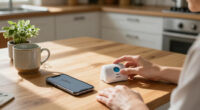
This guide helps you choose, practice, and schedule a few mental health self-care tools for everyday stress, low mood, or feeling overwhelmed. It is for beginners who want practical steps without needing special equipment or prior experience. Set aside 30-45 minutes to make your plan; most tools take 5-20 minutes to use.

Turn your wind-down time into listening time
- Thousands of audiobooks, podcasts and originals
- Listen on your phone, tablet or Echo — also offline
- Cancel anytime

Clever Fox Mental Health and Anxiety Journal, A5, Turquoise
- ✔ Brand: Clever Fox
- ✔ Paper size: A5
- ✔ Color: Turquoise

YeeBeny 4-7-8 Guided Breathing Lamp
- ✔ Brand: YeeBeny
- ✔ Breathing pattern: 4 seconds inhale, 7 seconds hold, 8 seconds exhale
- ✔ Light colors: Green, blue, and yellow

Janlaugh Mental Health Awareness Journals and Pens, 100-Piece Set
- ✔ Brand: Janlaugh
- ✔ Set contents: 50 journals and 50 pens
- ✔ Journal size: 3.15 × 4.92 in
Self-care can support well-being, but it is not a substitute for professional care when symptoms are severe, persistent, or interfere with daily life. You can start with one tool and adjust your plan as you learn what helps.
Difficulty: Beginner | Time: 30-45 minutes to set up; 5-20 minutes per use
What You’ll Need
Tools & Materials:
- A notebook, notes app, or calendar
- A quiet or reasonably comfortable place
- Optional: headphones, water, or a timer
Knowledge:
- No prior mental health training is needed
- A basic sense of what feels stressful or grounding for you
Choose a time when you are not driving or doing another task that needs your full attention. If focusing inward feels uncomfortable, choose an outward activity such as walking, listening to music, or contacting someone you trust. If you may hurt yourself or someone else, seek urgent local emergency or crisis support now rather than relying on self-care tools.
Clever Fox Mental Health and Anxiety Journal, A5, Turquoise
For a personal self-care routine built around understanding thoughts and emotions, the Clever Fox journal has the clearest purpose in this group. Its guided CBT prompts are described as helping users identify anxiety triggers and emotions, reframe negative thoughts, and develop coping strategies. That range gives it a more reflective role than the YeeBeny lamp, which cues a single breathing exercise, and more individual depth than Janlaugh’s short, affirmation-led journals.The A5 format is a practical middle ground for a journal intended to be used at home or carried along: it offers more room than Janlaugh’s pocket-sized booklets while remaining smaller than a full-size notebook. A 120 GSM paper weight, hardcover, elastic closure, and pen loop all support a more organized writing routine. Stickers and a user guide are included, though the listing does not explain how extensive the guide is or specify the binding type.This is our top pick for buyers who want prompts to shape their reflection rather than a blank page. That structure can help make journaling feel more approachable, but it still asks for time, attention, and a willingness to write about difficult feelings. It is not a quick breathing cue like the lamp, and it is not designed to supply a set of journals to a group. The product description lists only one section, so we should not assume a specific duration or a larger section-by-section program.
Pros:
- CBT prompts cover triggers, emotions, reframing, and coping strategies.
- A5 size offers more writing room than the Janlaugh pocket journals.
- 120 GSM paper and a hardcover support a more substantial journaling format.
- Pen loop, elastic closure, stickers, and a user guide are included.
Cons:
- The guided format still requires time and willingness to write regularly.
- Only one section is listed, and the binding type is unspecified.
- Less suited to quick breathing practice or sharing across a group.
Best for: Individuals who want guided prompts for noticing anxiety triggers, exploring emotions, and practicing cognitive reframing in a personal journal.
Not ideal for: People who prefer a hands-free, brief breathing cue, dislike writing, or need multiple journals for a class or group.
Bottom line: We rank Clever Fox first for its broad, structured approach to individual reflection, provided journaling is a format you will use.
“We rank Clever Fox first for its broad, structured approach to individual reflection, provided journaling is a format you will use.”
YeeBeny 4-7-8 Guided Breathing Lamp
The YeeBeny lamp suits a different kind of self-care moment: instead of asking us to write or analyze thoughts, it gives us a light-based cue for a defined breathing rhythm. The sequence is four seconds inhaling, seven seconds holding, and eight seconds exhaling, with green, blue, and yellow LEDs changing as guidance. Compared with the Clever Fox journal, it takes less written effort and offers a more immediate activity, but it addresses breathing rather than the broader reflection and coping themes in the journal.Its compact tabletop design can fit on a bedside table or desk, making it easy to keep near a place where we might pause for a short practice. The silicone shade and three-color cycle make the guidance visible without needing to consult a written prompt. Its role is deliberately focused: this is not a journal, a general-purpose lamp, or a customizable library of exercises based on the listed details. Buyers should be comfortable with the 4-7-8 pattern as the one provided.Practical constraints matter here. The lamp is intended for indoor use and is not water resistant, so it should stay away from wet areas. It also requires a long press to switch on or off, which may feel less intuitive than a simple tap. Unlike the two journals, it does not create a written record or invite users to identify triggers. We place it second because it offers a clear, low-writing barrier to a specific self-care practice, while the Clever Fox journal supports a wider range of reflection.
Pros:
- Visual color changes guide the listed 4-7-8 breathing sequence.
- Compact tabletop format fits indoor spaces such as a desk or bedside table.
- Soft silicone shade provides a tactile material contrast to the plastic base.
- Requires less writing effort than either journal option.
Cons:
- The described guidance is limited to one breathing pattern.
- Not water resistant, so placement near sinks or other wet areas is unsuitable.
- A long press is required to turn the lamp on or off.
Best for: People who want a compact visual cue to follow a 4-7-8 breathing exercise at a desk or bedside table.
Not ideal for: Buyers seeking journaling prompts, multiple breathing patterns, an outdoor or water-safe device, or a light that works as general room lighting.
Bottom line: We recommend the YeeBeny when a visible breathing rhythm is the habit you want to support, rather than a tool for written reflection.
“We recommend the YeeBeny when a visible breathing rhythm is the habit you want to support, rather than a tool for written reflection.”
Janlaugh Mental Health Awareness Journals and Pens, 100-Piece Set
Janlaugh’s 100-piece set is the practical group option in this comparison: it includes 50 pocket-sized journals and 50 black-ink plastic pens. That makes it easier to hand each participant a small writing tool for a classroom, counseling activity, team gathering, or appreciation gift. Clever Fox is better equipped for ongoing personal reflection, and the YeeBeny lamp serves an individual breathing practice; Janlaugh instead prioritizes making a simple journaling activity available to many people.Each journal measures 3.15 by 4.92 inches and has 32 lined pages, with positive affirmations and growth mindset messages. Those features can provide a starting point when we want a brief written check-in or a prompt to discuss together. The compact size is easy to carry in a bag or keep at a desk, but it brings an obvious compromise: there is limited room for longer entries. Its lined-page format and affirmations do not offer the same described CBT structure as Clever Fox, so buyers should choose it for accessibility and distribution rather than depth.The cardboard covers and plastic pens also position the set as a straightforward shared supply rather than a keepsake journal with the hardcover feel of Clever Fox. That tradeoff may make sense for a group where the goal is to put a small activity in many hands. It is less compelling for one person who wants a durable-feeling, guided tool or a visual breathing prompt. We rank it third for individual mental health self-care, while recognizing that its bulk format gives it a distinct advantage for facilitators who need matching materials for a group.
Pros:
- Includes 50 journals and 50 pens for distributing across a group.
- Affirmations and growth mindset messages offer simple writing prompts.
- Pocket-sized journals fit in backpacks, purses, and desk drawers.
- Each journal has 32 lined pages for brief notes or check-ins.
Cons:
- The small format limits space for longer reflection.
- Cardboard covers are less substantial than the Clever Fox hardcover.
- Plastic pens and affirmations provide a simpler experience than guided CBT prompts.
Best for: Teachers, counselors, team organizers, or group facilitators who want compact journals and pens for a shared writing activity.
Not ideal for: Individual users who want substantial writing space, guided CBT prompts, a durable hardcover format, or a breathing aid.
Bottom line: We choose Janlaugh for shared, low-barrier writing activities, while individual journalers will get more guidance and space from Clever Fox.
“We choose Janlaugh for shared, low-barrier writing activities, while individual journalers will get more guidance and space from Clever Fox.”
As an Amazon Associate we earn from qualifying purchases.
Before You Start
Think of self-care as a set of options, not a test you have to pass. Your needs can change from day to day. Pick tools that are accessible, safe, and suited to your circumstances; you do not need to use every tool in this guide. If an activity increases distress, stop it and try a gentler option or reach out for support.
Write down a simple starting point: what you would like more of, such as calm, energy, connection, or structure. Avoid judging yourself or trying to diagnose a condition. This note helps you choose tools based on what you need.
Step-by-Step Instructions
Step 1: Name what you need today
Take two minutes to pause and describe what is happening in plain words. Write a short phrase such as “tense after work,” “low energy,” or “too many tasks.” Then choose one need: calming down, getting moving, feeling connected, or making the next task manageable. Keep the goal small and focused on the next few hours.
Tip: If naming feelings is difficult, note physical cues or circumstances instead, such as tight shoulders, poor sleep, or an upcoming deadline.
Check: You have one clear need to guide your choice, not a long list of problems to solve at once.
Step 2: Choose one tool to try
Select one activity that matches your need. To settle physical tension, try slow breathing with a comfortable pace or relax your shoulders and jaw. To lift low energy, step outside or take a short walk if it is safe. To feel connected, send a brief message to someone you trust. To reduce overwhelm, write down the next small task and what you need to begin it.
Choose an activity you can realistically do today. If breathing exercises feel uncomfortable, skip them and use movement, music, or a sensory activity instead.
Tip: Avoid choosing a tool because it is popular. The useful tool is one you can access and tolerate.
Check: You can describe the activity in one sentence and identify when you will try it.
Step 3: Set up a manageable space and time
Choose a short time window, such as five minutes, and a place where you can focus safely. Put your phone on silent if notifications interrupt you, or keep it nearby if you may need support. Gather only what the activity needs, such as shoes for a walk or a notebook for writing. Set a timer if it helps you start and stop without watching the clock.
Tip: Make the first attempt brief. You can extend the time later if the tool feels helpful.
Check: The activity has a specific start time, a place, and any materials ready.
Step 4: Practice the tool without demanding a result
Begin the activity and give it the planned amount of time. During a walk, notice your surroundings; while writing, list what is on your mind and one next action; when reaching out, send a simple message such as “Could we talk for a few minutes?” Let your attention wander and return gently. You do not need to feel calm or positive for the practice to count.
Tip: Stop if you feel unsafe or significantly more distressed. Switch to a familiar grounding activity, move to a safer place, or contact someone who can help.
Check: You completed the activity, or made a deliberate choice to stop because it did not feel right.
Step 5: Notice what changed
Afterward, take a minute to note how you feel compared with before. Use a simple scale from 0 to 10 for stress, energy, or connection, or write a few words. Record whether the activity was easy to start, tolerable while doing it, and worth trying again. Treat this as information, not a score of your effort.
Tip: A tool may be worthwhile even if your mood does not change immediately; completing a small caring action can still support your routine.
Check: You have one observation about the tool, including whether it felt helpful, neutral, or unhelpful.
Step 6: Make a small plan for next time
Choose one or two tools to keep available and write down a cue for using each. For example: “After lunch, walk for five minutes” or “When I notice racing thoughts, write the next task.” Include a backup option for days when your first choice is not possible. Put the plan somewhere easy to find, and review it after a week.
Tip: Keep the plan flexible. Missing a planned activity is a signal to adjust the cue or size of the task, not a reason to give up.
Check: Your plan names a tool, a realistic cue, and an alternative you can use if needed.
Common Mistakes to Avoid
- Trying to change everything at once. — Start with one tool and a short session. Add another only after you know the first is manageable.
- Expecting a self-care activity to fix difficult feelings immediately. — Measure success by whether you tried a suitable action and learned from it, not by requiring a particular mood.
- Using a tool that feels uncomfortable because you think you should. — Stop and choose another approach. Movement, sensory grounding, a practical task, or social contact may suit you better.
- Making a plan that depends on ideal conditions. — Choose a brief version and name a backup that works with your schedule, energy, and access.
Troubleshooting
Problem: You cannot get started because the activity feels like too much.
Solution: Reduce it to a first action that takes less than two minutes, such as putting on shoes, opening your notes app, or drafting a message without sending it yet.
Problem: The tool makes you feel more anxious or upset.
Solution: Stop the exercise. Shift attention to your surroundings, use a familiar activity that feels safer, or contact a trusted person. Seek professional guidance if this reaction keeps happening.
Problem: You do not notice any difference after trying it.
Solution: Record the result as neutral and try the tool again at another time, or test a different type of support. Some tools work better with repetition, while others may not suit you.
Problem: You keep forgetting the plan.
Solution: Link the activity to an existing routine, set a discreet reminder, or place the needed item where you will see it. Make the activity shorter if the reminder feels like pressure.
What Success Looks Like
Your self-care plan is working as a starting point when you have at least one tool you can access, a clear cue for trying it, and a way to tell whether it felt useful or tolerable. You may complete a session feeling calmer, more connected, or more able to take one next step; you may also simply learn that a tool was not a good fit. Both outcomes provide useful information. Seek professional support if distress persists, worsens, or disrupts sleep, work, relationships, or basic care.
Next Steps
Review your notes after a week. Keep the activities that felt accessible, adjust ones that were hard to start, and replace tools that increased distress. Consider adding regular basics such as sleep routines, meals, movement, and time with supportive people when they fit your situation. If you need more help, contact a licensed mental health professional or a primary care provider to discuss options. For immediate danger or thoughts of self-harm, contact emergency services or a local crisis line.
Frequently Asked Questions
How often should I use a self-care tool?
Use it when it fits your need and circumstances. Some people benefit from a brief routine, while others use a tool when stress rises. Start with a schedule you can manage and adjust it based on what you notice.
What if I do not know which tool will help?
Choose one low-effort option based on your immediate need, such as movement for low energy, a short written list for overwhelm, or contacting someone for connection. Try it briefly and record how it felt. You can test a different option next time.
Can self-care replace therapy or medication?
Self-care can complement professional treatment, but it does not replace care recommended by a qualified clinician. Do not stop prescribed medication without discussing it with the prescriber.
What should I do if self-care is not enough?
Talk with a licensed mental health professional or healthcare provider, especially if symptoms persist, worsen, or interfere with daily life. If you are in immediate danger or may harm yourself, contact local emergency services or a crisis line now.