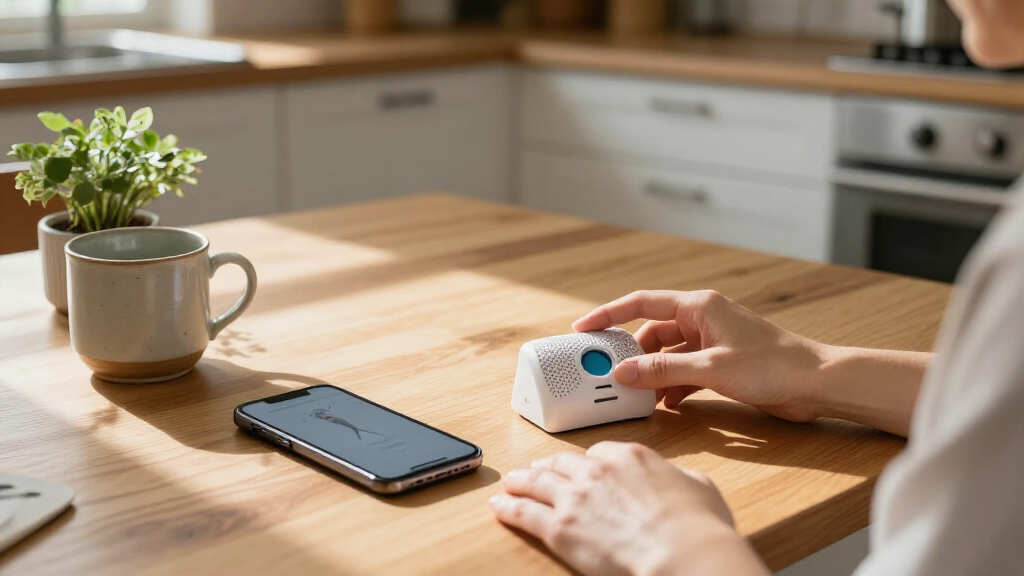

People comparing therapy apps with self-guided mental health tools are usually deciding how much support they need, how much they can spend, and whether they want a professional involved. Therapy apps may offer messaging or sessions with licensed clinicians, depending on the service; self-guided options include meditation apps, mood trackers, journals, workbooks, and structured courses. The central tradeoff is personal guidance versus lower cost and greater independence. A therapy app is the stronger fit for persistent or complicated concerns when professional care is accessible. Self-guided tools make more sense for building habits, learning coping skills, or trying a low-cost first step. Neither option replaces urgent or emergency care.

Turn your wind-down time into listening time
- Thousands of audiobooks, podcasts and originals
- Listen on your phone, tablet or Echo — also offline
- Cancel anytime

Clever Fox Mental Health and Anxiety Journal, A5, Turquoise
- ✔ Brand: Clever Fox
- ✔ Paper size: A5
- ✔ Color: Turquoise

Janlaugh Mental Health Awareness Journals and Pens, 100-Piece Set
- ✔ Brand: Janlaugh
- ✔ Set contents: 50 journals and 50 pens
- ✔ Journal size: 3.15 × 4.92 inches

64 Positive Affirmations in a Bottle for Self-Care
- ✔ Affirmation messages: More than 60 pre-written messages
- ✔ Format: Messages in capsules
- ✔ Included card: Self-care card with six practices
At a Glance
| Criteria | Therapy apps with licensed professional support | Self-guided mental health tools | Winner |
|---|---|---|---|
| Professional guidance | Licensed clinician may provide feedback, sessions, or messaging; details vary by service. | No clinician by default; guidance comes from recorded content, exercises, or prompts. | A |
| Cost | Usually subscription or session fees; ongoing care can add up. | Often free or lower-cost, though premium subscriptions and paid courses are common. | B |
| Personalization | A clinician can adapt support to the user’s goals and circumstances. | Users select content themselves; most tools do not adjust based on clinical judgment. | A |
| Flexibility and access | Remote scheduling and messaging can reduce travel, but availability and response times vary. | Typically available on demand and easy to pause or use in short sessions. | B |
| Privacy and data handling | Requires reviewing both the app’s data policy and the provider’s confidentiality practices. | Practices vary; mood logs and personal notes can be sensitive data stored by a provider. | Depends |
| Best use case | Ongoing, distressing, or complex concerns that benefit from professional input. | Everyday stress management, self-reflection, and practicing general coping skills. | Depends |
Clever Fox Mental Health and Anxiety Journal, A5, Turquoise
The Clever Fox Mental Health and Anxiety Journal takes the top spot because it gives self-care a clear direction. Its described CBT prompts focus on identifying triggers and emotions, developing coping strategies, and reframing negative thoughts. Compared with Janlaugh’s lined pocket notebooks, this journal is built around a more intentional reflection process; compared with the affirmation bottle, it invites us to work through our own thoughts rather than receive a prepared message.That added structure is useful when a blank page feels hard to approach, but it also asks for more time and willingness to write. The A5 format provides more room than Janlaugh’s 3.15-by-4.92-inch notebooks, though it is less pocketable. Its 120 GSM paper, eco-leather hardcover, pen loop, and elastic closure give it practical features for a regular writing routine. Stickers and a user guide are included, but the listed specifications identify only one section and leave the binding type unspecified. We should choose it for its guided approach, not assume the listing establishes the exact depth or sequence of every exercise.Among these three, this is the clearest choice for someone seeking a personal tool for recurring reflection. It is less convenient than the capsule bottle for a quick pause and less suited than Janlaugh to handing out across a group. Its prompts may encourage self-observation, but a journal cannot diagnose concerns or replace support from a qualified professional.
Pros:
- Guided CBT prompts address triggers, emotions, coping strategies, and reframing.
- A5 size offers more writing room than the Janlaugh pocket journals.
- 120 GSM paper and hardcover construction suit a regular journaling routine.
- Pen loop, elastic closure, stickers, and user guide are included.
Cons:
- Requires time and active writing, unlike the affirmation bottle’s quick-read format.
- Binding type and the details of the listed single section are unspecified.
Best for: People who want a personal, guided writing routine for noticing anxiety triggers, emotions, and coping strategies.
Not ideal for: People who want a tiny, instant prompt, dislike writing, or need a tool for distributing to a large group.
Bottom line: We recommend Clever Fox for the most structured personal reflection in this lineup, provided we are ready to make time for writing.
“We recommend Clever Fox for the most structured personal reflection in this lineup, provided we are ready to make time for writing.”
Janlaugh Mental Health Awareness Journals and Pens, 100-Piece Set
Janlaugh’s 100-piece set solves a different problem from Clever Fox: it helps us put a simple writing tool in front of many people. Fifty journals and fifty black-ink pens can be divided across a classroom, counseling group, team, or appreciation event. Each notebook has lined pages and positive affirmations or growth mindset messages, so it offers a starting point for brief reflection without asking every participant to bring their own supplies.The tradeoff is space. At 3.15 by 4.92 inches with 32 lined pages, each journal is compact and easy to tuck into a bag, but it cannot match the room or directed CBT prompts of Clever Fox. The affirmations provide a general nudge, yet the listed description does not present a tailored sequence for working through anxiety or coping strategies. Compared with the affirmation bottle, these notebooks let recipients add their own words, although the limited page area makes longer entries less practical.This set makes the most sense when accessibility and easy distribution matter more than an intensive individual practice. Cardboard covers keep the journals simple, and plastic pens are practical group supplies rather than standout personal accessories. We should skip it if we need one durable-feeling, guided journal for detailed reflection, or if we want a personal encouragement ritual that takes seconds and requires no writing. For organized group use, it is the most purpose-built choice among these options.
Pros:
- Fifty journals and fifty pens are ready to distribute across a group.
- Affirmations and growth mindset messages can help participants begin reflecting.
- Compact notebooks fit in backpacks, purses, or desks.
- Lined pages allow recipients to write their own brief notes.
Cons:
- The 3.15-by-4.92-inch format and 32 pages limit writing space.
- Cardboard covers and plastic pens are basic compared with a dedicated hardcover journal.
Best for: Teachers, counselors, team organizers, or hosts who want to offer compact journals and pens to a group.
Not ideal for: A reader seeking extensive writing space, a guided anxiety journal, or a single personal keepsake notebook.
Bottom line: We would choose Janlaugh for shared, low-pressure writing activities, not for deep or highly individualized self-reflection.
“We would choose Janlaugh for shared, low-pressure writing activities, not for deep or highly individualized self-reflection.”
64 Positive Affirmations in a Bottle for Self-Care
The affirmation bottle is the easiest of these three tools to pick up and use. It contains more than 60 pre-written messages in capsules, plus a card describing six self-care practices and a wallet-sized daily reminder. We can draw a message for a brief pause without opening a journal or deciding what to write. That makes it a more immediate option than Clever Fox and a more individual, single-moment ritual than distributing Janlaugh’s notebooks.Convenience is also its limit. Because the messages are pre-written, we cannot tailor them to a specific concern or use them to record what we are thinking. Unlike the Clever Fox journal, it does not describe prompts for exploring triggers, reframing thoughts, or developing coping strategies; unlike Janlaugh, it does not provide lined pages for our own notes. The included practice card adds some direction, but the product description does not specify the content of every capsule or a structured progression.This is a good fit when we want an accessible gift or a small prompt for occasional encouragement. It is less compelling as a primary self-care tool for someone who benefits from writing thoughts down or wants exercises with a defined reflection process. The capsules can invite a mindful moment, but a positive affirmation will not feel relevant to everyone in every circumstance. If flexibility and personal expression matter most, we should look to one of the journals instead.
Pros:
- More than 60 ready-to-read messages make it simple to begin a brief pause.
- Includes a card describing six self-care practices.
- Wallet-sized daily reminder is portable.
- Can be used daily or whenever a prompt feels useful.
Cons:
- Messages are pre-written and cannot be customized.
- Offers no described journaling space or CBT-style reflection structure.
Best for: People who want a low-effort encouragement prompt for occasional reflection, or a gift centered on self-care.
Not ideal for: People who want customizable prompts, substantial writing space, or a guided process for exploring anxiety.
Bottom line: We would pick the bottle for effortless encouragement, while choosing either journal when we want to put our own thoughts on the page.
“We would pick the bottle for effortless encouragement, while choosing either journal when we want to put our own thoughts on the page.”
As an Amazon Associate we earn from qualifying purchases.
Key Differences
The most consequential difference is who helps interpret what is happening. A clinician can ask follow-up questions, adjust a plan, and recommend other care when an approach is not helping. A self-guided tool can make evidence-informed exercises easier to practice, but it cannot assess a person’s full situation or notice risk unless a human is involved. That makes professional support a meaningful advantage for persistent symptoms, uncertainty about what to try, or difficulty maintaining progress alone.
Cost and control pull the other way. Self-guided tools are often cheaper and available whenever the user has time, making them practical for small, specific goals. Therapy apps may cost substantially more, but the added expense can buy personal feedback and accountability. Privacy is not an automatic win for either category: both can collect sensitive information, and policies differ. The right choice depends on the support needed, the service’s terms, and whether the user is comfortable sharing personal details through it.
Detailed Comparison
Professional guidance (Therapy apps with licensed professional support wins — major)
Therapy apps win by a major margin when they actually provide access to a licensed clinician. Users can discuss context, ask questions, and receive a response tailored to them. Self-guided tools provide general material and practice prompts; they cannot judge whether a method suits a particular situation. Check whether a service includes live sessions, asynchronous messaging, or only automated content, since the label “therapy app” does not guarantee the same level of care.
Cost (Self-guided mental health tools wins — major)
Self-guided tools win by a moderate to major margin for affordability. Many offer useful free features, while subscriptions or courses may still cost less than ongoing clinician support. Therapy apps can justify higher fees for people who will use professional guidance, but paying for access that is rarely used is poor value. Compare the actual session frequency, subscription terms, insurance coverage, and cancellation rules before deciding.
Personalization (Therapy apps with licensed professional support wins — moderate)
Therapy apps have a moderate advantage when a clinician is involved: support can respond to the user’s goals, history, and changing needs. A self-guided app may suggest a path based on selections or check-ins, but this is not the same as clinical judgment. For a simple goal such as establishing a short breathing routine, that distinction may matter little. It matters more when symptoms are persistent or several problems overlap.
Flexibility and access (Self-guided mental health tools wins — moderate)
Self-guided tools win by a moderate margin for immediate, on-demand use. A journal prompt or recorded exercise can fit into a short break without an appointment. Therapy apps remove travel and may offer messaging, but live appointments still require scheduling and clinician response times can vary. For someone who needs structure and follow-through, that scheduling can help; for someone with an unpredictable routine, self-paced access is easier.
Privacy and data handling (moderate difference)
There is no category-wide winner. Both options may involve sensitive notes, mood reports, or conversations, and privacy depends on the specific provider’s policies, security practices, and applicable professional obligations. Before signing up, check what is collected, how long it is retained, whether it is shared for advertising or analytics, and how account data can be deleted. Users who do not want to store personal reflections digitally can choose an offline journal or workbook.
Best use case (major difference)
The winner depends on the need. Self-guided tools are a sensible starting point for everyday stress, self-reflection, or practicing general skills when the user feels safe managing independently. Therapy apps are the stronger choice when distress is interfering with daily life, self-help has not been enough, or a person wants a qualified professional’s perspective. If there is immediate danger or risk of self-harm, neither app category is the right level of support; contact local emergency or crisis services.
Therapy apps with licensed professional support: Pros and Cons
Pros:
- Access to a licensed professional may provide tailored feedback and accountability.
- Can help users discuss context that a general exercise cannot account for.
- Remote sessions or messaging may be easier to access than some in-person options.
Cons:
- Usually costs more than self-guided resources, especially with frequent sessions.
- Availability, response times, clinician credentials, and service quality vary.
- Requires sharing personal information and checking how both the platform and provider handle it.
Self-guided mental health tools: Pros and Cons
Pros:
- Often free or relatively inexpensive, with tools available on demand.
- Supports independent practice through routines, prompts, and educational material.
- Easy to try, pause, or combine with other daily habits.
Cons:
- No clinician is there to interpret symptoms or tailor guidance by default.
- Can be difficult to stay consistent without accountability.
- May collect sensitive information, and automated suggestions are not professional care.
Who Should Choose What
Choose Therapy apps with licensed professional support if:
- You want to discuss personal circumstances with a licensed clinician rather than rely only on general exercises.
- Your distress is persistent, affects daily functioning, or has not improved with self-guided practice.
- You value accountability and can afford the service after reviewing what sessions or messaging it includes.
Choose Self-guided mental health tools if:
- Your goal is managing everyday stress or building a specific self-care habit.
- You prefer to work independently and want on-demand exercises or journaling prompts.
- Cost is a major constraint and you want to try structured self-help before paying for professional support.
Skip both if: You face immediate danger, may harm yourself or someone else, or need urgent medical support. Contact local emergency services or a crisis line; an app is not a substitute for urgent care.
Value for Money
Paying more for a therapy app is worthwhile when the service gives you meaningful access to a qualified clinician and you plan to use that support. The price buys conversation, feedback, and some accountability, not a guaranteed outcome. Check the provider’s credentials, what the fee includes, and whether you can afford continued care before subscribing. Self-guided tools are better value for people with modest, specific goals who can choose and practice exercises on their own. A free tool is not automatically good value if it does not meet the need, and a paid app is not better simply because it costs more.
Final Verdict
Choose a therapy app with licensed professional support if you want an expert’s input, need accountability, or have concerns that persist or interfere with daily life, provided the cost and service details work for you. Choose self-guided tools if you are addressing everyday stress, building a habit, or want an affordable way to practice coping skills independently. For most people, the deciding factor is whether general exercises are enough: if you need someone to understand your circumstances and respond to them, pay for clinician access; if you mainly need a convenient structure for self-care, start with a reputable self-guided tool. Seek urgent human help for immediate danger.
Frequently Asked Questions
Can a self-guided mental health app replace therapy?
It can help with general self-care and skill practice, but it does not provide a clinician’s assessment or individualized care. If symptoms persist, worsen, or disrupt daily life, consider speaking with a qualified professional.
Are therapy apps worth paying for?
They may be worth the cost if the plan includes a clinician you can actually reach and you will use that support. Compare credentials, session or messaging limits, total fees, and cancellation terms before paying.
Which option is better for anxiety?
For mild, situational stress, self-guided breathing, journaling, or educational tools may be a reasonable starting point. For ongoing anxiety, significant impairment, or uncertainty about what is happening, professional guidance through a suitable service is the stronger fit.
Are mental health apps private?
Privacy differs by provider and app. Read the data policy for collection, sharing, retention, deletion, and security practices before entering sensitive information; an offline journal is an option if you prefer not to store reflections online.