
TL;DR

Get self-care and calm essentials delivered free — and shop member deals
- Fast, free delivery on millions of items
- Access to Prime Big Deal Days deals on October 6–7
- Prime Video, Amazon Music and more included
Leaders at Trilogy Health Services and Signature HealthCARE described AI and predictive tools used for health alerts, fall prevention, resident monitoring and documentation. They reported positive results from some programs, including fewer falls and hospitalizations, but those figures come from operator statements and the source does not provide independent evaluations. Both leaders said adoption depends on helping staff and managing privacy and audit demands.
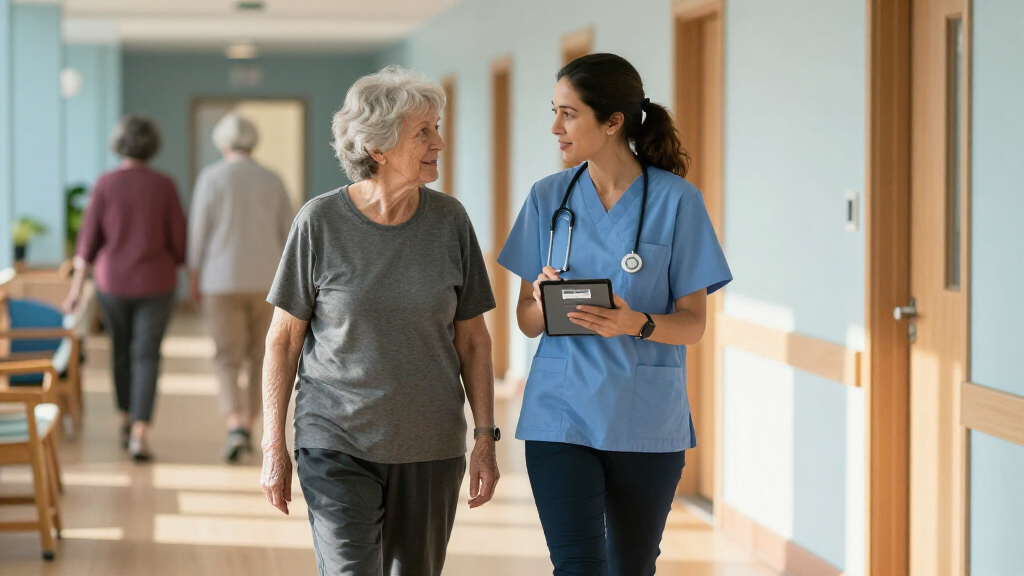
Executives from Trilogy Health Services and Signature HealthCARE described how their nursing-home organizations are using AI and predictive analytics for early health alerts, fall prevention and clinical documentation at the ReThink conference in Philadelphia this week. The operators said the tools can help staff identify risks and reduce administrative work, while warning that systems must fit caregivers’ workflows and protect resident information.
Trilogy Senior Vice President and Chief Nursing Officer Rhonda Dempsey said the company uses a chest-worn, 24-hour monitoring device for residents considered at higher risk of rehospitalization. The system tracks changes from a resident’s baseline and alerts a nurse when a temperature rise meets a specified threshold. Dempsey said staff then assess the resident and contact a practitioner. The program is currently used by about 300 residents, she said.
Dempsey reported that the monitoring device has helped reduce hospitalizations by 60%. The source report does not provide the study design, comparison period or other details behind that figure. Trilogy operates more than 140 senior living communities, according to the report.
Signature Chief Nursing Officer Barbara Revelette said the company introduced CareAI fall-prevention technology at four facilities and has expanded it to 20 buildings. The system detects resident movement and sends notifications to staff. Revelette said clinical teams recorded an 80% decrease in falls in buildings where the technology was implemented; the report does not specify the measurement period or comparison method.
Signature also uses a virtual-sitter program that combines live monitoring with ambient monitoring and AI features, Revelette said. A sitter can watch roughly eight to 10 residents, contact a resident or call facility staff when an alert signals that someone may be trying to get out of bed. The program is operated from Louisville, Kentucky, and can monitor residents in other states. Signature operates 69 locations in five states, according to the report.
Revelette said families have asked to use the system, including after a resident returns from a hospital. She described conference-call functions that can connect a resident, family member, sitter and doctor. Signature continues to add features, she said, and has not yet used all of the system’s capabilities.
AI Tools Must Fit Care Work
The examples show how nursing-home operators are applying AI to tasks tied to resident safety and clinical oversight, not only to back-office automation. Earlier alerts may give care teams more time to assess a resident, while movement notifications can prompt staff to respond when someone may be at risk of falling. Documentation tools can also help staff assemble records for audits.
But the potential gains depend on implementation. Dempsey said nurses need to see that a tool removes tasks or improves care; if it adds friction, staff may stop using it. Revelette described the virtual-sitter system as a way to monitor multiple residents remotely, but it still relies on a live person to respond and alert facility staff. The accounts do not establish that AI replaces bedside care.
There is also a privacy and compliance concern. Dempsey said staff may turn to unapproved tools if employers do not provide useful options, potentially creating HIPAA risks. She argued that working with technology partners and providing approved systems can help operators support staff while limiting exposure. The report offers the executives’ perspective, not an independent assessment of compliance or clinical outcomes.
AI fall prevention resident monitoring system
As an affiliate, we earn on qualifying purchases.
As an affiliate, we earn on qualifying purchases.
Two Operators, Different Applications
The comments came during a panel on clinical uses of AI at Skilled Nursing News’ ReThink conference in Philadelphia. The discussion focused on how nursing-home operators can use predictive analytics and monitoring in day-to-day care without adding complexity for frontline staff.
Trilogy’s described program centers on changes in residents’ health indicators, with alerts intended to prompt assessment before a condition worsens. Signature’s examples include movement detection, remote observation and documentation support. Revelette also said Signature uses technology to identify missing documentation and bring data into dashboards, which she said helps staff respond to auditors seeking different records.
Both executives said staffing and documentation demands shape how facilities adopt technology. Dempsey said Trilogy tracks its monitoring program weekly. She also said the company documents broadly to prepare for audits, even where she believes some material may not be explicitly required by regulation. These remarks describe the operators’ practices and views; they do not establish what documentation every facility must provide.
“When their temperature goes up two degrees above their baseline and sustains for about an hour, the nurse gets the alert, goes down and assesses the resident, and calls the practitioner.”
— Rhonda Dempsey, Trilogy Health Services senior vice president and chief nursing officer
How Results Were Measured
The report does not include independent evaluations or enough methodological detail to verify the operators’ reported 60% reduction in hospitalizations and 80% decrease in falls. It does not identify the periods used, the comparison groups, how outcomes were counted or whether other changes contributed. The figures should be understood as results reported by the executives, not as independently confirmed effects.
It is also unclear how the monitoring tools perform across different resident needs and facility settings, what safeguards govern access to collected information, and how alerts are checked before staff act on them. The report gives no detailed cost or staffing analysis. Signature is still adding features, and Revelette said some system capabilities remain under development or have not yet been used.
Expansion And Evaluation Ahead
Signature has expanded its fall-prevention technology from four facilities to 20 and is continuing to develop its virtual-sitter program, according to Revelette. She did not provide a timetable for further expansion or identify which additional features will be introduced next. Trilogy said its monitoring system is used by about 300 residents and is tracked weekly; the report does not describe a planned change in its scale.
The next useful updates would include more detail on how both operators measure falls and hospitalizations, whether results hold over time, and how technology affects staff workload and resident privacy. The executives also pointed to ongoing work on documentation tools and audit preparation. No specific product launch, regulatory decision or evaluation date was announced in the source report.
Key Questions
What AI applications did Trilogy describe?
Trilogy uses a 24-hour chest-worn monitoring device for some residents considered at higher risk of rehospitalization. Dempsey said it alerts nurses to certain changes from a resident’s baseline so they can assess the person and contact a practitioner.
How is Signature using AI to address falls?
Signature uses CareAI movement detection to notify staff when residents move in ways that may require attention. Revelette said the technology began in four facilities and has expanded to 20 buildings.
Are the reported reductions independently verified?
The source report attributes the figures to the company executives. It provides no independent study or detailed methodology for the reported 60% reduction in hospitalizations or 80% decrease in falls.
Does Signature’s virtual-sitter program use only AI?
No. Revelette described it as a combination of AI, ambient monitoring and live sitters. A sitter can contact residents and alert facility staff when a resident may be trying to get out of bed.
What concerns did the executives raise about adoption?
Dempsey said technology must make caregivers’ work easier or improve care, or staff may stop using it. She also warned that staff using unapproved tools could create privacy and HIPAA concerns for a facility.
Source: rss
Fall Picks
fall essentials
As an affiliate, we earn on qualifying purchases.