
Your personality traits evolve over your lifespan through a continuous interplay of genetics, cultural influences, and life experiences. As you grow, innate tendencies shape your responses, but your environment and social interactions can reinforce or modify these traits. Challenges and new experiences often lead to personal growth, gradually shifting traits like neuroticism or openness. If you want to understand how these factors interact to shape your unique personality journey, there’s more to discover ahead.
Key Takeaways
- Personality traits are initially rooted in genetics but can evolve through environmental influences and life experiences.
- Cultural norms shape how innate traits are expressed, leading to variations across different societies and ages.
- Ongoing interactions with diverse environments can modify traits like openness and extraversion over time.
- Personal challenges and social roles activate or suppress certain traits, contributing to personality development.
- Recognizing personality as a dynamic process highlights its continuous evolution throughout the lifespan.
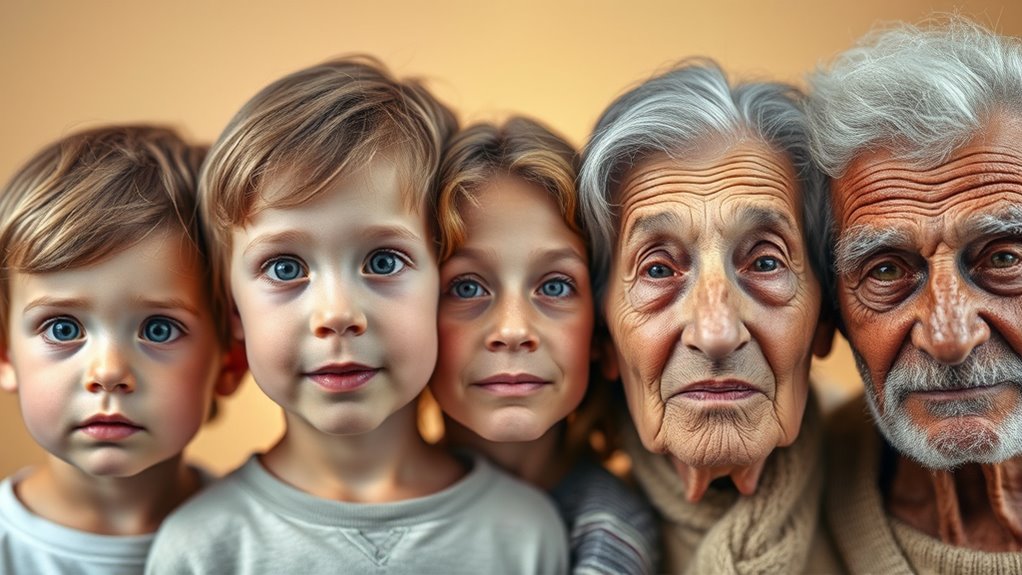
Have you ever wondered how personality traits develop and change over time? It’s a fascinating question, one that researchers have explored through various lenses, including biology and culture. Your personality isn’t fixed from the moment you’re born; instead, it evolves, shaped by a complex interplay of genetic influences and cultural impacts. Genetics play a significant role in determining your baseline traits. For example, your temperament, levels of extraversion or neuroticism, and tendencies toward openness or conscientiousness often have roots in your DNA. These genetic influences provide a foundation, giving you certain predispositions that influence how you respond to your environment and experiences. Regularly engaging in personal development activities can also influence how these traits manifest over time.
Personality traits are shaped by both genetics and cultural influences, evolving throughout your life.
However, your personality is not solely dictated by genes. Cultural impacts are equally influential, especially as you grow and interact with the world around you. From early childhood, the norms, values, and expectations of your culture help shape how you express your innate traits. For instance, if you come from a culture that emphasizes collectivism, you might develop a greater focus on social harmony and community, which could influence how your extraversion or agreeableness manifest over time. Conversely, in individualistic cultures, you might be encouraged to pursue personal goals and self-expression, impacting your openness and independence. These cultural influences can either reinforce or modify your genetic predispositions, leading to a dynamic evolution of your personality traits as you navigate different social contexts.
As you age, both genetic and cultural factors continue to interact, causing your personality to shift in subtle and sometimes profound ways. Life experiences, social roles, and personal challenges can activate or suppress certain traits, leading to growth or change. For example, someone naturally high in neuroticism may learn coping mechanisms over time, reducing their emotional reactivity. Similarly, cultural shifts or exposure to diverse environments may broaden your perspectives, increasing traits like openness. Your environment acts as a catalyst, either amplifying your genetic tendencies or challenging them to adapt.
Understanding this evolution helps you see personality as a fluid aspect of who you are, shaped by both inherited tendencies and the cultural landscape you move through. It’s not just about where you come from but also about how your experiences and surroundings influence your ongoing development. Recognizing the roles of genetic influences and cultural impacts allows you to appreciate the complexity behind your personality and how it continues to evolve throughout your lifespan. This ongoing process underscores that you are not a static entity but a dynamic individual, constantly growing and adapting.
Frequently Asked Questions
How Do Cultural Differences Influence Personality Development Over a Lifetime?
Cultural differences shape your personality development by influencing your cross-cultural identity and how you interpret societal norms. You adapt your traits based on cultural expectations, which can lead to variations in openness, extraversion, or agreeableness over time. As you navigate different environments, these influences help you develop a unique blend of traits, reflecting the values and norms of each culture you encounter throughout your life.
Can Significant Life Events Permanently Alter Personality Traits?
When it comes to life-altering events, they can leave a lasting mark on your personality, but they rarely change you entirely. While significant life events can challenge your personality resilience, they often lead to temporary shifts rather than permanent changes. Think of it as a storm passing through; you might be affected, but your core personality usually remains intact. You have the strength to adapt and grow from these experiences.
How Does Genetics Interact With Environment in Shaping Personality?
You might notice that genetics and environment interact through gene-environment interactions, influencing your personality. Your genes provide a foundation, but your environment can activate or suppress certain traits, showing personality plasticity. This dynamic interplay means your personality isn’t fixed; it adapts based on experiences and circumstances. So, both your genetic makeup and your environment shape who you are, working together to create your unique personality over time.
Are Personality Traits More Malleable During Early Childhood or Adulthood?
Personality traits are more like clay in early childhood, easily molded, than in adulthood. During early childhood, your personality development is highly malleable, shaped rapidly by experiences and environment. As you grow older, traits become more like a sturdy oak—less flexible but still capable of change. So, if you want to influence personality, early childhood is the prime time to nurture positive traits and habits.
What Role Does Neuroplasticity Play in Personality Change?
Neuroplasticity mechanisms play a vital role in personality change by allowing your brain to adapt to new experiences and environments. This flexibility facilitates personality adaptation, especially during key life shifts or after significant events. When your brain rewires itself through neuroplasticity, you can develop new traits or modify existing ones, making personality change possible throughout your lifespan. This dynamic process highlights how your brain’s adaptability influences your personal growth.
Conclusion
As you go through life, your personality traits evolve, showing remarkable consistency yet adapting to new experiences. Did you know that research indicates about 60% of personality changes occur in early adulthood? This highlights how your traits can develop markedly over time. Embrace this natural evolution, knowing you’re continuously growing and shaping who you are. Your journey is uniquely yours, and understanding this change can help you navigate life’s shifts with confidence and insight.