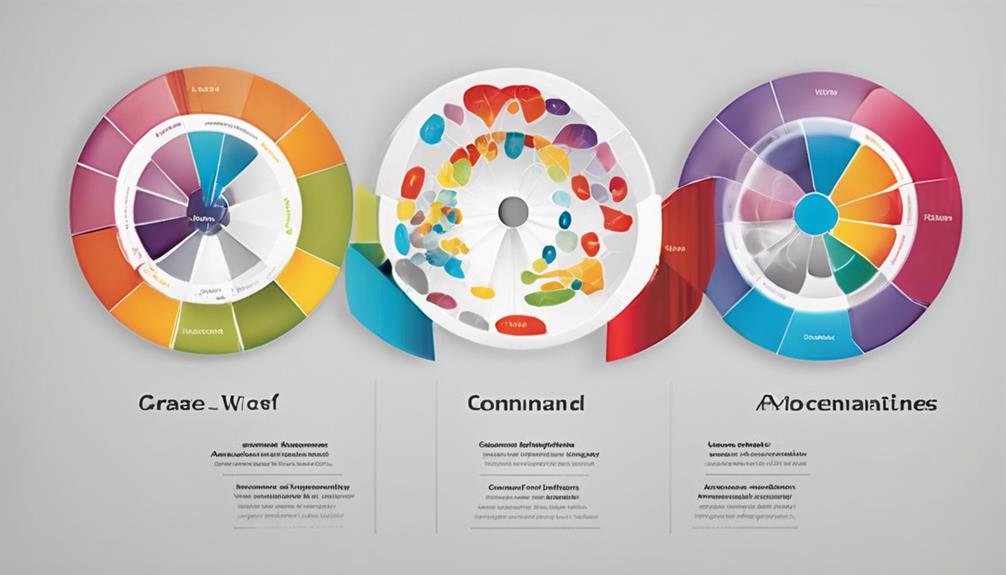

To interpret DISC profiles and charts, focus on where the individual falls on the assertiveness and responsiveness axes. High dominance means results-driven and direct, while high steadiness indicates patience and supportiveness. Influence shows sociability and enthusiasm, and conscientiousness reflects accuracy and detail-orientation. Understanding these patterns helps you tailor your communication and build stronger connections. If you want to access deeper insights and improve your interactions, exploring more about each profile will give you the confidence you need.
Key Takeaways
- Understand the axes: assertiveness (horizontal) and responsiveness (vertical) to identify behavioral tendencies.
- Recognize high Dominance traits as results-driven and direct; high Steadiness as stable and supportive.
- Use visual cues to tailor communication, such as positive reinforcement for Influence types or structured info for Conscientiousness.
- Observe behavioral patterns to adapt strategies in leadership, negotiation, or conflict resolution effectively.
- Interpret charts to enhance relationships by aligning interactions with individual behavioral preferences.

Understanding DISC profiles and charts can transform how you communicate and collaborate with others. When you grasp the fundamentals of behavior assessment embedded in DISC, you gain insights into why people act the way they do. These profiles classify behaviors into four main types—Dominance, Influence, Steadiness, and Conscientiousness—each revealing distinct preferences that influence interactions. By interpreting DISC charts accurately, you can tailor your communication strategies to better suit each individual’s style, making your conversations more effective and less prone to misunderstandings.
When you look at a DISC chart, you see a visual representation of a person’s behavioral tendencies. The chart highlights where someone falls on the axes of assertiveness and responsiveness, which helps you understand their motivations and communication preferences. For example, if someone scores high in Dominance, they tend to be direct, results-oriented, and confident. Recognizing this allows you to approach them with clear, concise messages focused on outcomes. Conversely, if someone scores high in Steadiness, they prefer stability, patience, and harmonious relationships. Your approach with them should be calm, supportive, and collaborative to foster trust.
Interpreting DISC profiles involves more than just identifying dominant traits; it’s about understanding how these traits influence behavior during interactions. For instance, a person with high Influence values social recognition and enthusiasm. Your communication strategies with them should include positive reinforcement and engaging storytelling to keep their interest. Meanwhile, someone with high Conscientiousness appreciates accuracy, structure, and detail. When talking with them, providing well-organized information and logical reasoning will resonate more effectively. Additionally, understanding the key components of sound design can help you craft more impactful audio experiences that complement behavioral insights.
As you use DISC charts for behavior assessment, you’ll notice patterns that explain why certain approaches work better than others. This understanding helps you adapt your style to connect better, whether you’re leading a team, negotiating, or resolving conflicts. By aligning your communication strategies with an individual’s DISC profile, you demonstrate empathy and increase your chances of success. You also foster more meaningful relationships, because people feel understood and valued when you speak their language.
In essence, mastering how to interpret DISC profiles and charts empowers you to communicate with confidence and clarity. It’s about recognizing behavioral cues and adjusting your approach accordingly. This skill not only enhances your professional interactions but also enriches your personal relationships. By continuously refining your understanding of behavior assessment through DISC, you build stronger, more productive connections, ultimately making teamwork smoother and your influence more impactful.
Frequently Asked Questions
How Can DISC Profiles Improve Team Communication?
You can improve team communication by using behavioral insights from DISC profiles to understand each member’s unique style. Recognizing different tendencies helps you tailor your messages, avoid misunderstandings, and foster better collaboration. This enhances team dynamics by promoting empathy and respect. When everyone’s aware of each other’s strengths and challenges, communication flows more smoothly, leading to a more cohesive, productive team where everyone feels understood and valued.
What Are Common Misconceptions About DISC Personality Types?
You might think DISC personality types are rigid boxes, but that’s a huge personality myth. Stereotype dangers often lead you to oversimplify or label people unfairly, ignoring their complexity. Common misconceptions include believing personalities never change or that they’re fixed categories. In reality, traits are fluid, and understanding these myths helps you see people more accurately, fostering better communication and collaboration without falling into stereotypes that limit growth and connection.
How Should I Interpret Mixed or Ambiguous DISC Results?
When you encounter mixed or ambiguous DISC results, focus on nuanced interpretations that recognize conflicting traits. Don’t see them as contradictions but as a reflection of your complexity. Consider how different situations might bring out different traits, and avoid oversimplifications. Use the results as a starting point to explore your unique behavioral patterns, understanding that your personality isn’t confined to a single profile but a blend of various tendencies.
Can DISC Profiles Predict Job Performance Accurately?
Yes, DISC profiles can help predict job performance by providing insights into your behavior prediction and personality assessment. They highlight your natural tendencies and how you might handle work situations. However, remember they’re just one tool; they offer valuable guidance but shouldn’t be the sole basis for hiring decisions. Use DISC profiles alongside other assessments to get an all-encompassing view of a candidate’s potential and fit for the role.
How Often Should DISC Assessments Be Updated or Retaken?
You should retake DISC assessments every 12 to 24 months to make certain assessment frequency remains relevant. Regular retake intervals help you track behavioral changes, adapt management strategies, and improve team dynamics. If your role or responsibilities shift considerably, consider updating more frequently. Consistent assessment updates allow you to maintain accurate insights into personality traits, fostering better communication and performance across your team.
Conclusion
Understanding your DISC profile is like opening a secret code to your personality’s rhythm. As you interpret charts, you’re tuning into a unique symphony of strengths and tendencies, each note guiding you toward better self-awareness. Embrace the dance of insights, letting them lead you to growth and harmony. With each discovery, you’re composing a more authentic, confident version of yourself—your personal melody waiting to be played in perfect harmony.