
To enhance your influence in DISC as a high I style, focus on building genuine social engagement through authentic connections and rapport. Your natural friendliness and enthusiasm help you attract others, so use your energy to foster trust and mutual respect. Active listening and remembering small details deepen relationships, while managing conflicts with empathy keeps interactions positive. Keep exploring ways to boost your social skills further, and you’ll discover even more strategies to strengthen your influence effectively.
Key Takeaways
- Social engagement boosts influence by fostering authentic connections and rapport with others.
- High I personalities thrive on energetic interactions, which enhance their persuasive communication.
- Building genuine relationships through active listening and shared interests strengthens influence.
- Managing conflicts with empathy and tact maintains trust and reinforces social influence.
- Creating a positive, inviting environment encourages collaboration and expands influence.
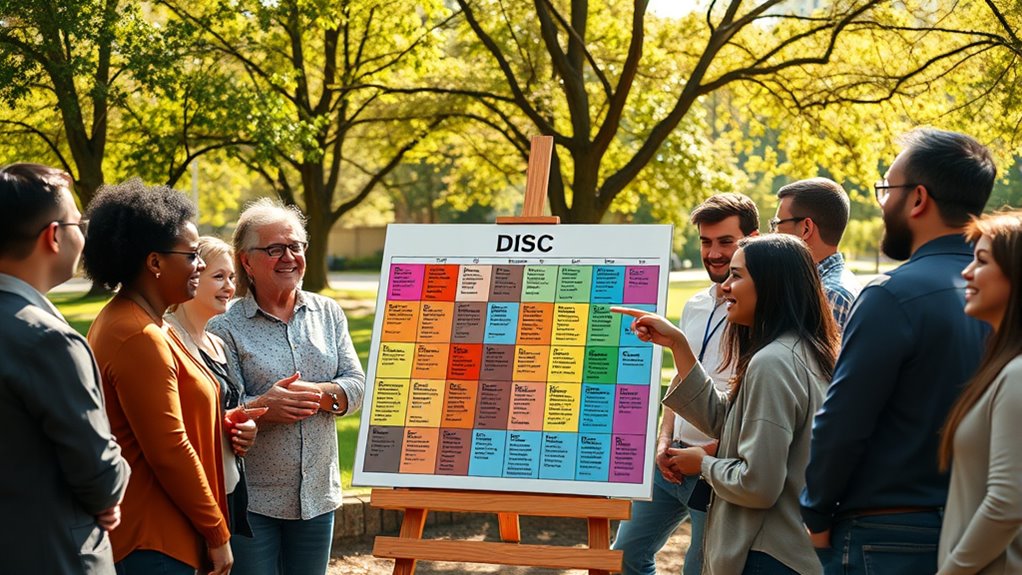
Understanding social engagement within the DISC personality framework helps you improve communication and build stronger relationships. When you recognize how different personality styles engage socially, you can tailor your approach to connect more effectively with others. For those with a high influence (I) style, social engagement is essential, as they thrive on interaction, enthusiasm, and connection. Your ability to build rapport quickly and authentically makes conversations smoother and relationships more meaningful. You naturally enjoy sharing ideas, celebrating successes, and motivating others, but it’s also important to balance this energy with active listening. By paying attention to cues from others, you show genuine interest, which deepens trust and rapport. When you consciously foster a warm, inviting atmosphere, people feel comfortable opening up, making your interactions more productive and enjoyable.
Managing conflicts is another critical aspect of social engagement. It’s inevitable that disagreements or misunderstandings will arise, especially when personalities clash or perspectives differ. Your challenge is to handle these situations with tact and empathy, preventing conflicts from escalating. As someone who values social harmony, you can use your natural enthusiasm to diffuse tension by focusing on common goals rather than differences. Recognizing when someone feels overlooked or misunderstood allows you to address concerns promptly, turning potential conflicts into opportunities for growth. Staying calm and composed helps you listen actively, validate others’ feelings, and find solutions that satisfy everyone involved. This approach not only preserves relationships but often strengthens them, as people appreciate your ability to handle disagreements constructively.
Building rapport is at the core of your social engagement style. Your friendly, outgoing nature naturally attracts people, but it’s important to ensure that your interactions are genuine and not superficial. Take the time to learn about others’ interests and values, which demonstrates sincerity and encourages mutual respect. When you remember small details about someone’s life or preferences, it reinforces your connection and makes your conversations more meaningful. This genuine interest motivates others to open up and trust you, laying the foundation for long-lasting relationships. Additionally, your energetic approach can inspire those around you, creating a positive, dynamic environment where collaboration flourishes. Recognizing the importance of essential oils for social health can also help you enhance your mood and energy, further improving your social engagement.
Ultimately, understanding your DISC influence style empowers you to navigate social situations more effectively. By consciously building rapport and managing conflicts with empathy and clarity, you foster stronger connections that benefit both your personal and professional life. Your ability to engage socially in a way that feels authentic and respectful makes you a natural leader and collaborator, capable of turning interactions into opportunities for growth and success.
Frequently Asked Questions
How Does Social Engagement Vary Across Different DISC Profiles?
You’ll notice social engagement varies across DISC profiles because each type has unique preferences. For example, D profiles prefer direct, no-nonsense interactions, while I types thrive on lively, engaging conversations. To boost engagement, tailor your strategies to each profile’s DISC compatibility—use energetic approaches for I types and concise communication for D profiles. By understanding these differences, you’ll foster better connections and improve overall influence.
Can Social Engagement Influence DISC Personality Scores?
Social engagement can indeed influence your DISC personality scores, especially if you actively develop social skills and emotional intelligence. While some may think personality is fixed, engaging in diverse social interactions helps you adapt behaviors that reflect higher Influence or Steadiness traits. This ongoing social practice can subtly shift your scores over time, highlighting your ability to connect and communicate effectively, ultimately shaping your DISC profile more dynamically.
What Are Common Challenges in Increasing Social Engagement for Each DISC Type?
You might face challenges increasing social engagement with each DISC type due to group dynamics and emotional expression. For Dominance types, control and assertiveness can hinder openness. For Influence types, maintaining focus amid social distractions is tough. Steadiness individuals struggle with change and emotional expression, making new interactions uncomfortable. Conscientious types may hesitate to share feelings, affecting group cohesion. Understanding these nuances helps tailor engagement strategies effectively.
How Can Leaders Improve Social Engagement Within Diverse DISC Profiles?
To improve social engagement across diverse DISC profiles, you should tailor your team building and communication strategies. For D types, challenge them with goals; for I types, encourage social interactions; for S types, create supportive environments; and for C types, provide clear, detailed info. By understanding their unique needs, you foster stronger connections, boost collaboration, and create an inclusive atmosphere where everyone feels valued and engaged.
Are There Specific Activities That Enhance Social Engagement for Each DISC Style?
You can enhance social engagement for each DISC style through targeted team building strategies and empathy development. For D styles, challenge them with leadership activities; for I styles, encourage social sharing and recognition. S types benefit from collaborative projects that foster trust, while C styles respond well to structured, detail-oriented interactions. Developing empathy helps you understand each style’s needs, enabling you to tailor activities that boost engagement and strengthen team cohesion effectively.
Conclusion
You might think social engagement in DISC is just about connecting with others, but it’s really about understanding yourself. While engaging socially can boost your confidence, it also reveals your vulnerabilities. The more you open up, the deeper your self-awareness grows. So, don’t just seek approval—use those interactions to discover who you truly are. In this dance of connection and self-discovery, you find strength not in hiding, but in revealing your authentic self.