
Job Interview
5 Medical Assistant Questions That’ll Make Or Break You!
Crucial interview questions for medical assistants can determine your career path; discover what they are and how to answer them effectively.


As a medical assistant, you'll face five key questions that can define your future. First, be ready to discuss your professional background, including your experience and training. Next, handling difficult patients will showcase your empathy and communication skills. Highlight strengths relevant to the role, and don't shy away from admitting your weaknesses. Experience with technology, especially EHR systems, is essential too. Finally, prepare for conflict resolution questions that test your ability to maintain calm and resolve issues. Each of these areas is critical, and there's so much more to explore about succeeding in interviews ahead.
Key Takeaways
- Demonstrate your hands-on experience in patient care and specific medical assistant tasks during interviews to showcase your qualifications.
- Prepare to discuss how you handle difficult patients, highlighting empathy and active listening as key strategies.
- Showcase your strengths, like strong communication skills and proficiency in phlebotomy, while being honest about areas for improvement.
- Familiarize yourself with EHR and telehealth technologies, as technological proficiency is crucial in modern healthcare settings.
- Practice conflict resolution techniques, emphasizing your ability to maintain composure and foster positive discussions among colleagues.
Tell Me About Yourself

When you're asked to "Tell me about yourself," think of it as your chance to showcase your journey in the medical field. Start by highlighting your professional background as a medical assistant. Mention your training and any certifications that underscore your qualifications. Talk about the hands-on experience you've gained through internships or previous roles, emphasizing key responsibilities that align with the medical assistant position.
Don't forget to mention your technical capabilities, such as proficiency in EHR software and skills in phlebotomy. These details not only demonstrate your competence but also your readiness to contribute effectively to the healthcare team. Share your motivation for pursuing this career, focusing on your passion for patient care and how it drives you to excel in your role.
Conclude by outlining your career goals. Express your enthusiasm for professional growth within the medical assisting field and your commitment to making a positive impact in patient care settings. By presenting yourself clearly and confidently, you can create a compelling narrative that resonates with your interviewers, showcasing not just your skills, but also your dedication to the field.
Handling Difficult Patients

Dealing with difficult patients can be one of the most challenging aspects of being a medical assistant. However, employing empathy and active listening can greatly de-escalate tense situations. When you focus on clear communication about procedures, you can prevent misunderstandings and reduce frustration. Recognizing patterns of emotional coldness can also help in managing interactions with patients who may be feeling neglected or frustrated.
Here's a quick reference table to help you remember key strategies:
| Strategy | Description |
|---|---|
| Empathy | Show understanding of the patient's feelings. |
| Active Listening | Pay attention and validate their concerns. |
| Distraction Techniques | Engage in light conversation to ease anxiety. |
| Stress Management | Use techniques like deep breathing to stay calm. |
| Document Incidents | Keep accurate records to guarantee HIPAA compliance. |
Strengths and Weaknesses

Handling difficult patients requires not only effective communication but also an understanding of your own strengths and weaknesses. In the medical assistant role, it's essential to identify strengths that align with job requirements. Focus on your strong communication skills and solid work ethic, as these traits enhance patient care and teamwork. If phlebotomy is one of your strengths, emphasize that during your interview—it's a significant skill in patient interactions.
When discussing weaknesses, practice self-awareness. Acknowledge areas needing improvement, such as administrative tasks, but don't highlight weaknesses critical to the job, like a lack of medical terminology knowledge. Instead, show your commitment to personal growth by mentioning steps you're taking to improve, like enrolling in courses or seeking mentorship. This illustrates that you're proactive and dedicated to enhancing your skills.
Experience With Technology

Maneuvering the technology landscape in healthcare is essential for a medical assistant. Your familiarity with Electronic Health Records (EHR) software is important, as it streamlines patient information management and enhances workflow efficiency. Employers often look for candidates with proficiency in medical billing and coding software, especially programs like Epic or eClinicalWorks.
With the rise of telehealth technologies, knowing how to conduct virtual patient consultations is becoming a standard requirement. Additionally, understanding HIPAA regulations and compliance software is critical to guarantee patient confidentiality and the secure handling of sensitive medical information.
Continuous training in emerging healthcare technologies can greatly boost your employability. By staying updated on the latest tools and systems, you enhance your skill set, making you a more attractive candidate in the competitive job market. Highlighting your experience with various healthcare technologies during interviews can make a strong impression, showing that you're proactive and committed to professional growth. Remember, your tech-savviness not only benefits your career advancement but also contributes to better patient care and satisfaction in your future role.
Conflict Resolution Strategies

While conflicts are a natural part of any workplace, especially in fast-paced healthcare environments, knowing effective resolution strategies can make all the difference. By implementing these techniques, you can foster a collaborative environment that enhances teamwork and ultimately improves patient care.
- Practice active listening to understand different perspectives.
- Maintain a calm demeanor to set a positive tone for discussions.
- Show empathy to acknowledge others' feelings and de-escalate tensions.
- Use "I" statements to express your feelings without blaming others.
These strategies are vital for constructive discussions. Active listening allows you to grasp the nuances of the conflict, while a calm demeanor encourages open communication. Empathy helps you connect with your colleagues on a personal level, making it easier to resolve issues amicably. By utilizing "I" statements, you minimize defensiveness and create an atmosphere where everyone feels heard.
Additionally, understanding the importance of emotional expression can support colleagues in managing their feelings during conflicts.
Training in conflict resolution techniques not only enhances teamwork but also improves workplace dynamics, which is essential in delivering high-quality patient care. Embrace these strategies; they can turn potential conflicts into opportunities for growth and collaboration.
Frequently Asked Questions
What Is Your Biggest Weakness in a Medical Assistant Interview?
When you're asked about your biggest weakness in an interview, be honest yet strategic. Choose something like your administrative skills, and mention how you're taking courses in Electronic Health Records to improve. Share that this journey has taught you the importance of organization and attention to detail. By demonstrating your commitment to growth, you show that you're dedicated to patient care and teamwork, ensuring your weaknesses won't affect your performance.
What Questions to Ask a Medical Assistant?
When interviewing a medical assistant, think of it like peeling an onion—you've got layers to uncover. Start by asking about their experience with essential signs and blood draws to assess hands-on skills. Immerse yourself in their comfort level with electronic health records and how they handle difficult patients. Don't forget to explore their understanding of HIPAA regulations. Finally, ask about their motivations and career goals to gauge their commitment to the field.
What Are Things Medical Assistants Cannot Do?
As a medical assistant, you can't diagnose conditions, prescribe medications, or perform invasive procedures without supervision. You're also not allowed to operate complex medical equipment like MRI or CT machines. Providing patient education on treatment plans or medications falls outside your responsibilities unless a physician or nurse oversees you. Additionally, you can't handle controlled substances, as this requires specific training and licensing that you don't possess. Always remember your scope of practice!
What Are Good Questions to Ask at the End of a Hospital Interview?
At the end of a hospital interview, it's smart to ask questions that show your interest and commitment. You might ask about professional development opportunities, the hospital's patient care philosophy, or how the team collaborates. It's also beneficial to inquire about career progression for medical assistants and how the hospital handles difficult patient interactions. These questions can highlight your values and help you gauge if the environment aligns with your career goals.
Conclusion
To summarize, mastering these five medical assistant questions can truly make or break your interview. By confidently sharing your experiences and strategies, you can demonstrate your readiness for the role. Just remember, as the ancients would say, "Know thyself," because self-awareness is key in healthcare. Embrace your strengths, acknowledge your weaknesses, and show your ability to handle challenges with finesse. With preparation and poise, you'll be well on your way to landing that coveted position.
Felicity, our Author, pens in-depth articles and guides that delve into the heart of personal discovery. Her narrative-driven approach weaves together theory, practice, and personal anecdotes, making the journey of self-exploration both relatable and inspiring. Felicity’s contributions help illuminate the path for those seeking a deeper understanding of themselves and their relationships.











Job Interview
The Perfect Email Response That Makes You Look Like A Pro!
Crafting the perfect email response can elevate your professionalism, but are you making these common mistakes? Discover how to impress your recipients!

To craft the perfect email response that showcases your professionalism, start with a clear subject line that grabs attention. Use a polite greeting and maintain a professional tone throughout. Keep your message concise, organizing content into short paragraphs or bullet points for easy reading. Acknowledge receipt of emails promptly to enhance communication flow. Include a clear call to action, motivating timely responses. Finally, polish your email signature with your name, title, and contact info. Avoid common pitfalls like vague subjects or lengthy messages. Master these tips, and you'll be well on your way to impressing your recipients and fostering better relationships.
Key Takeaways
- Start with a clear purpose statement to capture attention and set the direction of your email.
- Use a professional tone with proper grammar, spelling, and personalized greetings to reflect respect and professionalism.
- Acknowledge receipt of the email promptly within 24 to 48 hours to maintain communication flow and show attentiveness.
- Include a specific and actionable call to action (CTA) at the end to guide the recipient's next steps effectively.
- Craft a polished email signature with your full name, title, company, and contact information for easy identification and credibility.
Importance of Subject Lines
When you hit "send" on an email, the subject line is your first chance to grab attention. It's vital for clear communication and can greatly impact open rates and response times. Engaging subject lines like "Invoice #1234 – Payment Inquiry" instantly inform the recipient about the email's content, making them more likely to open it. In contrast, vague subject lines such as "Payment Info" can lead to confusion and lower engagement.
To improve your email effectiveness, consider A/B testing different subject lines. This way, you can identify which formats resonate best with your audience. Remember, clarity in your subject lines helps recipients prioritize their emails and guarantees important messages aren't overlooked.
This is especially important with technical inquiries, where precise subject lines provide immediate context. When you're clear about the email's purpose, it facilitates quicker responses from recipients. So, make it a habit to craft engaging and specific subject lines. They're not just a formality; they're your gateway to effective communication and stronger relationships. By prioritizing your subject lines, you'll enhance clarity and minimize confusion, leading to better outcomes in your email exchanges.
Professional Tone and Etiquette
A polished email reflects your professionalism and respect for the recipient. To achieve this, you must adopt a professional tone that aligns with email etiquette. Start with a polite greeting, like "Dear [Name]," to establish a positive first impression. This simple step sets the stage for respectful communication.
Clear communication is crucial. Verify your message is concise, using proper grammar and spelling to maintain professionalism. Mistakes can undermine your credibility and lead to misunderstandings. Tailor your tone based on the recipient and context, especially in formal settings like job applications or external correspondence.
At the end of your email, include a clear call to action. This guides the recipient on the next steps and demonstrates your respect for their time. Responding promptly also reflects your commitment to effective email communication.
Structuring Your Email
When structuring your email, start with a clear purpose statement to set the tone. Organize your content into concise paragraphs or bullet points for better readability, making it easy for the recipient to grasp key information. Don't forget to include an engaging call to action at the end, encouraging a response or further discussion. Additionally, being aware of cookie management practices can enhance your professionalism by showing attention to detail and concern for privacy.
Clear Purpose Statement
Often, a clear purpose statement at the beginning of your email can set the tone and direction for the entire message. By clearly articulating your intent, you help recipients quickly grasp the main objective, making your communication more effective. This clarity not only enhances your professional communication but also fosters positive relationships.
Here's a simple breakdown of the benefits of a clear purpose statement:
| Benefit | Description |
|---|---|
| Timely Response | Recipients can prioritize important emails more easily. |
| Enhanced Open Rates | Engaging subject lines with a clear purpose boost open rates. |
| Reduced Misunderstandings | Clear and concise purpose statements minimize confusion. |
| Maintained Professionalism | A structured email reflects professionalism and respect. |
Incorporating a specific purpose statement is key to maintaining effective communication. It saves both you and your recipient valuable time, ensuring that important details don't get lost in the shuffle. Additionally, establishing a clear purpose can enhance your overall mental well-being, allowing for smoother interactions in both personal and professional settings. So, when crafting your emails, remember: a well-defined purpose statement is essential for achieving your communication goals.
Organized Content Structure
Structuring your email effectively can make a significant difference in how your message is received. Start with a polite greeting that sets the tone for your professional email responses. Reference the original email or context to maintain engagement. An organized content structure is essential; break your email into clear paragraphs and use bullet points to enhance readability. This approach guarantees that key points are easily digestible.
Keep your sentences concise and focused on the main ideas. Avoid lengthy, convoluted messages that might lose your reader's attention. A logical flow of information helps your email feel coherent, with smooth shifts between paragraphs. This way, your recipient can follow your thoughts without confusion.
Conclude with a polite closing statement that reinforces your professionalism. A clear call to action encourages further engagement, prompting the recipient to respond or take the desired next step. By following these guidelines, you'll create emails that are not only effective but also reflect your professionalism and attention to detail. With organized content structure, you'll guarantee your messages resonate and elicit the responses you seek. Additionally, consider using A/B testing to determine which email formats and content engage your audience best.
Engaging Call to Action
An engaging call to action (CTA) is essential for guiding your recipient towards the next steps you want them to take. A well-crafted CTA not only boosts engagement but also greatly enhances your email's response rate. To achieve clear communication, make your CTA specific and actionable. For instance, using phrases like "Please confirm your availability for a meeting next week" or "Click here to access the document" provides clear direction.
To enhance clarity, guarantee your CTAs stand out visually. Consider using bold text or buttons to draw attention and encourage immediate action. Adding a sense of urgency can also motivate quicker responses. For example, saying "Respond by Friday to secure your spot" can push recipients to act promptly.
Don't forget to test different CTAs in your emails. This practice helps you determine which phrasing resonates best with your audience, leading to higher engagement rates. By optimizing your CTAs, you'll not only improve the effectiveness of your professional email but also guarantee that your recipients clearly understand the next steps they need to take. Remember, an actionable CTA is a key component of effective email communication.
Timeliness and Acknowledgment

Timeliness in your email responses is key, with a 24 to 48-hour window being ideal for important messages. By acknowledging receipt, even if you can't respond fully right away, you show that you're engaged and attentive. This simple act not only maintains the flow of conversation but also builds trust and professionalism in your communication.
Importance of Prompt Replies
In the fast-paced world of email communication, responding promptly can make all the difference in maintaining professional relationships. When you send prompt replies, you show respect for the recipient's time and enhance your professional reputation. Timely replies help keep the communication flow active, preventing bottlenecks that can derail decision-making processes. Incorporating practices such as self-care and mindfulness can also help you maintain mental clarity, allowing for more effective communication.
| Action | Impact | Outcome |
|---|---|---|
| Respond within 24-48 hours | Demonstrates respect | Strengthens relationships |
| Acknowledge receipt | Keeps communication flowing | Builds trust and reliability |
| Provide clear communication | Prevents misunderstandings | Enhances customer satisfaction |
| Maintain consistency | Fosters loyalty | Benefits business outcomes |
Studies show that your email response speed can directly influence customer satisfaction and loyalty. By acknowledging receipt, even if a full response takes longer, you convey attentiveness. This simple act can greatly enhance professional relationships, making others feel valued. So, prioritize timely replies in your email strategy, and watch how it transforms your interactions!
Acknowledging Receipt Effectively
Acknowledging receipt of an email is a vital part of maintaining effective communication. When you respond within 24 to 48 hours, you demonstrate professionalism and respect for the sender's time. A brief acknowledgment, even when a full response can't be provided immediately, keeps the conversation moving forward and shows attentiveness. This simple act helps maintain engagement and assures the sender that their message is being addressed.
Using polite language in your acknowledgment emails enhances the recipient's perception of your professionalism and reliability. Timely responses prevent misunderstandings and contribute to a smoother communication flow. This not only boosts productivity but also fosters strong relationships.
Maintaining Engagement Continuously
Effective communication thrives on engagement, and maintaining that connection requires prompt responses. When you respond to emails within 24 to 48 hours, you show respect for the recipient's time and keep the conversation flowing. Acknowledging receipt, even if you can't provide a full response right away, keeps the dialogue alive and demonstrates your attentiveness.
- You know how frustrating it is to feel ignored.
- Quick responses create a sense of trust and reliability.
- A simple acknowledgment can spark meaningful discussions.
Timeliness is essential for clarity in your communication. Delayed responses can lead to misunderstandings, disrupting the flow of important information. By providing a brief acknowledgment, you maintain engagement and prevent the sender from feeling overlooked. This practice not only enhances your professional email response but also fosters an environment of open dialogue. Additionally, extended separations can create communication gaps that make prompt responses even more critical in maintaining relationships.
Effective Email Signatures
A polished email signature not only showcases professionalism but also serves as a key communication tool. An effective professional email signature includes your full name, job title, and Company Name, guaranteeing recipients can quickly identify who you are. Don't forget to add your contact information, like phone numbers and email addresses, to make it easy for people to reach you.
Incorporating links to your professional social media profiles, such as LinkedIn, can enhance your credibility. This allows recipients to learn more about your background and expertise. A well-structured email signature should feature a clear hierarchy of information, making it easy for recipients to spot essential details at a glance.
Consistent use of branding elements, like your company logo and colors, reinforces brand recognition and professionalism. Aim to keep your email signature concise—ideally no more than 5-6 lines. This not only guarantees visual appeal but also prevents overwhelming the reader. By focusing on these elements, you'll create an email signature that reflects your professionalism and strengthens your communication.
Common Mistakes to Avoid
Clarity is essential in email communication, and avoiding common mistakes can make a significant difference in how your messages are received. Here are some pitfalls to watch out for:
- Using vague subject lines can leave your email overlooked and ignored.
- Failing to personalize your messages may make recipients feel undervalued.
- Overly lengthy emails can lose your reader's attention and reduce engagement.
To maintain professionalism, always proofread before hitting send. Spelling and grammar errors can undermine your credibility. Aim for concise communication; keeping your emails short and focused helps keep the tone light and engaging. Always include a clear call to action, so recipients know what you expect from them. If you're using email templates, make sure to personalize them to reflect your unique voice and relationship with the recipient.
Additionally, demonstrating strong communication skills can significantly enhance the effectiveness of your emails, fostering better relationships with your recipients. Finally, don't forget to thank them for their time. A simple line like "I appreciate you taking the time to read this" can go a long way. By being mindful of these common mistakes, you'll enhance your email etiquette and strengthen your professional image. Best regards!
Frequently Asked Questions
What Is the Best Professional Reply to an Email?
When crafting a professional email reply, start with a respectful greeting, using the recipient's name for a personal touch. Reference their original message to provide context, ensuring clarity and continuity. Keep your response concise, focusing on key points to respect their time. End with a polite closing and a clear call to action, encouraging them to respond or take the next steps. Finally, proofread your email to eliminate any errors.
How Do I Make My Email Look Professional?
To make your email look professional, start with a clear subject line that summarizes your message. Address the recipient by name and maintain a polite, formal tone throughout. Use proper grammar and structure your email with paragraphs or bullet points for clarity. Keep it concise and to the point, and don't forget to include a professional signature with your name, job title, and contact information. This way, you'll project credibility and professionalism.
How Do You End an Email Like a Pro?
Did you know that 93% of communication is non-verbal? Ending your email professionally is essential. To wrap up your email like a pro, use a courteous closing phrase like "Best regards" or "Sincerely." Reinforce your main points and express gratitude for the recipient's time. Don't forget to include your full name, job title, and contact info in your signature. Personalizing your closing can also create a stronger connection.
What Is the Most Professional Looking Email?
To craft the most professional-looking email, start with a clear subject line that summarizes your message. Address the recipient with a respectful greeting, like "Dear [Recipient’s Name]." Keep your content concise, using short paragraphs or bullet points for easy reading. Maintain a polite tone throughout, even if the topic is challenging. Finally, wrap up with a professional signature that includes your name, title, and contact information to enhance your credibility.
Conclusion
Crafting the perfect email response is like tuning a fine instrument; it requires attention to detail and a sense of harmony. By mastering subject lines, maintaining a professional tone, and structuring your emails effectively, you'll hit all the right notes. Remember to respond promptly and include a polished signature to leave a lasting impression. Avoid common pitfalls, and you'll not only look like a pro but also compose emails that resonate well with your recipients.
Felicity, our Author, pens in-depth articles and guides that delve into the heart of personal discovery. Her narrative-driven approach weaves together theory, practice, and personal anecdotes, making the journey of self-exploration both relatable and inspiring. Felicity’s contributions help illuminate the path for those seeking a deeper understanding of themselves and their relationships.
Job Interview
Mastering the Art of Interview Reports
Navigating the nuances of interview reports can transform your hiring process, but are you ready to discover the secrets to effective evaluation?


Mastering the art of interview reports is essential for making informed hiring decisions. Start by gathering key points and quotes from each interview. Aim for clarity and consistency, ensuring your reports simplify discussions and keep evaluations uniform. Use structured templates to organize your insights effectively, and always document your impressions promptly after the interview. Maintain professionalism throughout, avoiding personal biases. By focusing on these practices, you'll streamline your hiring process and enhance collaboration among team members. If you're enthusiastic to improve your reporting skills even further, there's more valuable information waiting for you.
Key Takeaways
- Begin with a structured template to ensure consistency and clarity in capturing candidate evaluations.
- Document key observations immediately post-interview to enhance accuracy and detail in reports.
- Balance objective facts with subjective impressions to provide a comprehensive view of candidates.
- Tailor the report's tone and style to the intended audience for effective communication.
- Incorporate feedback from team members to continuously improve the quality of interview reports.
Understanding Interview Summary Reports

Understanding interview summary reports is essential for anyone involved in the hiring process, since they provide a structured and coherent account of candidate evaluations. These reports capture the essence of professional conversations, summarizing interviewers' observations and experiences.
By documenting key points and insights, you facilitate better communication among team members and enhance the decision-making process.
You'll find that an effective summary report combines objective facts with subjective impressions, creating a well-rounded assessment of each candidate. This documentation not only aids in evaluating candidates but also serves as a valuable reference for future interviews.
Ultimately, mastering this skill will streamline your hiring process, ensuring you make informed choices that align with your organization's goals.
Significance of Summary Reports

Summary reports play an essential role in streamlining the hiring process and enhancing communication among team members. By summarizing key insights from interviews, these reports guarantee everyone's on the same page, making decision-making smoother and more efficient.
Here are some notable benefits of summary reports:
- Clarity: They condense complex discussions into digestible information.
- Consistency: They maintain a uniform approach to evaluating candidates.
- Reference: They create a valuable resource for future hiring discussions.
- Collaboration: They foster better teamwork by sharing perspectives and insights.
Incorporating summary reports into your hiring process can considerably boost your team's efficiency and effectiveness, helping you make informed decisions confidently.
Crafting Your Summary Report
Crafting an effective interview summary report is essential for capturing the essence of your discussions and insights. Start by gathering all relevant information, including key points and quotes from the interview.
Tailor your tone and style to fit the audience and purpose of the report; whether you choose a Q&A or narrative format, consistency is key. Focus on documenting both objective facts and subjective impressions to provide a well-rounded assessment.
Be certain to draft your report promptly after the interview to guarantee accuracy and clarity. Finally, keep your writing professional, avoiding personal opinions or biases, which can cloud your evaluation and impact decision-making. Additionally, consider the emotional impact of the interviewee's experiences, as this can provide deeper insights into their responses.
A clear, concise summary will serve as a valuable reference for future discussions and decisions.
Utilizing Report Templates

Using report templates can greatly streamline the process of creating interview summary reports. They provide a structured format that helps you stay organized and focused.
Here's how you can effectively utilize report templates:
- Choose the Right Template: Select a template that fits your interview style—whether it's Q&A or narrative.
- Customize as Needed: Modify sections to suit specific requirements or organizational preferences.
- Fill in Details Promptly: Complete the template soon after the interview to guarantee accuracy and detail retention.
- Maintain Professional Tone: Use a professional tone throughout the report, avoiding personal opinions.
Effective Interview Writing Practices

Three key practices can elevate your interview writing and secure clarity and professionalism.
First, use shorthand during the interview for quick note-taking. This helps you capture essential points without losing focus on the conversation.
Second, consider recording the interview, but always obtain consent first. This allows for accurate transcription and guarantees you don't miss any important details.
Finally, draft your report soon after the interview. Your memory will be fresher, leading to a more accurate representation of the discussion.
Additionally, incorporating feedback from user feedback can help refine your interview reports over time.
By following these practices, you'll enhance your writing's effectiveness and maintain a professional tone, making your reports valuable resources for decision-making.
Frequently Asked Questions
What Are Common Mistakes to Avoid in Interview Summary Reports?
When writing interview summary reports, avoid common mistakes like being too vague or overly detailed.
Don't forget to include key points and quotes that reflect the interviewee's insights. Keep your tone professional, steering clear of personal biases.
Make sure you complete the report soon after the interview to maintain accuracy.
Finally, remember to tailor your content to your audience, as this enhances clarity and effectiveness in communication.
How Can I Improve My Interview Questioning Techniques?
They say, "Practice makes perfect."
To improve your interview questioning techniques, start by preparing open-ended questions that encourage discussion. Actively listen to responses, and don't hesitate to ask follow-up questions for clarity. When you create a comfortable environment, interviewees are more likely to open up.
Additionally, review your past interviews to identify which questions worked well and which didn't. Keep refining your technique, and you'll see significant improvement over time.
What Tools Can Assist in Writing Interview Summary Reports?
To assist you in writing interview summary reports, consider using tools like templates for structure and organization.
Software such as Google Docs or Microsoft Word can help format your reports neatly. Recording apps can capture interviews for accurate transcription, and note-taking tools like Evernote enhance your shorthand capabilities.
Additionally, project management tools can keep track of your reports and deadlines, ensuring you stay organized and efficient throughout the process.
How Do I Handle Conflicting Information From Interviewees?
When you encounter conflicting information from interviewees, it's essential to remain objective.
Start by verifying facts against additional sources or documents. If possible, follow up with the interviewees for clarification, asking open-ended questions to gather more context.
Document all perspectives carefully in your report, noting discrepancies. This approach not only maintains professionalism but also aids in informed decision-making, ensuring you consider all viewpoints before drawing conclusions.
What Should I Do if I Miss Key Points During an Interview?
It's easy to feel overwhelmed when you miss key points during an interview, but don't panic.
First, review your notes immediately after the interview to capture your thoughts. If possible, reach out to the interviewee for clarification on specific topics.
Consider recording future interviews (with consent) to guarantee accuracy.
Finally, always ask follow-up questions during the interview to dig deeper and cover any gaps while maintaining the conversation flow.
Conclusion
In mastering interview reports, you'll find that each conversation holds a treasure trove of insights waiting to be uncovered. As you apply these techniques, you'll not only elevate your writing but also enhance decision-making in your organization. Coincidentally, the more you practice, the more natural this process will feel, transforming interviews into powerful tools for growth. So, embrace this journey, and watch your skills flourish—what starts as a simple report can turn into a catalyst for change.
Eugene brings a fresh, dynamic voice to our platform as one of our talented Writers. Specializing in research-driven content, he explores the latest findings in psychology and personal growth, translating them into actionable insights for our readers. Eugene’s work is fueled by a curiosity about what makes us tick and a desire to help others unlock their potential.
Job Interview
What Is a Job Interview? 10 Things You Need to Know Before Your Next Meeting!
Master the art of job interviews with these 10 essential tips that could change your approach. Discover what you need to know before you go!

A job interview is your chance to impress potential employers and demonstrate why you're the right fit for the job. It can come in different formats, so knowing what to expect is essential. Preparation is key: research the company, understand its mission, and align your skills with their needs. Dress professionally, maintain good posture, and use active listening to build rapport. Don't forget to ask insightful questions to show interest. Finally, follow up with a thank-you note to reinforce your enthusiasm. Interested in more tips and strategies to ace your next interview? There's plenty more to discover!
Key Takeaways
- Job interviews are formal meetings where candidates and employers assess fit for a position through structured or unstructured formats.
- Preparation involves researching the company, understanding job requirements, and familiarizing yourself with industry trends.
- Present yourself professionally with appropriate attire, good grooming, and confident body language to make a positive first impression.
- Build confidence through mock interviews, personal strengths lists, and visualization techniques to reduce anxiety and enhance performance.
- Follow up with a thank-you note within 24 hours to express appreciation and reinforce your interest in the position.
Understanding Job Interviews

A job interview is your chance to showcase why you're the right fit for a role. Understanding job interviews starts with recognizing that they're formal meetings between you and the employer. The interview process can vary, featuring structured, unstructured, or semi-structured formats. Structured interviews often rely on standardized questions, ensuring consistency across all candidates.
You'll likely face common interview questions, including behavioral and situational ones designed to assess how you've handled past experiences and how you might tackle future challenges. Keep in mind that first impressions matter—research shows they're formed within the first 30 seconds. Arriving professionally dressed and presenting yourself well can set a positive tone from the start.
Additionally, your follow-up communication can make a significant impact. Sending a thank-you note after the interview shows your continued interest in the position and can influence the hiring decision.
Importance of Preparation

When you're preparing for a job interview, researching the company is essential to show that you understand its mission and culture. You should also take the time to grasp the job requirements so you can highlight your relevant skills. Plus, having thoughtful questions ready demonstrates your genuine interest and sets you apart from other candidates.
Research the Company
Thorough research on the company before your interview is essential for making a strong impression. By understanding the mission, values, and culture of the organization, you can tailor your responses to align with what they stand for. This alignment not only showcases your interest in the position but also helps you answer interview questions effectively.
| Key Areas to Research | Benefits |
|---|---|
| Mission and Values | Align your responses to their culture |
| Products or Services | Discuss how your skills contribute |
| Recent News | Show initiative and spark conversation |
Familiarizing yourself with the company's offerings allows you to highlight relevant experiences, enhancing your candidacy. Additionally, exploring employee feedback on platforms like Glassdoor can provide insights into the work environment, informing your questions during the interview. Finally, review job listings to understand role expectations, enabling you to articulate how your qualifications meet their needs. In sum, researching the company not only prepares you for interview questions but demonstrates your genuine interest in the position, setting you apart from other candidates. Furthermore, understanding the company's financial health can provide valuable context for discussing how you can contribute to their success.
Understand Job Requirements
Understanding job requirements is essential for your interview preparation. By thoroughly reviewing the job description, you can pinpoint key responsibilities and qualifications. This knowledge allows you to tailor your responses, showcasing your relevant experiences and achievements effectively. Employers value candidates who can demonstrate a clear understanding of what the job entails.
Additionally, knowing the required skills enables you to highlight your transferable skills, making it easier to show how your background aligns with the role. Researching the company's mission, values, and culture is equally important, as this insight helps you frame your answers in a way that resonates with what the organization seeks.
Don't forget to prepare for any gaps in your skills or experiences. Addressing these proactively shows self-awareness and a willingness to grow, traits that employers appreciate. Staying updated on industry trends and news related to the company can also enhance your interview performance. It equips you to ask informed questions and discuss how you can contribute positively to their goals, further solidifying your fit for the position. Ultimately, understanding job requirements sets the foundation for a successful interview outcome.
Prepare Key Questions
Preparing key questions to ask during a job interview can truly set you apart from other candidates. It demonstrates your genuine interest in the role and helps you assess whether the company aligns with your values and career goals. Thoughtful inquiries about team dynamics, growth opportunities, and company culture showcase your engagement and enthusiasm for the position.
Before the interview, research the company to tailor your questions. This not only reflects an understanding of its mission and values but also shows you're proactive. For example, ask about recent developments or initiatives that resonate with you. Having a list of prepared questions facilitates a smoother conversation and helps you gather important information that may not come up otherwise.
Engaging the interviewer with well-structured questions builds rapport and leaves a lasting positive impression. It illustrates that you're not just focused on getting the job but also genuinely interested in contributing to the organization. By taking the time to prepare key questions, you position yourself as a thoughtful candidate who's ready to make an impact. So, don't overlook this vital step; it can greatly enhance your interview experience.
Researching the Company

Researching the company is essential to making a strong impression during your job interview. Start by exploring the company website to grasp its mission, values, and key initiatives. This knowledge will help you tailor your answers and show how your goals align with theirs.
Don't stop there—utilize social media platforms like LinkedIn. Connect with current employees to gain insights into the company culture and work environment. Their experiences can provide valuable context for your discussions.
Look for recent news articles or press releases about the company to stay updated on its latest achievements or projects. This information can give you talking points that demonstrate your genuine interest in the organization.
Additionally, review job listings for similar roles to understand the expectations and responsibilities related to the position you're applying for. Finally, check employee reviews on platforms like Glassdoor. Identifying common themes regarding job satisfaction and areas for improvement can help you frame your questions during the interview.
Moreover, understanding the company's iterative processes can provide insight into how they approach challenges and innovations.
Professional Presentation Tips

When it comes to making a lasting impression, your professional presentation plays an essential role in a job interview. Start with your attire: dressing in neat, professional clothing, preferably in neutral colors, sets the right tone. Grooming matters too; make sure your hair is clean and limit accessories to show attention to detail.
Tailor your outfit to fit the company culture. This illustrates your understanding of the organization and boosts your candidacy. Also, wear comfortable yet professional shoes. You'll want to maintain confidence without being distracted by discomfort.
Here are some key professional presentation tips:
| Aspect | Tips | Importance |
|---|---|---|
| Attire | Choose neutral colors | Reflect seriousness |
| Grooming | Maintain clean hair & minimal accessories | Show professionalism |
| Eye Contact | Maintain eye contact throughout | Engage the interviewer effectively |
| Body Language | Practice good posture | Project confidence |
Practicing these elements will help you create a strong, positive impression. Remember, your presentation isn't just about what you wear; it's how you carry yourself in the room.
Effective Communication Techniques

A strong professional presentation sets the stage for your interview, but effective communication techniques are what truly drive the conversation forward. Start by actively listening to the interviewer; this guarantees you understand the questions clearly and shows your engagement. When answering interview questions, use the interviewer's name correctly, addressing them appropriately to create a respectful atmosphere.
Tailor your communication style to match theirs, which can enhance rapport and make the conversation more comfortable. Avoid jargon and fillers, and refrain from interrupting. Instead, maintain open body language—this helps convey confidence and clarity.
When you respond, provide concise, relevant answers. Using structured methods like the STAR technique can help you effectively communicate your experiences and skills, making your answers more impactful. Remember, it's also vital to ask the interviewer insightful questions. This not only shows your interest in the role but also encourages a two-way dialogue, enhancing the overall communication flow. By mastering these effective communication techniques, you'll set yourself apart and make a lasting impression during your interview.
Active Listening Strategies

Active listening is an essential skill that can greatly enhance your interview performance. It's about fully concentrating on the speaker rather than just passively hearing their words. To demonstrate active listening, use nonverbal cues like nodding and maintaining eye contact. These small gestures show engagement and reinforce the message being conveyed.
When the interviewer shares information, paraphrasing or summarizing their points not only indicates that you're listening but also offers a chance to ask for clarification if something isn't clear. This technique guarantees you truly understand their message and fosters better communication.
Additionally, asking open-ended questions based on the interviewer's responses can spark more in-depth discussions and showcase your interest in the conversation. Remember to avoid interrupting the speaker, as this can disrupt their train of thought and may give off an impression of disinterest or impatience.
Practicing these active listening strategies can make your interview experience more productive and enjoyable. By engaging fully, you're not just responding; you're building a connection that can set you apart from other candidates.
Asking Insightful Questions
Asking insightful questions during your interview can set you apart and show your genuine interest in the role. Focus on types of questions that reveal team dynamics and growth opportunities, ensuring they're relevant to the conversation. Remember, the timing of your questions can enhance the flow of the discussion and demonstrate your engagement.
Types of Questions
Frequently, candidates overlook the importance of asking insightful questions during an interview, which can greatly impact their chances of making a positive impression. When you engage the interviewer with thoughtful questions, it shows your genuine interest in the role and the company. Consider asking about team dynamics and collaboration; understanding how you'd fit into the workplace culture is essential for your success.
You might also want to inquire about growth opportunities within the organization. Questions about training programs and career advancement paths highlight your ambition and desire for professional development. Additionally, seeking clarification on job responsibilities and expectations demonstrates that you're proactive and serious about understanding what the role entails.
Timing and Relevance
Timing and relevance play a significant role in how your questions are received during a job interview. When you ask insightful questions, you not only demonstrate a genuine interest in the job but also enhance your candidacy. Make sure to prepare your questions in advance, reflecting your research about the company and its culture. This preparation shows that you're invested in understanding how you can contribute effectively.
Consider asking questions that reflect your engagement and critical thinking, such as:
- What are the team dynamics like?
- Can you tell me more about growth opportunities within the company?
- What are the company's future goals?
These inquiries help you assess whether the organization aligns with your personal and professional aspirations. Furthermore, by clarifying specific job responsibilities or expectations, you showcase your proactive approach to the role. Remember, the way you time your questions matters—don't hesitate to ask them at relevant points during the conversation. Ultimately, asking insightful questions can set you apart from other candidates and leave a lasting impression on your interviewers.
Building Confidence Levels

To build your confidence levels before a job interview, it is essential to engage in thorough preparation. Start by researching the company, which helps you align your answers to common interview questions with their values. Practicing responses to common questions reduces anxiety and enhances self-assurance.
Mock interviews with peers or mentors can provide constructive feedback, improving your delivery and further boosting confidence levels. Also, visualize success; imagining a positive interview can reinforce a confident mindset.
Here's a quick reference table to help you prepare:
| Preparation Method | Benefits | Tips |
|---|---|---|
| Research the Company | Aligns your answers to their values | Use the company website and news |
| Mock Interviews | Improves delivery and feedback | Invite supportive peers or mentors |
| Positive Visualization | Reinforces confidence | Picture yourself succeeding |
| Personal Strengths List | Articulates your value | Highlight relevant achievements |
Navigating Challenges and Red Flags

While maneuvering through challenges during a job interview, it's essential to maintain a professional demeanor, especially when discussing past employers. Negative language can raise red flags for the hiring manager, signaling potential attitude issues. Instead, focus on demonstrating resilience and a growth mindset. This approach reassures employers that you can effectively handle difficult situations.
When addressing a lack of experience or gaps in employment, be transparent. Highlight the skills or experiences gained during those times rather than merely pointing out periods of inactivity. This shows that you're proactive and focused on growth.
To guarantee you navigate these potential pitfalls smoothly, consider these tips:
- Prepare thoughtful explanations for any inconsistencies in your resume.
- Share relevant work experiences and their outcomes instead of overly personal anecdotes.
- Maintain a positive tone, even when discussing challenges. Additionally, showcasing your emotional intelligence can further demonstrate your adaptability and team management skills during the interview process.
Importance of Follow-Up Actions
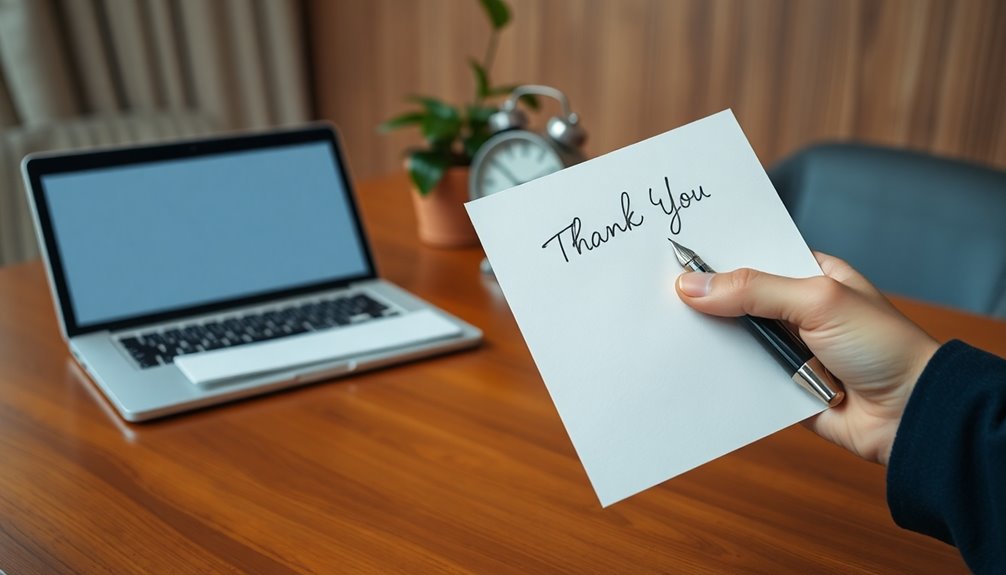
After addressing potential challenges during your interview, the steps you take afterward can considerably influence the hiring manager's decision. Your follow-up actions are essential for leaving a lasting impression. Sending a timely thank-you note within 24 hours not only shows appreciation but also helps reaffirm your interest in the position. This small gesture can set you apart from other candidates and keep you top-of-mind.
In your follow-up, summarize key qualifications that align with the job requirements. Reiterating your excitement for the role can further strengthen your candidacy. Don't hesitate to ask about the next steps in the hiring process—this demonstrates your proactive approach and willingness to move forward with the job offer.
Frequently Asked Questions
What Are 5 Tips for a Successful Job Interview?
To ace your job interview, start by researching the company and role to tailor your answers effectively. Arriving 10-15 minutes early shows punctuality and sets a positive tone. Practice common interview questions using the STAR method to clearly convey your experiences. Dress professionally to boost your confidence and make a great first impression. Finally, send a thank-you note within 24 hours to express gratitude and reinforce your enthusiasm for the position.
What Are the 7 Most Common Interview Questions and Answers Pdf?
You'll often encounter seven common interview questions that can shape your chances of success. These include inquiries like "Tell me about yourself" and "What are your strengths and weaknesses?" Prepare concise answers that highlight your skills and experiences. Behavioral questions, like "Describe a challenge you faced," require you to use the STAR method. Practicing these responses can boost your confidence and guarantee you effectively convey your qualifications during the interview.
What to Expect in a 10 Minute Interview?
In a 10-minute interview, you can expect a fast-paced format that quickly assesses your qualifications. You'll need to answer questions succinctly, keeping your responses to one or two minutes. The interviewer will likely ask about your experience and skills, so be prepared for targeted inquiries. Since first impressions matter, convey enthusiasm and confidence in your communication. Don't forget to have one or two questions ready to show your interest!
What's Important Before a Job Interview?
Before a job interview, you should research the company's mission, values, and recent news. Understanding the job description is essential too; it helps you highlight your relevant skills. Prepare specific examples from your past experiences using the SARA method to clearly demonstrate your accomplishments. Don't forget to think of thoughtful questions to ask the interviewer about the company culture and growth opportunities. Practicing common interview questions with someone can boost your confidence as well.
Conclusion
In the dance of a job interview, preparation is your rhythm, and confidence is your partner. By researching the company and presenting yourself professionally, you'll waltz through questions with ease. Don't forget to ask insightful questions—it's your chance to lead the conversation. After the curtain falls, a thoughtful follow-up can keep the music playing. So, step onto that stage ready to shine, and remember, every interview is a new opportunity to showcase your potential!
Felicity, our Author, pens in-depth articles and guides that delve into the heart of personal discovery. Her narrative-driven approach weaves together theory, practice, and personal anecdotes, making the journey of self-exploration both relatable and inspiring. Felicity’s contributions help illuminate the path for those seeking a deeper understanding of themselves and their relationships.


Book Review: “The Creative Spark: Unleashing Your Inner Artist”
L1rabe Book Review Notepad 50 Sheets Reading Journals for Book Lovers&Readers, Book Journal for Book Lovers Gift, Reading Log for...


3 Best Guides for Navigating Parenting in the Digital Age – Expert Recommendations
Yearning for expert tips on digital parenting? Discover top guides for navigating the complexities of raising children in the digital...
-

 Love Compatibility between Zodiac Signs2 months ago
Rat Compatibility in the Chinese Zodiac: Which Signs Are the Perfect Match?
-

 Love Compatibility between Zodiac Signs2 months ago
The Ultimate Guide to Throuple Zodiac Compatibility
-

 Love Compatibility between Zodiac Signs3 months ago
10 Mother-Daughter Zodiac Combinations That Have Natural Compatibility
-

 Love Compatibility between Zodiac Signs1 month ago
Cat Zodiac Compatibility: Which Signs Are Most Compatible With Cats?
-

 Love Compatibility between Zodiac Signs2 months ago
How to Assess Snake Compatibility in the Chinese Zodiac
-

 Love Compatibility between Zodiac Signs1 month ago
Discover Your Family's Zodiac Compatibility With This Calculator
-

 Love Compatibility between Zodiac Signs1 month ago
Chinese Zodiac Compatibility: How Does the 1957 Year of the Rooster Interact With Other Signs?
-

 Love Compatibility between Zodiac Signs3 months ago
BTS Zodiac Signs Compatibility: A Guide to Their Ideal Matches