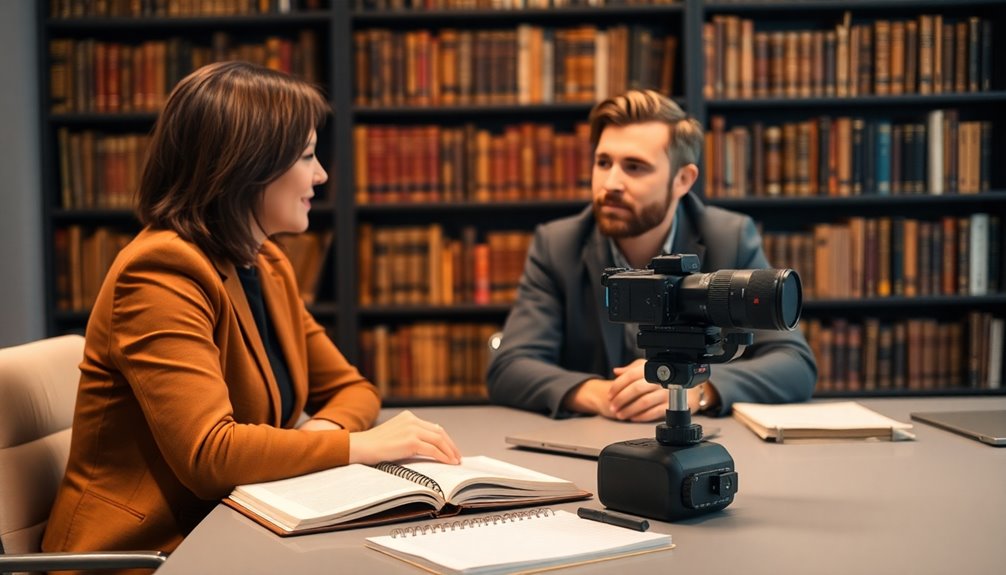

To master your job expectations during interviews, focus on clear communication and understanding mutual needs. Research the company's culture and values, and be ready to articulate your career goals while aligning them with the company's mission. Anticipate common questions about your strengths and adaptability, using personal stories to showcase your qualifications. Maintain confident body language, like good posture and eye contact, to build rapport. Don't forget to follow up after the interview, reinforcing your interest. With these strategies, you'll not only meet expectations but exceed them, leading you closer to your dream job. You'll want to explore even more tips to ace your interviews!

Turn your wind-down time into listening time
- Thousands of audiobooks, podcasts and originals
- Listen on your phone, tablet or Echo — also offline
- Cancel anytime
Key Takeaways
- Clearly communicate your career goals and how they align with the company's mission during the interview.
- Understand the skills and experiences that the company values to tailor your responses effectively.
- Discuss your desire for growth and stability to show long-term commitment to the organization.
- Recognize the importance of cultural fit and express how you embody the company values.
- Prepare thoughtful questions that reflect your understanding of the company's expectations and culture.
Significance of Interview Preparation

Preparing for an interview is essential to your success in the job search process. Your performance can hinge on how well you prepare. Start by researching the company and understanding its values.
Practice your responses and refine your body language, as first impressions matter from the moment you enter the building. Remember, every staff member you encounter could provide feedback, so treat everyone with respect.
Managing your nerves is vital; deep breathing techniques can help you stay calm. Focus on presenting yourself confidently, maintaining good posture, and engaging with the interviewer.
Preparation not only boosts your confidence but also demonstrates your genuine interest in the role, setting you apart from other candidates.
Common Interview Questions

Most interviewers ask common questions to gauge your fit for the role and your motivations. Preparing for these inquiries can help you stand out. Here's a quick reference table of typical questions and effective responses:
| Question | Purpose | Tips for Response |
|---|---|---|
| Why do you want to work here? | Assess motivation | Connect personal values to the company's mission. |
| What are your strengths? | Evaluate self-awareness | Mention specific skills with examples. |
| Describe a challenge you've faced. | Test problem-solving ability | Share a story that highlights your resilience. |
| How do you handle feedback? | Determine adaptability | Emphasize growth and learning from past experiences. |
Being honest and using personal stories will make your answers more relatable and memorable.
Mastering Body Language

Mastering body language is essential for making a positive impression during job interviews. Stand tall with good posture—keep your head up and shoulders back. This conveys confidence and readiness.
Maintain eye contact; it shows you're engaged and interested in the conversation. Use open gestures, like uncrossed arms, to express openness and approachability.
Be mindful of your movements; avoid fidgeting or tapping, as these can distract from your message. Mirroring the interviewer's posture subtly can help build rapport.
Finally, practice active listening; nod occasionally to show you're paying attention. By mastering these nonverbal cues, you'll enhance your presence and demonstrate genuine interest in the position, helping you stand out as a strong candidate.
Understanding Mutual Expectations

Guiding the job interview process requires a clear understanding of mutual expectations between candidates and employers. You should communicate your career goals and what you seek in a workplace, while also grasping what the employer needs from you. This alignment can create a stronger foundation for your potential role.
- Make certain you articulate your desire for growth and stability while understanding the company's expectations for performance and collaboration.
- Be ready to discuss how your skills and experiences can meet the company's needs, and ask questions that clarify their goals.
- Recognize the importance of cultural fit; both parties should feel aligned in values and work styles for a successful partnership. Additionally, understanding unique value propositions can help you tailor your discussions to show how you can contribute to the company's mission and goals.
Building Rapport With Interviewers

Building rapport with interviewers can greatly enhance your chances of making a positive impression. Start by smiling and offering a firm handshake, which sets a friendly tone.
As the conversation unfolds, actively listen and engage with their comments. Show genuine interest in their insights and experiences; this helps create a connection.
You can also mirror their body language subtly to foster a sense of familiarity. Share personal anecdotes that relate to the role, demonstrating your enthusiasm and fit for the team.
Don't shy away from asking thoughtful questions about the company culture; this signals your keenness to be part of their environment. Additionally, fostering healthy boundaries during the interview can help establish mutual respect and comfort.
The Importance of Follow-Up

After establishing a solid connection with your interviewer, the next step is to reinforce that relationship through effective follow-up. A thoughtful follow-up shows your appreciation and keeps you fresh in their mind.
Sending a thank-you email within 24 hours is essential. It not only expresses gratitude but also reiterates your enthusiasm for the position.
Here are three key points to keep in mind in your follow-up:
- Personalize Your Message: Reference specific topics discussed during the interview to remind them of your conversation.
- Keep It Concise: Aim for clarity; a brief thank-you is often more impactful than an overly detailed message.
- Express Continued Interest: Reaffirm your enthusiasm for the role and how you'd fit into their team.
Additional Resources for Success

To truly excel in your job search and interviews, leveraging additional resources can make a significant difference.
Consider reading articles on resume writing and career development to sharpen your skills. Websites and forums dedicated to interview preparation can provide you with insights into common questions and effective responses.
You might also find valuable tips on professionalism and the benefits of volunteering, which can enhance your resume.
Don't forget to explore performance reviews and feedback mechanisms to understand employer expectations better.
Networking with professionals in your field can offer firsthand knowledge and support.
Finally, follow up on your conversations with the hiring manager; a simple thank-you email can reinforce your enthusiasm and commitment to the position.
Frequently Asked Questions
How Should I Dress for an Interview?
When you dress for an interview, aim for professionalism that reflects the company culture.
Choose clean, well-fitted clothes; for most positions, this means a suit or smart casual attire. Avoid overly bright colors or distracting patterns. Make sure your shoes are polished and appropriate.
Pay attention to grooming—neat hair and minimal accessories can enhance your look.
What Should I Bring to the Interview?
When heading to an interview, you should bring several essential items. A few copies of your resume are vital, along with a list of references.
Don't forget a notepad and pen for taking notes or jotting down questions. It's also wise to have a portfolio showcasing your work, if applicable.
Finally, keep a professional demeanor and a positive attitude—these can leave a lasting impression on your potential employer.
How Early Should I Arrive for the Interview?
Arriving for an interview is like setting the stage for a performance—timing is everything. You should aim to arrive about 10 to 15 minutes early.
This gives you a chance to gather your thoughts and settle any nerves. Showing up too early can disrupt the interviewer's schedule, while arriving late can create a negative first impression.
Can I Ask About Salary During the Interview?
You can absolutely ask about salary during the interview, but timing's key.
Wait until the interviewer brings it up or after they've shown interest in you as a candidate.
When you do ask, frame it positively, showing your interest in the role first.
This way, you'll demonstrate that while compensation is important, you're also focused on how you can contribute to the team and organization.
What if I Have a Gap in My Employment History?
If you've got a gap in your employment history, don't panic.
Be honest about it; everyone faces challenges. You can explain what you did during that time, like volunteering, taking courses, or personal projects.
Emphasize how those experiences made you stronger and more skilled. Focus on your enthusiasm for the position and what you bring to the table.
This approach shows resilience and readiness to contribute positively to the team.
Conclusion
To sum up, mastering your job expectations in interviews is like preparing for a big race. Just as athletes train rigorously to understand the course and their competition, you need to hone your skills and insights to stand out. Remember, every interaction is an opportunity to showcase your strengths. So, lace up your shoes, focus on your strategy, and run towards success. With these tips, you'll not only meet expectations but exceed them, crossing the finish line ahead of the pack!
Halloween Picks
halloween
As an affiliate, we earn on qualifying purchases.