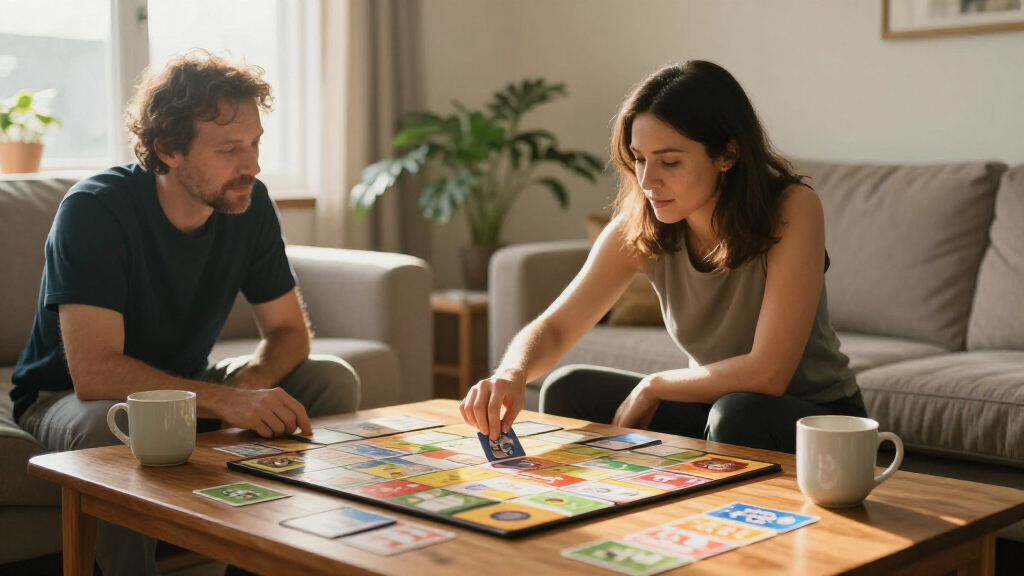

The best psychology board games for adults turn social cues, decision-making, or self-reflection into the main event. Unconscious Mind is my best overall pick for players who want a substantial strategy game grounded in psychological themes, while The Chameleon and The Empathy Game offer lighter routes into bluffing and conversation. The main tradeoff is between games built for lively group deduction and activities designed to prompt more personal discussion. Some picks need a full table and competitive energy; others work better with a partner or a small, willing group. Read on for the full breakdown and help matching a game to your gathering.

Turn your wind-down time into listening time
- Thousands of audiobooks, podcasts and originals
- Listen on your phone, tablet or Echo — also offline
- Cancel anytime
Key Takeaways
- Unconscious Mind is the strongest fit for players seeking strategic depth and a psychology-themed setting, though its heavier play style asks more of the group than a quick party game.
- The Chameleon and Herd Mentality favor accessible group play, but one centers on spotting a hidden player while the other rewards matching the group’s answers.
- The Empathy Game, Are We Compatible?, and the conversation-card options put discussion ahead of conventional board-game strategy.
- ThinkPsych Dive In offers a large range of prompts, which can suit groups who want variety; a high topic count alone does not guarantee every prompt will fit every gathering.
- The lineup spans party games, strategy, relationship conversation, and social-skills activities, so choosing by audience and desired tone matters more than choosing by the word “psychology.”
| Viral Studios Split Decision Party Game |  | Best for Reading Friends | Players: 3+ | Age range: 17+ | Playing time: 30 minutes | VIEW LATEST PRICE | See Our Full Breakdown |
| Herd Mentality Family Party Board Game |  | Best for Big, Mixed-Age Groups | Players: 4–20 | Recommended age: 10 years and up | Playing time: 20 minutes | VIEW LATEST PRICE | See Our Full Breakdown |
| The Chameleon Social Deduction Board Game for Adults, Ages 12+ |  | Best for Bluffing and Social Deduction | Players: 3–8 | Age range: 14 years and up | Estimated playing time: 15 minutes | VIEW LATEST PRICE | See Our Full Breakdown |
| Mindfulness Therapy Game: Teaches Social Skills, Self Care & More for Kids, Teens & Adults. 50 Cards |  | Best for Guided Mindfulness | Cards: 50 | Recommended players: Up to 15 | Suitable ages: Kids, teens, and adults | VIEW LATEST PRICE | See Our Full Breakdown |
| You Know Social Skills & Therapy Card Game |  | Best for Conversation Across Ages | Players: 2–6 | Age range: 7+ years | Cards: 108 | VIEW LATEST PRICE | See Our Full Breakdown |
| Lucky Duck Games Unconscious Mind Strategy Board Game |  | Best for Strategy Fans | Players: 1–4 | Recommended age: 12 years and up | Playing time: 60–120 minutes | VIEW LATEST PRICE | See Our Full Breakdown |
| ThinkPsych Dive In – SEL Conversation Dice Game with 450+ Topics |  | Best for Guided Group Conversations | Players: 6 | Topics: 450+ | Play levels: Two | VIEW LATEST PRICE | See Our Full Breakdown |
| Psychological: The Social Perception Board Game |  | Best for Reading Friends | Players: 3–6 | Recommended age: 8 years and up | Contents: Board, 250 cards, 6 magnetic scoring tiles, 6 character pieces, scoring trophy | VIEW LATEST PRICE | See Our Full Breakdown |
| Are We Compatible? A Romantic Relationship Card Game by Relatable |  | Best for Couples | Age range: Adult | Prompt cards: 200 | Categories: 5 | VIEW LATEST PRICE | See Our Full Breakdown |
| The Empathy Game: Playfully Connect on a Deeper Level |  | Best for Empathy-Focused Play | Title: The Empathy Game: Playfully Connect on a Deeper Level | ASIN: 9063695241 | Description: A game designed to help players connect and engage with empathy | VIEW LATEST PRICE | See Our Full Breakdown |
| psychology board games for adult | Players | Dimensions |
|---|---|---|
| Viral Studios Split Decision P | 3+ | 8.2 x 4.5 x 0.04 inches |
| Herd Mentality Family Party Bo | 4–20 | 7.4 x 5.8 x 0.04 inches |
| The Chameleon Social Deduction | 3–8 | — |
| Mindfulness Therapy Game: Teac | — | — |
| You Know Social Skills & Thera | 2–6 | 3.54 x 2.68 x 1.42 inches |
| Lucky Duck Games Unconscious M | 1–4 | — |
| ThinkPsych Dive In | 6 | 3.5 × 3.15 × 3 inches |
| Psychological: The Social Perc | 3–6 | 10.5 × 10.5 × 0.1 inches |
| Are We Compatible? A Romantic | — | — |
| The Empathy Game: Playfully Co | — | — |
More Details on Our Top Picks
Viral Studios Split Decision Party Game
Split Decision makes psychology part of the party: players try to guess which of two prompts a friend answered, turning their assumptions about one another into the game. Its 300+ double-sided cards offer more variety than the smaller decks in Mindfulness Therapy Game and You Know, while the accusation mechanic gives it a sharper, more teasing tone than Herd Mentality. That tone is also its main tradeoff: the mature prompts suit adults comfortable with roasting, but can make it a poor fit for mixed-age or reserved groups. It supports three or more players and takes about 30 minutes, so it asks for a little more time than The Chameleon. Choose it for lively groups that enjoy personal questions; skip it if you want a structured skills exercise or gentler conversation.
Pros:- 300+ double-sided cards provide a broad supply of prompts
- Guessing a friend’s hidden answer encourages social interaction
- Distinctive question-choice mechanic mixes intuition with playful accusation
- 30-minute playtime suits a party session
Cons:- Mature content and its 17+ age guidance limit who can join
- Needs at least three players
- No rulebook is included
Best for: Adult friend groups who enjoy teasing prompts and guessing how well they know one another
Not ideal for: Mixed-age groups, reserved players, or anyone needing a rulebook to explain play
- Players:3+
- Age range:17+
- Playing time:30 minutes
- Cards:300+ double-sided cards
- Genre:Party
- Material:Cardstock
- Dimensions:8.2 x 4.5 x 0.04 inches
- Language:English
Our verdict“Pick Split Decision for an adult group that wants revealing, teasing guesses, and pass if you need a gentler or more explicitly therapeutic game.”
Herd Mentality Family Party Board Game
Herd Mentality explores group psychology through a simple question: can you predict what most people will say? Matching the majority earns cows, so players read the room rather than analyze one person’s private answer as they do in Split Decision. Its 4–20 player range also makes it a better fit for a crowded gathering than The Chameleon, which tops out at eight. The Kids Edition is listed for ages 10 and up, making it more accessible to families, though adults seeking deeper reflection may find its focus on popular answers lightweight. Rounds take about 20 minutes and the rules are easy to learn, but the fun depends on a group willing to play along with the same prompts. It’s a crowd-pleaser for casual company, not a therapy-style conversation tool.
Pros:- Supports groups of 4–20 players
- Simple majority-guessing premise is quick to learn
- 20-minute sessions fit into a casual gathering
- Includes 20 extra questions
Cons:- Requires at least four players
- Play centers on predicting group answers rather than personal exploration
- Listed Kids Edition may feel lightweight to adults seeking a serious psychology theme
Best for: Hosts who need a quick, accessible game for a large family gathering with players aged 10 and up
Not ideal for: Adults seeking personal reflection or groups smaller than four players
- Players:4–20
- Recommended age:10 years and up
- Playing time:20 minutes
- Genre:Family, Party
- Game mechanic:Social deduction
- Edition:Kids Edition
- Material:Cardboard
- Dimensions:7.4 x 5.8 x 0.04 inches
Our verdict“Choose Herd Mentality for accessible group dynamics at a large mixed-age gathering, rather than for deeper adult self-reflection.”
The Chameleon Social Deduction Board Game for Adults, Ages 12+
The Chameleon turns social perception into a compact deduction challenge: most players share a secret word, while one imposter tries to blend in through careful word choices. That gives it more tactical tension than Herd Mentality’s majority-matching questions and a stronger focus on bluffing than the reflective prompts in You Know. With 15-minute rounds and room for three to eight players, it works well when a group wants a quick, repeatable challenge. Its limit is the same mechanic that makes it engaging: players need to listen closely, make guesses, and enjoy bluffing, so it’s a weaker choice for a quiet conversation or a large party. The listing includes cards and identifies the set as the main game in a smaller box. Choose it for deduction-minded adults and older teens rather than self-care discussion.
Pros:- Hidden-code and word-choice play rewards attention to others
- 15-minute rounds make it easy to fit into game night
- Supports three to eight players
- Smaller-box main-game set is suited to compact storage
Cons:- Eight-player maximum excludes larger groups
- Relies on active interaction and bluffing
- Offers less direct self-reflection than Mindfulness Therapy Game
Best for: Small groups of adults or older teens who enjoy bluffing, word clues, and quick deduction rounds
Not ideal for: Large gatherings or players who prefer open-ended discussion to competition and deception
- Players:3–8
- Age range:14 years and up
- Estimated playing time:15 minutes
- Genre:Word
- Edition:Standard Edition
- Included components:Cards
- Language:English
- Set name:Main game, smaller box
Our verdict“Pick The Chameleon for short, competitive rounds of social deduction; choose a conversation game if your group wants personal reflection.”
Mindfulness Therapy Game: Teaches Social Skills, Self Care & More for Kids, Teens & Adults. 50 Cards
Mindfulness Therapy Game is the most directly therapeutic choice in this lineup, with cards for mindful practices, visualization, social skills, and self-care. That makes it a better match for facilitated reflection than Split Decision’s adult humor or The Chameleon’s bluffing. It supports up to 15 players, which can suit a counseling group or family activity, though the listing doesn’t give a fixed playtime or a minimum player count. The 50-card set is more focused than You Know’s 108 cards, and that smaller selection may limit variety across repeat sessions. Its large, sturdy cards are designed for group handling, but players looking for a strategic board game may find the activities simple. I’d choose this for a guided, supportive session, not a competitive game night.
Pros:- Includes mindful practices, visualizations, self-care, and social-skills cards
- Suitable for kids, teens, and adults
- Supports groups of up to 15 players
- Large, sturdy cards suit repeated group use
Cons:- 50 cards may provide less variety than You Know’s 108-card deck
- Activities may feel basic to adults seeking a more demanding game
- Not designed for solo play
Best for: Counselors, facilitators, and families seeking guided mindfulness and social-skills activities for a group
Not ideal for: Solo players or adults wanting strategic competition and a defined board-game structure
- Cards:50
- Recommended players:Up to 15
- Suitable ages:Kids, teens, and adults
- Card types:True/false, mindful practices, visualizations, social skills, and self-care
- Material:Large, sturdy cards
- Creator:Arcia, professionals with over 25 years of experience
Our verdict“Choose Mindfulness Therapy Game for facilitated group exercises in self-care and awareness, rather than competitive adult gameplay.”
You Know Social Skills & Therapy Card Game
You Know uses thought-provoking questions and positivity-focused prompts to open conversation, giving it a more personal, relationship-building purpose than Herd Mentality’s push to match the majority. Its 108-card double deck offers more prompt variety than Mindfulness Therapy Game’s 50 cards, while the two-to-six player range suits a smaller family, classroom, or counseling session. The age guidance starts at seven, so it can bridge generations, though that broad audience may make it less tailored to adults seeking challenging psychological play. Unlike The Chameleon, there’s no bluffing or deduction; the value depends on people being willing to answer and listen. I’d pick it for gentle communication practice, but skip it if your group wants competitive mechanics or a larger party format.
Pros:- 108 cards provide a broad range of conversation prompts
- Supports two to six players, including pairs
- Age guidance from seven supports mixed-age play
- Designed to encourage communication, social skills, and self-esteem
Cons:- Broad age range may feel less tailored to adults seeking challenging psychology gameplay
- Conversation depends on players being willing to share and listen
- Small player cap limits its use at larger gatherings
Best for: Families, educators, and therapists who want a small-group conversation game usable across ages
Not ideal for: Adults seeking bluffing, strategy, or a game for groups larger than six
- Players:2–6
- Age range:7+ years
- Cards:108
- Deck:Jumbo double deck
- Game type:Therapy/Social Skills
- Material:Cardstock
- Dimensions:3.54 x 2.68 x 1.42 inches
- Item weight:7 ounces
Our verdict“Choose You Know for gentle, prompt-led conversation in a small mixed-age group, and look elsewhere for tactical play or adult-only depth.”
Lucky Duck Games Unconscious Mind Strategy Board Game
Unconscious Mind is the most mechanically involved pick here, using worker placement, engine building, and movement around Vienna to frame its theme of early psychoanalysis. Its cascading player-board effects reward players who enjoy planning how actions connect, giving the psychology theme more strategic structure than the conversation-led Psychological: The Social Perception Board Game. Solo play also makes it a better fit for someone who wants a substantial game without assembling a group. That depth comes with a learning and time commitment: sessions run 60–120 minutes, and the range of actions may feel like too much for a casual evening. Compared with the lighter social prompts elsewhere in this roundup, this is for players drawn to systems and long-term planning as much as the subject matter.
Pros:- Supports solo play as well as groups of up to four
- Combines worker placement, engine building, and rondel movement
- Cascading board effects reward planning connected actions
- Psychoanalytic theme gives its strategy a distinct setting
Cons:- A 60–120 minute playtime is a substantial commitment
- Multiple action systems may be demanding for newcomers
- Its strategy focus offers less direct personal conversation than social-perception games
Best for: Strategy board game players who want a psychology-themed solo option or a deep game for a regular group of up to four.
Not ideal for: Casual groups looking for quick conversation starters or players who prefer short, low-complexity games.
- Players:1–4
- Recommended age:12 years and up
- Playing time:60–120 minutes
- Genre:Strategy
- Edition:Standard Edition
- Brand:Lucky Duck Games
- Components:Meeting board, map board, player boards, cards, tokens, tiles, markers, dials, rulebooks, and other game pieces
Our verdict“Choose Unconscious Mind if you want a long, strategic game with a psychology theme and the option to play solo.”
ThinkPsych Dive In – SEL Conversation Dice Game with 450+ Topics
Dive In uses conversation cards and dice to prompt social-emotional discussions, making it a facilitator-friendly choice for classrooms, therapy settings, or family groups. Its two levels of play give an adult a way to adjust the activity, while the supplied description says it offers 450+ topics. That makes it more structured for guided discussion than Psychological: The Social Perception Board Game, which centers on guessing how well traits describe someone. Dive In is described as designed for kids and teens, so adults choosing it for themselves may find its tone or prompts less suited to an adult-only group. Younger children may also need an adult to guide play, and a conversation format can feel repetitive once familiar prompts come around again.
Pros:- Psychologist-created prompts support low-pressure conversation
- Two levels of play provide some flexibility for different groups
- Cards and dice offer many prompt combinations
- Designed for therapy, classroom, and family settings
Cons:- Younger children may need adult facilitation
- The kid-and-teen focus may not suit adult-only play
- Question combinations may feel repetitive over time
Best for: Therapists, teachers, and families who want a structured way to start social-emotional conversations with kids or teens.
Not ideal for: Adult-only groups seeking a game built around adult experiences or players who want deep strategy and varied win conditions.
- Players:6
- Topics:450+
- Play levels:Two
- Container:Box
- Educational objective:Social and emotional learning
- Use:Indoor
- Item weight:0.3 kg
- Dimensions:3.5 × 3.15 × 3 inches
Our verdict“Pick Dive In when you need an adaptable conversation aid for a facilitated group of children or teens.”
Psychological: The Social Perception Board Game
Psychological turns personality traits into a guessing game: players estimate how strongly another person thinks a pair of traits describes them, then score close guesses. Its simple 1–10 scale makes it easier to get a group started than the action-heavy Unconscious Mind, while the thousands of trait combinations give it a conversational party-game feel. The catch is built into the premise: the game works best when players know one another well enough to make informed guesses. With a minimum of three players, it also cannot fill the small-group or solo role of Unconscious Mind. The 8+ age guidance means the supplied data does not position it specifically for adults, but adult friends who enjoy playful personality talk may find it the more accessible psychology-themed pick.
Pros:- Simple 1–10 guessing mechanic is easy to explain
- Trait combinations give the group many conversation prompts
- Magnetic scoring tiles and character pieces support group play
- Works for groups of three to six
Cons:- Guesses depend on players knowing one another
- Requires at least three players
- Its 8+ age guidance does not make it an adult-specific game
Best for: Adult friends or family groups of at least three who know one another and enjoy light personality-based guessing.
Not ideal for: Two-player couples, strangers who lack a basis for guessing, or groups looking for substantial strategy.
- Players:3–6
- Recommended age:8 years and up
- Contents:Board, 250 cards, 6 magnetic scoring tiles, 6 character pieces, scoring trophy
- Dimensions:10.5 × 10.5 × 0.1 inches
- Brand:PlayMonster
- Language:English
- Model number:26139
Our verdict“Choose Psychological for a familiar group that wants light personality talk and easy-to-learn guessing.”
Are We Compatible? A Romantic Relationship Card Game by Relatable
Are We Compatible? is the most relationship-specific option in this lineup, using 200 prompts across five categories to give couples a shared starting point for talking about compatibility. That focus makes it a clearer date-night fit than Psychological: The Social Perception Board Game, which is designed for groups to guess how traits apply to one another. The prompts can invite honest conversation and humor, but they may also feel too personal for a new relationship or for partners who would rather keep certain topics private. The supplied details identify it as an adult game but do not state a player count, so buyers should not assume a particular format beyond its couples focus. It offers more directed relationship discussion than a general social game, at the cost of narrower group appeal.
Pros:- Focuses specifically on compatibility between romantic partners
- Includes 200 prompts across five categories
- Designed for date nights, gifts, and couples’ activities
- Can prompt both serious discussion and lighter exchanges
Cons:- Adult-only positioning excludes younger players
- Some prompts may feel too personal
- Its couples focus limits usefulness for larger groups
Best for: Adult couples looking for a prompt-based activity for a date night or a private conversation together.
Not ideal for: Families, party groups, or couples who are uncomfortable discussing personal relationship topics.
- Age range:Adult
- Prompt cards:200
- Categories:5
- Included components:1 Compatibility Board, 200 Test Cards, 1 Instruction Sheet
- Brand:WHAT DO YOU MEME?
- Model number:UCQ4132
- Set name:Are We Compatible
Our verdict“Choose Are We Compatible? if both adult partners want structured relationship conversation and are comfortable with personal prompts.”
The Empathy Game: Playfully Connect on a Deeper Level
The Empathy Game is the most directly empathy-centered title in this batch, and its stated aim of helping players connect gives it a distinct angle beside Dive In, which supplies conversation cards and dice for social-emotional learning. The available product information does not describe its mechanics, player count, or components, so I can only recommend it cautiously: the title and description signal a connection-focused activity, but do not show how play creates that outcome. That lack of detail makes it harder to compare its structure or replayability with the 200 prompts in Are We Compatible?. It may suit a buyer seeking an empathy-themed game, but shoppers who need a defined format, adult age guidance, or clear group-size information have too little here to judge fit confidently.
Pros:- Explicitly centers play around empathy
- Aims to support connection between players
- Offers a different theme from the relationship-compatibility focus of Are We Compatible?
Cons:- Available description does not explain the mechanics
- Player count and age guidance are not provided
- Components and replay details are not provided
Best for: Buyers specifically seeking an empathy-themed activity who are comfortable checking the full product listing for play details before choosing.
Not ideal for: Shoppers who need confirmed player count, age guidance, components, or a clearly described game format.
- Title:The Empathy Game: Playfully Connect on a Deeper Level
- ASIN:9063695241
- Description:A game designed to help players connect and engage with empathy
Our verdict“Consider The Empathy Game only if its empathy-first premise appeals and you can confirm its format and audience from the full listing.”
How We Picked
I compared the ten options by how directly their central activity connects to psychology: reading social cues, reasoning about other people, exploring relationships, or using structured prompts for reflection. I also considered how easily a group can learn the rules, the kind of gathering each game suits, and whether its format offers strategic decisions or mainly guides conversation. These factors help distinguish a playable game night from a facilitated discussion activity.
The ranking favors options with a clear adult use case, a distinct experience, and enough structure to keep the activity moving. Unconscious Mind leads for players wanting strategy and a sustained psychology theme; accessible deduction and party choices follow for groups who value quick participation. Prompt-based and relationship-focused picks serve more specific needs, while their narrower audience or conversation-led format places them lower for a general adult game-night recommendation. I treated age labels and promotional descriptions as clues to intended audience, not proof of therapeutic outcomes.
Factors to Consider When Choosing Psychology Board Games For Adults
Before choosing, decide what you want psychology to mean at your table. A game about reading bluffs creates a different evening from one that invites personal answers or teaches social skills. These broader factors can help you avoid a format mismatch.
Choose the kind of psychological play
Psychology-themed games can ask players to infer motives, recognize patterns, disclose opinions, or explore a subject through strategy. Those activities feel different even when they share a label. If your group likes deduction, look for hidden information and decisions based on what others say or do. For reflective play, prompts and conversation rules may fit better than a competitive scoring system. A common mistake is buying for the theme alone without checking what players actually do each turn. Match the activity to the mood you want, whether that is playful suspicion or thoughtful conversation.
Match the format to the group
Party games depend on enough people being present and willing to participate, while a relationship or conversation game can work with a smaller group. Check the listed player range and consider how often your usual gathering reaches it. A game that needs a lively table may feel flat with two quiet players. Conversely, a prompt game can put people on the spot if they expected a casual competition. Think about who will be there, including whether new acquaintances are comfortable sharing opinions. The easiest game to bring out is the one whose format fits your typical group size and familiarity.
Set the right level of personal disclosure
Conversation games vary in how much they ask people to reveal about themselves. A light prompt can suit a mixed gathering, while questions about relationships or emotions may call for more trust. Read sample prompts or the publisher’s description when available, and agree that players can pass on a question. Avoid assuming that a game labeled for therapy or social skills replaces professional care or guarantees a therapeutic result. For a casual evening, choose a format that lets people participate without explaining private experiences. This small expectation-setting step can keep reflection comfortable rather than awkward.
Balance learning time with replay style
Rules-heavy strategy games can reward repeat sessions, but they take more time and attention to learn. Simple party formats are easier to teach when guests arrive at different times, though they may rely more on the group than on evolving tactics. Consider whether your table enjoys mastering a system or prefers to start playing quickly. Do not equate a large prompt set with endless replay value; prompts can still feel repetitive if they draw on the same themes. Likewise, a focused game may hold interest through decisions and interaction rather than sheer content volume. Pick the kind of variety your group actually enjoys.
Decide whether you want a game or a conversation aid
Some products use points, turns, and a winner to shape the experience; others mainly provide a framework for discussion. Neither format is automatically better, but they serve different expectations. If your group wants a clear finish and competitive momentum, check how the game defines progress and victory. If your goal is to start a meaningful conversation, look for prompts that can stand on their own without demanding a winner. A frequent mismatch happens when one player expects a party game and another expects a serious discussion. Agreeing on the purpose before buying can save the evening from feeling like a forced activity.
Frequently Asked Questions
Which type of psychology board game works best for a mixed group of friends?
For a mixed group, a social deduction or party format is often easier to introduce than questions that invite personal disclosure. Check that the rules are quick to explain and that players can take part without sharing private details. A group with different tastes may also prefer a game where observing and guessing are as important as talking. If your friends enjoy reflective questions, set expectations first and let players pass. The right choice depends on whether the group wants lively competition or a guided conversation.
Are psychology-themed games suitable for a therapy session?
A game marketed around therapy or social skills may provide prompts or structured interaction, but that does not establish it as a clinical tool. A licensed professional can decide whether an activity suits a particular person or session. For informal use, treat the game as a conversation aid and allow participants to decline questions. Avoid relying on it to diagnose, treat, or resolve mental-health concerns. Check the intended audience and prompt style before bringing it into a sensitive setting.
Can I choose a psychology game for two adults?
Start by checking the stated player count, since many social deduction and party games need a larger group to work as intended. Relationship-focused and conversation-led formats can be more natural for two, provided both people want that kind of exchange. Consider whether you want an activity with a winner or one that simply gives you topics to discuss. A game designed around reading a crowd may lose its central tension with only two players. For a pair, the intended interaction matters more than the word “board game” on the box.
How do I tell whether a game will feel too personal for my group?
Look for sample questions, topic descriptions, and any guidance about passing or skipping prompts. Games centered on empathy, relationships, or self-care can invite more disclosure than bluffing and deduction games. Consider how well the players know one another and whether the setting is casual or private. You can agree in advance that anyone may skip a prompt without giving a reason. If the group prefers low-stakes play, choose a format that focuses on guesses or shared answers rather than personal stories.
Should I pick a strategy game or a conversation card game?
Choose strategy when your group wants planning, competition, and decisions that build across turns. Choose conversation cards when the main goal is to get people talking, with fewer systems to learn. The first format usually asks for more attention and a longer commitment; the second can be easier to adapt to a relaxed gathering. Think about whether people want to play toward a result or explore topics together. If the group is divided, a lighter party format may offer a middle ground between structured play and open discussion.
Conclusion
For the broadest fit among adults who want psychology tied to strategy, I recommend Unconscious Mind as best overall, with the caveat that it suits groups ready for a more involved game. For a value-oriented pick, Herd Mentality is the straightforward party option for groups who enjoy matching the room’s thinking. Beginners looking for quick social deduction can start with The Chameleon. For a premium-feeling strategic evening, choose Unconscious Mind; for personal connection, look to The Empathy Game or Are We Compatible?. If your priority is guided prompts or social-skills practice, compare ThinkPsych Dive In, Mindfulness Therapy Game, and You Know by audience and comfort level before deciding.
Fall Picks
fall essentials
As an affiliate, we earn on qualifying purchases.