
TL;DR
A Sixty and Me report titled “Train Smart: A Menopause Playbook” outlines a three-part exercise approach for midlife women: strength training, endurance work and impact activity. It proposes weekly routines for each, but the recommendations are the report’s guidance, not a personalized prescription, and the article does not establish that its exact schedule suits everyone.
Sixty and Me has published “Train Smart: A Menopause Playbook,” a guide that recommends combining strength training, cardiovascular endurance and impact activity in midlife. The report sets out a sample weekly structure for women seeking clearer exercise guidance during menopause, while its specific routines remain recommendations from the author rather than individualized medical advice.

Turn your wind-down time into listening time
- Thousands of audiobooks, podcasts and originals
- Listen on your phone, tablet or Echo — also offline
- Cancel anytime
The guide identifies three training pillars: resistance exercise to build or maintain muscle, endurance training for cardiovascular fitness, and impact exercise intended to provide a stimulus to bone. Its author links the need for these activities to changes associated with fluctuating and declining estrogen, including effects on muscle, bone, cardiovascular health, recovery, insulin resistance and body composition. Those points are presented as the rationale for the recommendations; the supplied report does not assess each effect in detail.
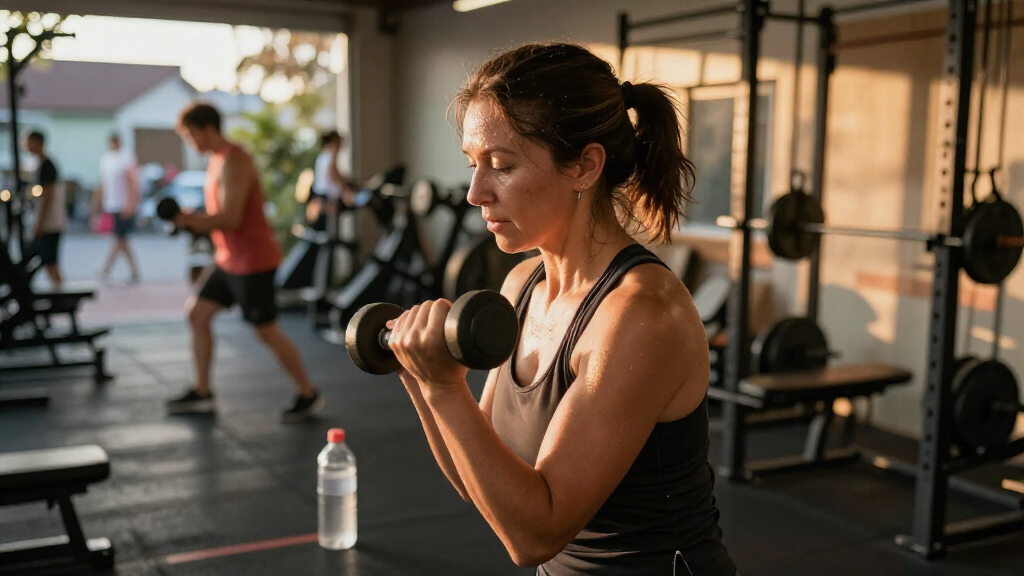
For strength work, the author recommends three sessions a week using progressive overload—gradually adding repetitions or sets, increasing the load, or changing movement tempo. The suggested split is two upper-body sessions and one lower-body session, with core work included each time. The guide says home workouts using dumbbells or resistance bands can be an option, and names hinges such as deadlifts, squats, rows and presses as useful movements.
For cardiovascular exercise, the proposed routine is two Zone 2 sessions and one interval session each week, with Zone 2 described as a conversational pace lasting about 35 to 45 minutes. The author advises building an endurance base before adding high-intensity intervals. The impact recommendation is three sessions weekly, which can be added to strength or endurance workouts. Suggested options range from brisk walking and heel drops to running and jumping; the guide advises people over 60 or new to impact to start gradually.
A Structured Plan for Midlife Exercise
The report addresses a practical problem it describes as conflicting and vague exercise advice. By grouping activity into three categories and offering a sample frequency, it gives readers a framework they can discuss with a qualified health professional or adapt to their circumstances. Its emphasis on both resistance and aerobic activity also pushes back against the idea, cited by the author, that midlife women should simply skip cardio or rely on one exercise format.
The distinction between impact exercise and weighted vests alone is another useful point for readers. The guide says that a vest by itself has not been shown to raise bone mineral density in the cited trial, which also included resistance exercise. That qualification matters because it separates a specific tool from the impact activity the author recommends. The article’s weekly targets, however, should not be treated as universally appropriate: experience, health conditions, balance, injuries and access to equipment can affect what is safe and feasible.
Popular right now

Samsung 65-Inch 4K OLED Smart TV with Dolby Atmos, 120Hz Refresh Rate, and Amber Protection Bundle

Dyson V8 Cyclone Cordless Vacuum

De'Longhi Magnifica Evo Fully Automatic Espresso Machine with Milk Frother, Silver
As an affiliate, we earn on qualifying purchases.
Research Behind the Recommendations
The supplied report cites research on exercise, fitness, mortality and bone health, including studies of postmenopausal women and a 2025 randomized clinical trial on weighted vests or resistance exercise in older adults experiencing weight-loss-associated bone loss. It also lists a 2000 study on long-term weighted-vest use and hip bone loss, as well as research on resistance and impact training. These studies address different populations and interventions; the reading list alone does not show that every proposed session frequency or exercise choice has been tested as one complete program.
The guide also cites the American Heart Association on cardiovascular disease as a major health threat to women, and research examining cardiorespiratory fitness and mortality. Such sources provide context for including aerobic training, but they do not by themselves validate the article’s exact weekly prescription. The report does not provide a named author’s qualifications in the supplied text or a publication date, limiting the available information about its editorial and professional basis.
“The 3 pillars are: Strength Training, Endurance Training and Impact Training.”
— Sixty and Me report author
Limits of the Exercise Prescription
The supplied material does not identify the report’s publication date or author credentials, and it does not include independent expert comment on the proposed routine. It is also unclear whether the author’s exact three-session targets for each pillar are intended for all readers or how the sessions should be modified for people with health conditions, injuries, osteoporosis, balance concerns or limited training experience.
The cited evidence covers varied groups, exercise programs and outcomes. The source does not establish that the complete weekly plan has been tested as a single intervention, nor does it provide a detailed evidence review for each claim. Readers should treat the routine as general guidance, not a diagnosis or a substitute for advice from a qualified health professional, particularly before starting strenuous or impact exercise.
How Readers Can Apply the Guide
The report does not announce a follow-up study, program or policy change. For readers, the immediate next step is to consider the guide’s three categories alongside their own fitness level and health needs. Those new to resistance or impact work can ask a qualified professional about safe technique, starting loads and gradual progression; the guide itself recommends beginning with lower-impact options when jumping is unfamiliar.
No further development is specified in the supplied material. Any future evidence about menopause-specific exercise programs, weighted vests or bone outcomes would need to be evaluated on its own methods and population rather than assumed to confirm this particular schedule.
Key Questions
What is the main recommendation in “Train Smart: A Menopause Playbook”?
The Sixty and Me report recommends combining strength, endurance and impact training as three parts of a midlife exercise routine.
How many strength sessions does the guide suggest?
It suggests three strength sessions per week, using gradual progression in weight, repetitions, sets or tempo. The report’s schedule is general guidance, not a personalized plan.
What does the guide recommend for endurance training?
It proposes two Zone 2 sessions and one interval session weekly. Zone 2 is described as a conversational pace for about 35 to 45 minutes.
Does the report say a weighted vest alone builds bone density?
No. The author says weighted vests alone have not been shown to increase bone mineral density in the study discussed, which included impact activity alongside vest use.
Should everyone follow the same routine?
The supplied report does not show that its schedule suits everyone. People with health conditions, injuries, balance concerns or little exercise experience should seek guidance from a qualified health professional before making substantial changes.
Source: rss