As we peel back the layers of narcissistic family dynamics, we uncover a tangled garden of roles where some wither in darkness while others bask in the artificial sunlight.
The intricate dance of manipulation and validation plays out on a stage where authenticity is but a distant memory.
Join us as we navigate through the labyrinth of toxic family structures, where the masks worn by each member reveal a fragile truth waiting to be unveiled.
Key Takeaways
- Children in narcissistic families adopt roles like scapegoats or golden children.
- Enabler parents support narcissistic behaviors, perpetuating family dysfunction.
- Healing from narcissistic family dynamics involves therapy, support groups, and boundary setting.
- Recognizing toxic family patterns and prioritizing self-care are crucial for breaking the cycle.

The DBT Workbook for Narcissistic Abuse and Gaslighting: Dialectical Behavior Therapy Skills to Stay Emotionally Centered, Overcome Self-Doubt, and Reclaim Your Self-Worth
As an affiliate, we earn on qualifying purchases.
As an affiliate, we earn on qualifying purchases.
Family Dynamics and Narcissistic Roles
In examining family dynamics and narcissistic roles, it becomes evident that the impact of narcissistic behavior on children is profound and long-lasting. Children raised in narcissistic families often bear the weight of unrealistic expectations and emotional manipulation.
The scapegoat child, unfairly burdened with blame, internalizes feelings of inadequacy and shame. On the other hand, the golden child, constantly praised and shielded from failures, may struggle with forming genuine connections and authentic self-worth.
Enabler parents play a crucial role in perpetuating these damaging dynamics by endorsing and enabling the narcissistic behavior within the family unit. Understanding these roles and their effects is essential in breaking free from the cycle of toxicity, fostering healing, and promoting healthier family relationships.
Childhood Impact and Adult Repercussions

Examining the lasting effects of narcissistic family dynamics on children reveals profound emotional scars that often manifest in adulthood. These scars shape our perceptions, relationships, and self-worth, influencing our journey through life. Understanding the childhood impact and adult repercussions of narcissistic family roles can be a crucial step towards healing and growth. Through introspection and acknowledgment of these experiences, we can begin to unravel the complexities of our past and pave a path towards a healthier future.
- Childhood wounds can lead to challenges in forming authentic connections.
- Emotional manipulation may hinder the ability to set healthy boundaries.
- Unresolved trauma from childhood can persist and affect mental well-being.
- Seeking therapy and support is essential in processing and overcoming the impact of narcissistic family dynamics.
Breaking the Cycle and Enabler Intervention
Breaking free from the cycle of narcissistic family dynamics requires a concerted effort to recognize enabling behaviors and establish firm boundaries with toxic family members. Enablers play a significant role in perpetuating the abusive cycle within the family, often struggling with psychological issues and codependency. Addressing enabling behaviors is crucial for breaking the toxic patterns and prioritizing self-care. Seeking therapy, counseling, and building a support network are essential steps in processing past traumas and fostering healing. By acknowledging and addressing these enabling behaviors, individuals can begin to unravel the complexities of their family dynamics and work towards creating healthier relationships.
| Enabling Behaviors | Impact |
|---|---|
| Denying the issue | Sustains abuse cycle |
| Making excuses | Validates toxic behavior |
| Ignoring boundaries | Enables manipulation |
| Defending the abuser | Hinders healing |
Mental Health, Relationships, and Recovery
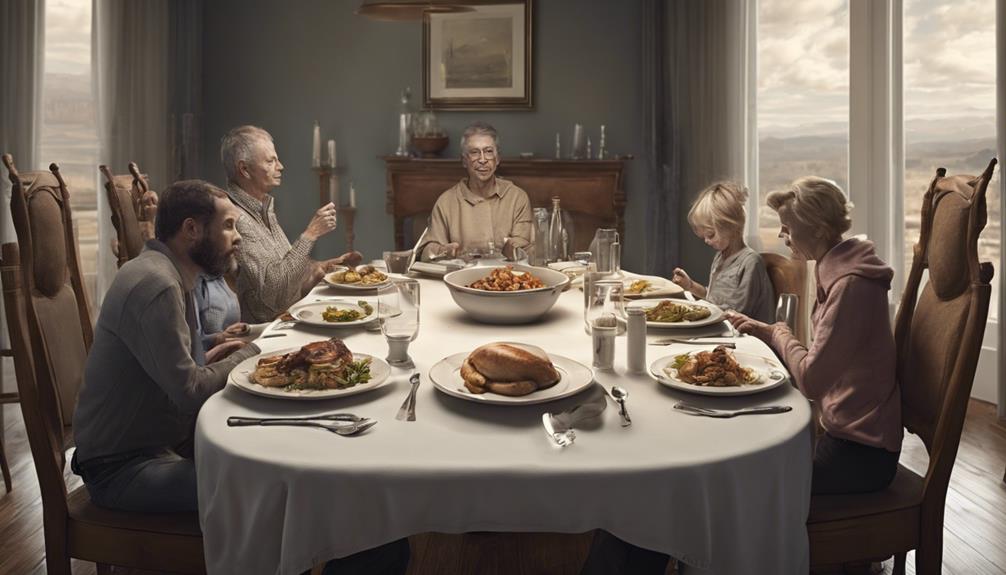
Addressing the impact of toxic family dynamics on mental health, relationships, and recovery is crucial for fostering healing and personal growth.
- Acknowledging Emotional Wounds: Recognizing the emotional scars left by toxic family dynamics is the first step towards healing.
- Seeking External Support: Building relationships outside the toxic family circle can provide the necessary support and validation for recovery.
- Establishing Boundaries: Setting boundaries with toxic family members, though challenging, is essential for protecting mental well-being.
- Embracing Healing Practices: Engaging in therapy, recovery programs, and self-care routines can facilitate the journey towards healing and personal growth.
Realization, Acceptance, and Environmental Factors
Realizing the impact of dysfunctional family dynamics and acknowledging the need for personal growth are pivotal steps towards healing from narcissistic roles and behaviors. Coming to terms with the toxic patterns within our families can be challenging, but it opens the door to self-discovery and healing. By prioritizing our well-being over toxic family relationships, we empower ourselves to seek love and acceptance in healthier environments. Embracing personal growth and joy post-detachment from harmful ties leads to a more fulfilling life. Environmental factors, such as heritability and a lack of empathy, play significant roles in shaping narcissistic traits within families. Seeking information from reliable sources, connecting with supportive communities, and enforcing boundaries against manipulative behaviors are crucial in navigating toxic family dynamics.
| Factors to Consider | Impact on Healing |
|---|---|
| Recognizing Patterns | Key Step in Recovery |
| Prioritizing Well-being | Empowers Personal Growth |
| Environmental Influence | Shapes Family Dynamics |
Frequently Asked Questions
How Can Siblings in a Narcissistic Family Dynamic Support Each Other and Work Together to Heal From Childhood Trauma?
We, as siblings in a narcissistic family, can support each other by validating experiences, practicing active listening, and encouraging therapy. Working together to heal involves fostering a safe space for vulnerability and growth.
What Are Some Practical Strategies for Setting Boundaries With Toxic Family Members Without Completely Cutting off All Ties?
Setting boundaries with toxic family members involves clear communication, prioritizing self-care, and seeking external support. It's a delicate balance between self-preservation and maintaining connections. We must advocate for our well-being while fostering healthier relationships.
How Can Individuals Differentiate Between Healthy Familial Love and Conditional Love Often Prevalent in Narcissistic Family Dynamics?
Understanding healthy familial love involves consistent respect, support, and freedom to be oneself. Differentiating from conditional love in narcissistic families means recognizing manipulation, lack of empathy, and love that's transactional or controlling, leading to self-doubt and guilt.
What Are Some Red Flags to Watch Out for When Forming Relationships Outside of the Family, to Avoid Repeating Toxic Patterns?
When forming relationships, we watch for red flags like manipulation, lack of empathy, and controlling behaviors. Setting boundaries, seeking support, and valuing our well-being are essential to avoid repeating toxic patterns and cultivate healthy connections.
Can Genetic Predispositions or Environmental Factors Contribute to the Likelihood of a Child Becoming a Narcissist or Enabling Narcissistic Behavior in the Family?
Genetic predispositions and environmental factors can influence a child's likelihood of becoming a narcissist or enabling such behavior within a family. Recognizing these influences is crucial in understanding and addressing toxic family dynamics for healthier relationships.
Conclusion
In conclusion, the prevalence of narcissistic family roles is staggering, with studies showing that 1 in 25 people in the United States exhibit narcissistic traits.
These toxic dynamics have far-reaching consequences on individuals' mental health and relationships, perpetuating cycles of dysfunction.
By recognizing and addressing these roles, we can break free from the chains of toxicity, seek healing, and embark on a journey towards self-discovery and liberation.
Let's strive to create healthier family dynamics for a brighter future.