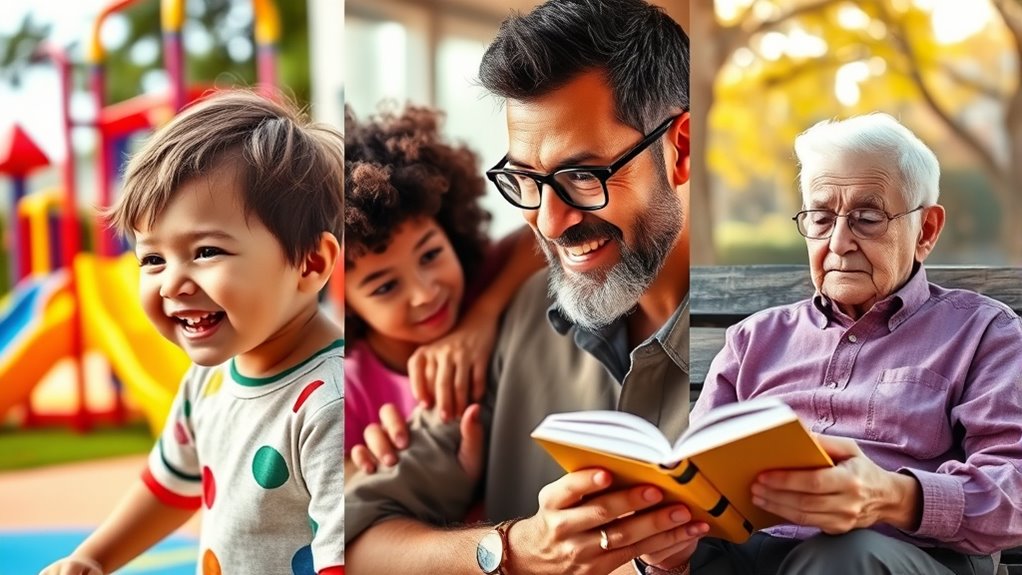

Personality development across your lifespan is a continuous process of growing your emotional resilience and social adaptability. As you face new challenges and experiences, you learn to handle setbacks positively and adjust your behavior in different social settings. This ongoing journey helps you build stronger relationships, boost self-confidence, and manage stress better. If you stay committed to developing these qualities, you’ll find yourself becoming more well-rounded and thriving in all areas of life.
Key Takeaways
- Personality develops continuously through experiences, shaping identity and social interactions across different life stages.
- Emotional resilience is cultivated over time, helping individuals manage stress and setbacks effectively.
- Social adaptability improves with exposure to diverse environments, enhancing communication and relationship skills.
- Lifelong practice and reflection refine personal strengths, address weaknesses, and promote emotional maturity.
- Supportive resources and strategies facilitate ongoing growth, fostering a well-rounded, confident individual throughout life.

Personality development is a lifelong process that shapes who you are and influences how you interact with the world. As you grow, you continuously learn new ways to handle life’s challenges and connect with others. Two key aspects of this development are emotional resilience and social adaptability. Building emotional resilience allows you to bounce back from setbacks and stay grounded during stressful situations. It’s about developing inner strength that helps you manage your emotions effectively, so you don’t get overwhelmed by difficulties. The more resilient you become, the better you are at maintaining a positive outlook, even when faced with adversity. This resilience not only helps you handle personal setbacks but also improves your ability to navigate social situations, making you more adaptable in diverse environments.
Building emotional resilience helps you bounce back from setbacks and stay positive amid life’s challenges.
Social adaptability is equally essential in shaping your personality. It involves your capacity to adjust your behavior, communication, and mindset to fit different social settings. As you encounter new people or unfamiliar circumstances, your ability to adapt determines how well you form meaningful relationships and thrive socially. Developing social adaptability requires awareness of social cues and an open-minded attitude, which lets you respond appropriately and empathetically. When you’re adaptable, you can shift your approach based on the needs of the moment, whether you’re in a formal meeting or a casual gathering. This flexibility enhances your interpersonal skills and fosters better connections, which in turn influence your self-confidence and overall personality growth.
Your experiences play an indispensable role in honing these traits. Facing challenges head-on and reflecting on your reactions helps you strengthen your emotional resilience. Similarly, exposing yourself to different social environments and practicing active listening boosts your social adaptability. Over time, these efforts contribute to a more balanced personality, where you can manage your emotions with maturity and engage with others more effectively. Remember, personality development isn’t about changing who you are but about evolving your strengths and addressing your weaknesses. As you become more emotionally resilient, you’ll find it easier to stay calm and focused under pressure. Meanwhile, improving your social adaptability allows you to connect more authentically with diverse groups of people, enriching your personal and professional life.
Additionally, engaging with vetted tools and resources can support your growth in these areas, providing practical strategies and insights to enhance your development journey. Ultimately, cultivating emotional resilience and social adaptability empowers you to navigate life’s ups and downs with confidence. These qualities help you build stronger relationships, handle stress more effectively, and grow into a well-rounded individual. The journey of personality development is continuous, and each experience offers an opportunity to refine these skills. By consciously working on them, you shape a resilient, adaptable personality that can thrive in an ever-changing world.
Frequently Asked Questions
How Do Genetics Influence Personality Changes Over Time?
Genetics influence your personality changes over time through genetic predispositions and hereditary influence. These inherited traits can shape your temperament, emotional responses, and tendencies, which may evolve as you encounter different life experiences. While your genes set a foundation, your environment and personal choices interact with them, leading to gradual personality shifts. So, genetics play a significant role in how your personality develops and adapts throughout your life.
What Role Does Culture Play in Personality Development?
Think of culture as a vibrant tapestry woven with threads of social expectations and cultural norms that shape your personality. It guides how you express yourself, influencing your behaviors and beliefs. As you navigate different cultural landscapes, these influences act like a gentle river shaping the rocks in its path, molding your personality over time, making you uniquely resilient and adaptable in a world rich with diverse traditions.
Can Personality Traits Be Intentionally Changed in Adulthood?
Yes, you can intentionally change personality traits in adulthood. By using behavioral interventions, you can modify specific behaviors, and self-awareness techniques help you understand your habits and thought patterns. Consistent effort and reflection enable you to develop new traits or strengthen existing ones. While change takes time, these strategies empower you to shape your personality consciously and achieve personal growth throughout your life.
How Does Aging Impact Emotional Resilience and Personality Stability?
As you age, your emotional resilience tends to improve because you develop better emotional adaptability and resilience factors. This means you become more capable of handling stress and setbacks with a stable outlook. While personality stability increases over time, some traits may still change slightly. Overall, aging helps you become more emotionally resilient, allowing you to navigate life’s challenges more effectively while maintaining core aspects of your personality.
Are Personality Development Patterns Universal Across Different Societies?
You might think personality patterns are set in stone, but they’re more like a tapestry woven with societal influences and cross-cultural consistency. While core traits can be universal, cultural norms shape how these traits express themselves. Different societies may emphasize traits like independence or collectivism, leading to variations in personality development. So, the patterns aren’t entirely the same worldwide; they adapt to each society’s unique norms and values.
Conclusion
As you journey through life, remember that your personality is a dynamic story unfolding with every experience. Like a river carving its path, your traits evolve, shaped by challenges and triumphs alike. Embrace these changes, knowing they craft the unique masterpiece that is you. After all, isn’t it fascinating how life’s twists and turns sculpt your very essence? Keep growing, keep transforming—your personality is your most extraordinary adventure.