
Your personality results from a mix of innate traits and life experiences. While your natural temperament influences early behaviors, ongoing self-awareness and emotional intelligence play a crucial role in your growth. By understanding your feelings and patterns, you can make better decisions, improve relationships, and develop resilience. This interplay shapes who you are becoming. To discover how nurturing these qualities can open your full potential, keep exploring how you can take control of your journey.
Key Takeaways
- Personality development results from both genetic predispositions (nature) and environmental influences (nurture).
- Nature provides innate traits, while nurture shapes behaviors through experiences and social interactions.
- Self-awareness and emotional intelligence can be cultivated regardless of innate or environmental factors.
- Genetic factors may influence temperament, but nurturing environments enhance emotional growth and resilience.
- A balanced interplay of nature and nurture fosters comprehensive personality development and adaptability.
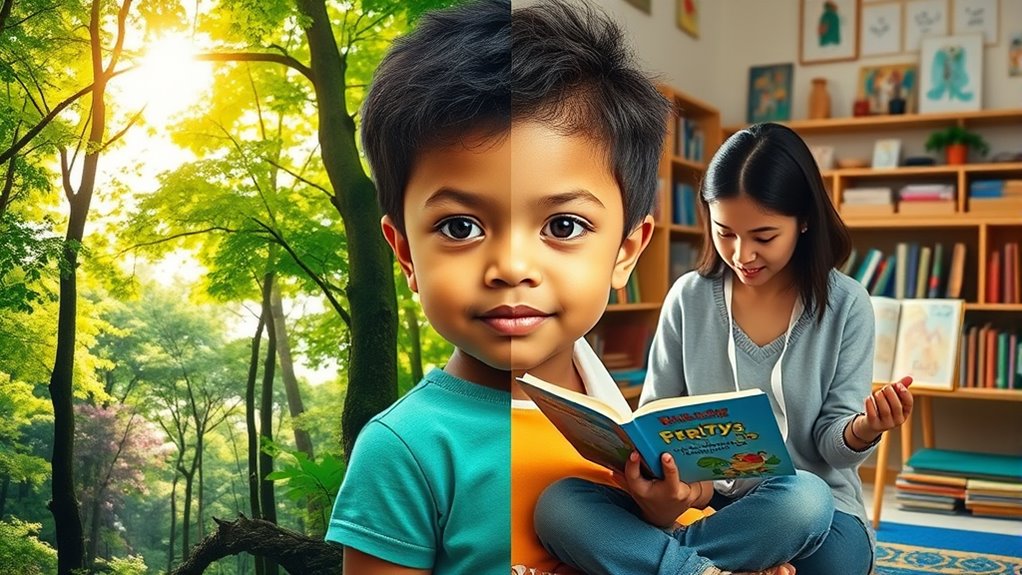
Have you ever wondered how some people seem to effortlessly grow and improve over time? The key often lies in their self-awareness and emotional intelligence. When you develop a clear understanding of your own thoughts, feelings, and motivations, you become better equipped to manage your reactions and navigate life’s challenges. Self-awareness is the foundation of personality development because it enables you to recognize your strengths and weaknesses honestly. This awareness doesn’t happen overnight; it requires intentional reflection and a willingness to look inward. As you become more conscious of your emotional patterns, you start to notice how your feelings influence your decisions and interactions.
Emotional intelligence plays an essential role here. It’s not just about feeling; it’s about understanding and managing those feelings effectively. When you cultivate emotional intelligence, you learn to empathize with others, which improves your relationships and communication skills. This, in turn, helps you adapt better to changing situations, fostering personal growth. For example, when you’re aware of your emotional responses—like frustration or anxiety—you can choose healthier ways to express or cope with them rather than reacting impulsively. This control over your emotions strengthens your resilience and enhances your personality.
Building self-awareness and emotional intelligence involves consistent effort. You might start by regularly checking in with yourself, asking questions like, “How am I feeling right now?” or “Why did I react that way?” Journaling can help you track your emotional responses and identify patterns. Practicing mindfulness or meditation can also heighten your awareness of your thoughts and feelings, making it easier to respond thoughtfully instead of reacting on impulse. As you deepen your understanding of yourself, you’ll notice your personality becoming more adaptable and refined. Additionally, understanding skin hydration and the benefits of eye patches can serve as a metaphor for nurturing your inner resilience—both require consistent care for lasting results.
Moreover, developing these qualities allows you to be more open to feedback, which is indispensable for growth. When you understand your emotional triggers, you’re less likely to take criticism personally and more likely to see it as an opportunity for improvement. This mindset fosters humility and continuous learning, both essential for personality development. Over time, you’ll find that self-awareness and emotional intelligence don’t just help you understand yourself better—they also enhance your interactions with others, making you more empathetic and approachable.
In essence, nurturing self-awareness and emotional intelligence paves the way for meaningful personal growth. It’s a continuous journey that requires patience and dedication, but the benefits—improved relationships, better decision-making, and a more resilient personality—are well worth the effort. By focusing on these inner qualities, you set the stage for a more fulfilled, adaptable, and authentic version of yourself.
Frequently Asked Questions
Can Personality Change Significantly Over a Lifetime?
Yes, your personality can change markedly over a lifetime. You develop greater personality resilience and social adaptability through life experiences, challenges, and intentional growth efforts. These changes allow you to better handle stress, adapt to new environments, and improve relationships. While some core traits might remain stable, your behaviors, attitudes, and outlooks evolve, shaping a more flexible and resilient personality as you learn and grow over time.
How Do Genetics Influence Personality Traits?
Ever wonder if your knack for procrastination is just your genetic predisposition? Genetics influence your personality traits through inherited traits and genetic predispositions that shape your behavior, mood, and tendencies. You might be born with a natural inclination toward introversion or extraversion, but don’t blame your parents entirely—your DNA quietly scripts parts of your personality, making some traits almost as inevitable as your morning coffee.
What Environmental Factors Most Impact Personality Development?
Environmental influences, especially social environments, most impact your personality development. When you interact with family, friends, teachers, and peers, these social influences shape your behaviors, beliefs, and emotional responses. Positive social environments foster confidence and resilience, while negative ones can lead to insecurity or anxiety. Your experiences within these environments help mold your personality traits over time, emphasizing the essential role of your surroundings in shaping who you are.
Is Personality Development Different Across Cultures?
Yes, personality development varies across cultures because cultural expressions and social norms shape how you express emotions, behave, and interact. You adapt to different expectations, which influence traits like openness, agreeableness, or independence. For example, in some cultures, collectivism emphasizes community over individualism, affecting personality traits. So, your personality isn’t static; it evolves based on the cultural environment you’re immersed in, making development unique across different societies.
Can Early Childhood Experiences Determine Adult Personality?
Absolutely, early childhood experiences can shape your adult personality more than you realize. A strong early attachment and parental influence act like the blueprint for your future self, influencing your confidence, trust, and social skills. Imagine a tiny seed growing into a mighty tree—those formative years are the roots that determine how tall and resilient you’ll stand later. Your early environment truly molds who you become in profound ways.
Conclusion
In the journey of personality development, think of yourself as a sculptor shaping a masterpiece. Whether you’re influenced by nature or nurture, remember that your experiences and choices carve your unique character. Embrace the tools you have—your instincts and environment—and craft a personality that reflects your true self. Ultimately, you hold the chisel; with intention and effort, you can transform raw material into a work of art that’s distinctly yours.