
TL;DR

Turn your wind-down time into listening time
- Thousands of audiobooks, podcasts and originals
- Listen on your phone, tablet or Echo — also offline
- Cancel anytime
Researchers developed a machine-learning “speech clock” that estimates chronological age from hundreds of features in a person’s speech. In 2,928 Spanish-speaking participants, the gap between actual and speech-estimated age was associated with biological and brain aging measures, cognitive performance and dementia diagnoses. The researchers say it is not yet a diagnostic test, and its ability to predict future decline remains unproven.
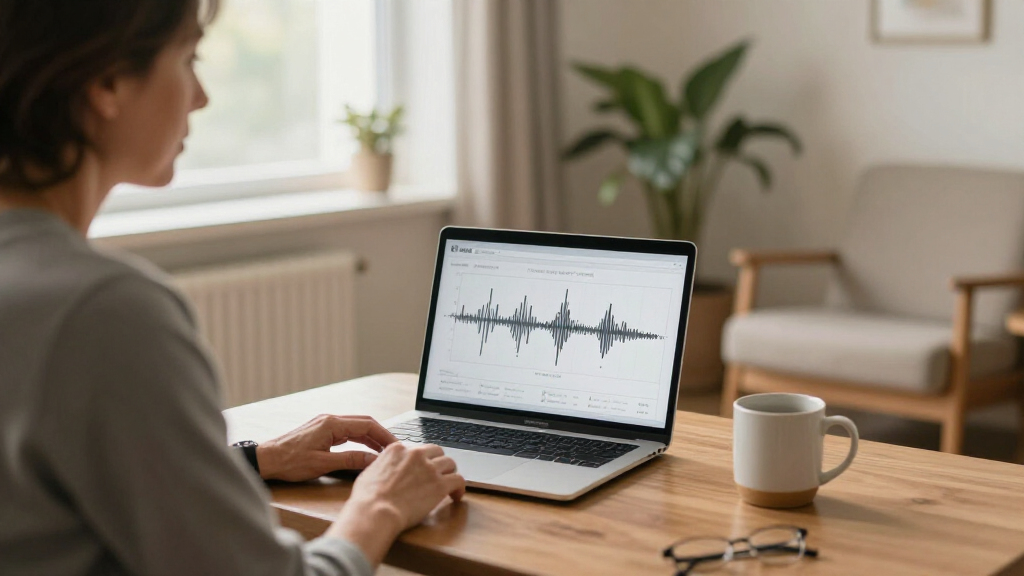
Researchers have developed a machine-learning “speech clock” that estimates a person’s chronological age from hundreds of features in their speech, and a study of 2,928 Spanish-speaking participants found that the difference between speech-estimated and actual age was associated with measures of biological aging, brain health, cognition and dementia. The findings, published in Science Advances, point to a possible low-cost way to monitor aspects of aging, but the measure is not a dementia diagnostic test and has not been shown to predict future decline.
The research team analyzed participants from Argentina, Chile, Colombia, Mexico and Peru. The group included healthy adults and people diagnosed with mild cognitive impairment, Alzheimer’s disease and forms of frontotemporal dementia. Using machine-learning models, researchers combined hundreds of acoustic and linguistic characteristics to estimate each person’s age from speech and calculate a “speech age gap”: the difference between that estimate and chronological age.
The features included speech rate and pauses, pitch, emotional content, vocabulary, semantic precision and the amount and organization of verbal output. The approach was not based on a single voice feature. According to the study report, the combined speech-age measure differentiated clinical groups better than individual acoustic or linguistic features considered separately.
Participants whose speech appeared older than their chronological age tended to show higher measures of aging across several systems. The reported associations included brain age estimated through structural and functional neuroimaging, and epigenetic aging measured by three DNA-methylation clocks. Larger speech age gaps were also associated with lower global cognition, executive function, functional abilities and performance on several memory measures. The relationships extended to some non-linguistic cognitive tests, according to the report.
The study also found differences between clinical groups: healthy participants had the lowest speech age gaps, while larger gaps were observed among people with Alzheimer’s disease and forms of frontotemporal dementia. In participants with Alzheimer’s, the speech-derived measure was associated with higher plasma levels of p-tau217, a blood biomarker linked to Alzheimer’s pathology. These are associations reported by the researchers; they do not establish that speech changes cause disease or can identify an individual diagnosis.
A Low-Cost Signal of Aging
Many measures used to study biological or brain aging rely on MRI scans, blood samples, molecular tests or specialist assessments. Speech can be recorded remotely and repeatedly without an invasive procedure, which could make it easier to gather over time and less expensive than some conventional assessments. The study suggests that speech may contain signals related not only to age but also to cognition, brain health and other aspects of a person’s health and circumstances.
That possibility could matter in places where advanced diagnostic equipment and specialist services are difficult to access. The research draws on participants from five Latin American countries, a region the report describes as underrepresented in dementia research. It therefore adds evidence from populations and settings not always included in studies of aging biomarkers. Still, the results do not show that a speech clock can replace existing clinical evaluations or laboratory measures. Its potential role would need to be tested in further research, possibly as a complement to other assessments rather than a stand-alone tool.
The findings also point to the range of influences that can shape speech. The study linked accelerated speech aging with a more adverse social exposome—a combination of factors such as education, financial conditions, food security, healthcare access and early-life experiences. This association does not show that any one social factor caused a larger speech age gap. It does suggest researchers will need to account for people’s backgrounds when evaluating the measure across different groups.
As an affiliate, we earn on qualifying purchases.
How Researchers Built the Clock
Rather than treating speech as a single signal, the team used machine learning to combine information about how people speak and what they say. Acoustic characteristics included elements such as pitch, pauses and speaking rate. Linguistic features captured vocabulary, semantic precision and the organization and volume of verbal output. The model used these features together to estimate chronological age, then compared that estimate with each participant’s actual age.
The study compared speech-age gaps with independent measures of brain and biological aging, cognitive performance, clinical functioning and dementia status. That breadth is part of what makes the findings relevant: the reported links were not limited to language performance, and included imaging, DNA-methylation measures and a blood biomarker. The study also examined social conditions associated with aging, rather than treating speech as a signal of biology alone.
However, the reported research was primarily cross-sectional: it assessed participants at a point in time rather than following them to determine how their speech and health changed. This design can identify associations but cannot establish whether an older-appearing speech profile precedes cognitive decline, follows it, or reflects other factors. The researchers say longitudinal studies and testing in more languages, cultures and natural speaking situations are needed.
“Our voice appears to contain much more information about aging than we previously recognized.”
— Agustin Ibanez, senior author and professor of brain health at the Global Brain Health Institute and Trinity College Dublin School of Medicine
Prediction and Diagnosis Remain Untested
The study does not establish that the speech clock can predict who will later develop cognitive decline or dementia. Because the research was primarily cross-sectional, it cannot show the order of events or whether a larger gap precedes changes in health. An association with a disease group or biomarker is not proof that the measure can diagnose disease in an individual.
It is also not yet clear how reliably the model would work across other languages, cultures and everyday speaking conditions. The study included Spanish-speaking participants in five countries, but broader validation is needed before the results can be applied to populations not represented in this sample. The supplied report does not provide a specific accuracy rate or threshold for classifying an individual, so the study’s findings should not be read as a ready-to-use screening result.
Researchers will also need to examine how factors such as education, financial circumstances, healthcare access and early-life experiences affect estimates. The reported link with social adversity makes this especially relevant: a tool used across communities would need to distinguish meaningful health signals from differences in opportunity, background or speaking context. The report does not say when such testing will be completed or whether the clock will be developed for clinical use.
Longitudinal Tests Needed
The next research step identified by the study team is to test the speech clock in longitudinal studies, following participants over time. That could help establish whether speech-age gaps change before, alongside or after shifts in cognition and clinical health, and whether they can forecast later outcomes. Such studies would address a central limitation of the current research.
The researchers also call for validation in additional languages and cultures, as well as testing in more naturalistic speech settings. Before clinical implementation, the measure would need to show that it works reliably across different populations and recording conditions, and that its results add useful information to existing assessments. For now, the study presents speech as a promising research signal—not a confirmed diagnostic or forecasting tool.
Key Questions
What is a speech clock?
A speech clock is a machine-learning model that estimates chronological age by analyzing features of how a person speaks and the language they use. This study combined hundreds of acoustic and linguistic characteristics rather than relying on one feature.
What does the speech age gap mean?
The speech age gap is the difference between a person’s actual age and the age estimated by the speech model. The study reported that larger gaps were associated with several measures of biological aging, brain health and cognitive performance.
Can the speech clock diagnose Alzheimer’s disease?
No. The researchers say the measure is not a diagnostic test. Although the study found associations with dementia groups and, in Alzheimer’s disease, plasma p-tau217, it did not establish that speech analysis can diagnose an individual.
Could speech analysis predict future dementia?
That remains unknown. The study was primarily cross-sectional and did not establish whether an older-appearing speech profile predicts later cognitive decline or dementia. Longitudinal research is needed to test that possibility.
Who took part in the study?
The study included 2,928 Spanish-speaking participants from Argentina, Chile, Colombia, Mexico and Peru. They included healthy adults and people with mild cognitive impairment, Alzheimer’s disease and forms of frontotemporal dementia.
Source: rss
Columbus Day / Indigenous Peoples' Day Picks
long weekend sales
As an affiliate, we earn on qualifying purchases.