
The Enneagram outlines nine unique personality types that help you understand how you see the world, behave, and grow. Each type is driven by specific core motivations like security, recognition, or control. This system reveals your natural strengths and challenges, emphasizing how types connect and influence each other. Exploring these types offers valuable insights into your habits and emotional triggers. Keep exploring, and you’ll uncover more about yourself and your growth journey.
Key Takeaways
- The Enneagram identifies nine distinct personality types, each with unique core motivations, fears, and desires.
- It originates from ancient spiritual traditions and has evolved into a modern tool for self-awareness and personal growth.
- Types are interconnected in a dynamic system, with traits from neighboring types influencing behavior.
- The system helps recognize automatic responses, emotional triggers, and unhealthy patterns for better self-understanding.
- Practical applications include improving relationships, fostering empathy, and guiding behavioral and emotional development.
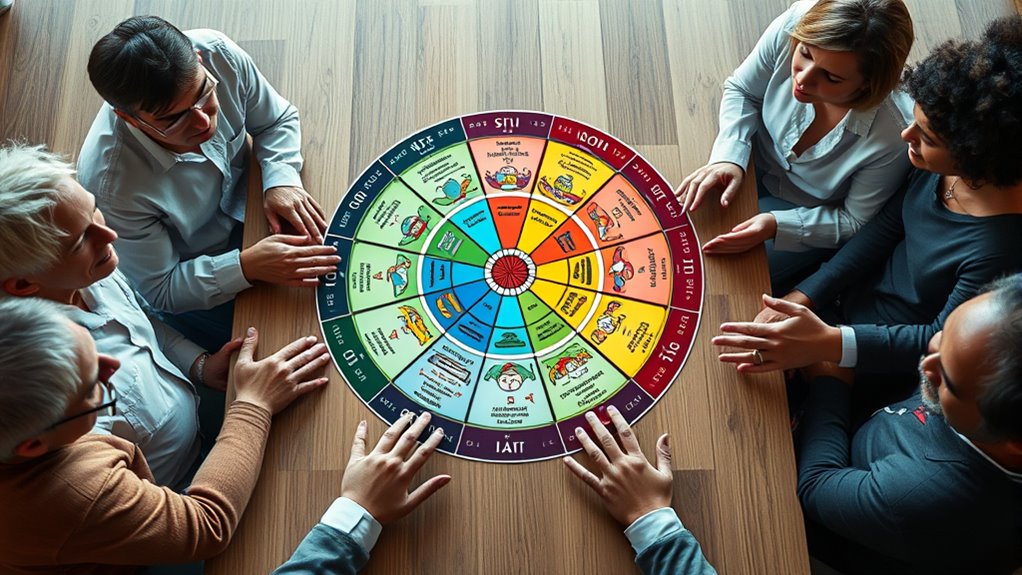
Have you ever wondered why people react so differently to the same situation? The answer often lies in the unique makeup of each person’s personality. The Enneagram offers a fascinating way to understand these differences by identifying nine distinct personality types. Its origins trace back to ancient spiritual traditions, but it has evolved into a practical tool for personal growth and self-awareness. Today, the Enneagram is widely used in various settings, including therapy, coaching, and team development. One reason for its popularity is its foundation in personality assessment techniques that help you recognize your core motivations, fears, and desires. Unlike other personality tests that focus on behavior alone, the Enneagram digs deeper into why you act the way you do, revealing the underlying patterns that shape your worldview. Additionally, the Enneagram’s roots in diverse spiritual and philosophical traditions contribute to its depth and versatility as a self-discovery tool.
When you start exploring the Enneagram, you’ll notice that it emphasizes nine core types, each with its own set of strengths and challenges. These types are interconnected in a dynamic system, meaning you might find traits from neighboring types or experience growth and regression along a spectrum. The system’s roots, or Enneagram origins, are somewhat debated, but it’s believed to draw from various spiritual and philosophical traditions that aimed to understand the human psyche. Over time, psychologists and personality experts adopted and adapted these ideas, integrating them into modern personality assessment techniques. This blend of ancient wisdom and contemporary science makes the Enneagram a powerful tool for understanding yourself and others.
As you delve into the types, you’ll learn that each one is driven by a specific core motivation—whether it’s the need for security, recognition, control, or connection. Recognizing your type can be eye-opening because it illuminates your automatic responses and emotional triggers. Many people use the Enneagram as a guide to personal development, helping them identify unhealthy patterns and work toward growth. It’s also valuable in improving relationships, as it fosters empathy and understanding by revealing how different types perceive the world. The process of discovering your type often involves various personality assessment techniques, including questionnaires, reflection exercises, and discussions with others. These tools help clarify which of the nine types best describes you, providing a roadmap for self-discovery and change.
Ultimately, the Enneagram offers more than just labels; it’s a journey into understanding the complex layers of your personality. By recognizing your core motivations and patterns, you gain insight into your behaviors and choices, empowering you to make conscious changes. Whether you’re seeking personal growth, better relationships, or simply a deeper understanding of yourself, the Enneagram serves as a valuable guide. Its origins, combined with effective assessment techniques, make it a timeless and practical approach to exploring the depths of human personality. Furthermore, understanding the foundational principles of the Enneagram can enhance your ability to identify your personality types more accurately and foster meaningful self-awareness.
Frequently Asked Questions
How Accurate Is the Enneagram in Predicting Behavior?
The Enneagram offers useful insights into behavior prediction, but it’s not 100% accurate. You might find that your personality consistency varies in different situations, so the system provides a framework rather than definitive predictions. It helps you understand your tendencies and motivations, but keep in mind that human behavior is complex and influenced by many factors beyond your Enneagram type. Use it as a guide, not a crystal ball.
Can Personality Types Change Over Time?
Personality types can change over time, especially if you actively work on personal growth. For example, you might start as a Type 6, seeking security, but through self-awareness, evolve toward greater independence. While personality stability varies, type evolution is possible with effort and experiences. Your core traits may shift, reflecting your development, but the process depends on your willingness to change and adapt.
How Do Enneagram Types Influence Relationships?
Your Enneagram type influences your relationships by shaping your emotional compatibility and communication styles. When you understand your type, you become aware of your needs and how you express emotions, making it easier to connect with others. Recognizing differences in communication helps you navigate conflicts and deepen bonds. By embracing these insights, you improve your relationships, fostering empathy, understanding, and stronger emotional connections with your partner or friends.
Is the Enneagram Scientifically Validated?
You might think the Enneagram is just a handy tool, but its scientific validation is murky at best. While some scientific studies support its insights, validity concerns remain due to limited rigorous research and subjective interpretations. It’s like chasing shadows—you can find useful patterns, but don’t rely on it as hard science. Be cautious, and consider it a helpful guide rather than an absolute truth.
How Can I Determine My Enneagram Type Accurately?
To determine your Enneagram type accurately, start with self-assessment techniques like reflecting on your core motivations and behaviors. You can also take professional typing assessments for a more structured approach. Be honest with yourself, explore different types, and consider consulting Enneagram experts if needed. Combining self-awareness with professional insights helps you identify your true type more reliably.
Conclusion
By understanding the nine personality types of the Enneagram, you unseal a treasure trove of self-awareness that can transform your relationships and personal growth. Think of it as holding the key to the universe’s most intricate puzzle—your own mind. Embracing these insights might just make you feel like you’ve discovered the secret to mastering life itself. So dive deep, explore freely, and let the Enneagram guide you to becoming your best, most authentic self.