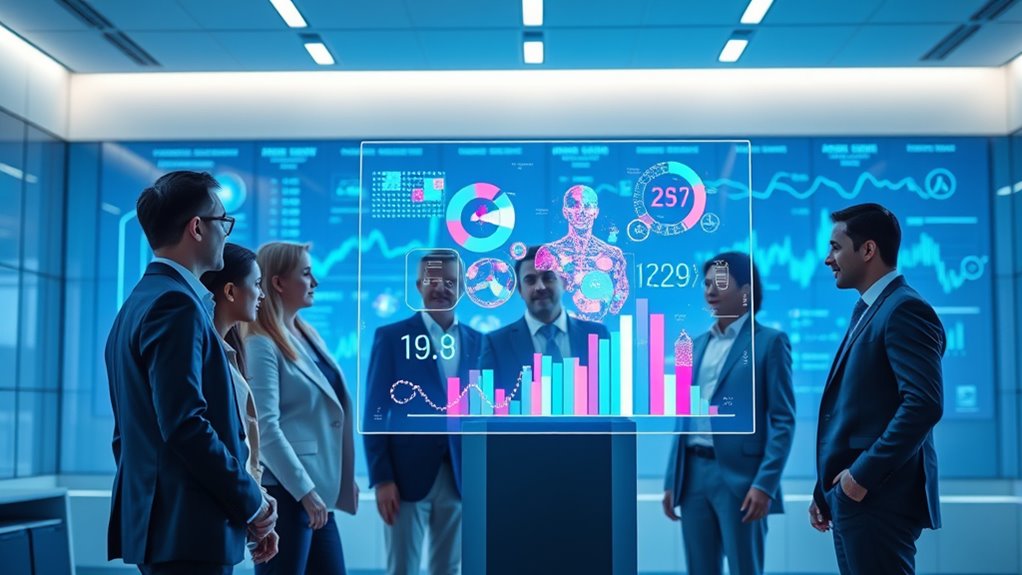

The future of personality testing in hiring involves more remote, AI-driven, and adaptive assessments that deliver faster, more accurate, and fair evaluations. You’ll experience seamless online platforms that simulate real-world scenarios and personalize questions based on your responses, reducing bias and increasing fairness. As these technologies evolve, they’ll help you find better job matches more efficiently. Keep exploring to discover how these innovations will shape more transparent and effective hiring processes.
Key Takeaways
- Remote assessments will become the standard, offering greater accessibility and flexibility for both candidates and employers.
- AI-driven tests will deliver more accurate, nuanced, and fair personality profiles through adaptive and interactive formats.
- Integration of advanced algorithms will streamline hiring, enabling faster and more precise candidate matching.
- Technologies will enhance transparency and reduce biases, promoting equitable and inclusive hiring practices.
- Future assessments will focus on real-world interaction simulation, providing deeper insights into candidate behavior and potential.
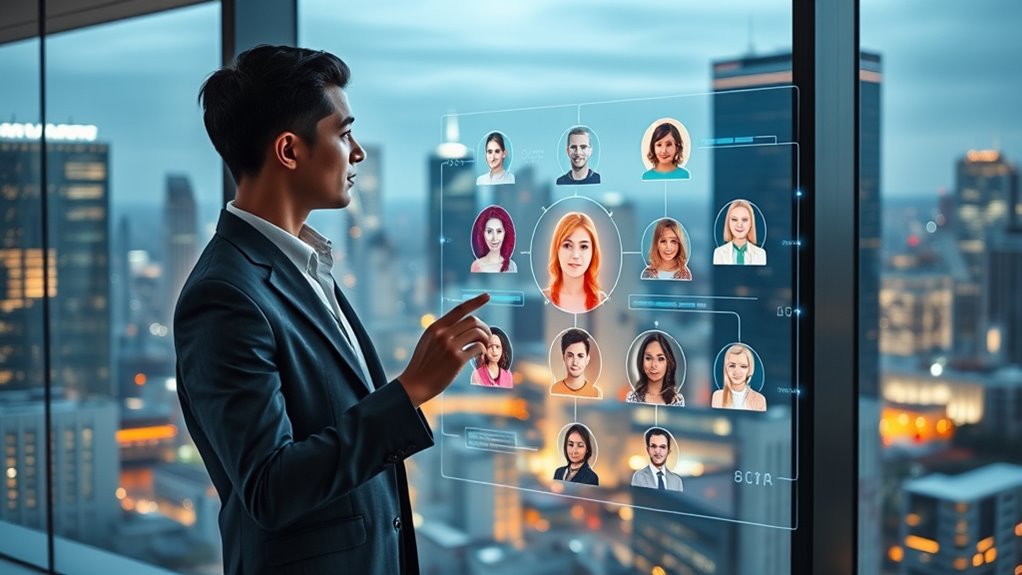
As technology advances, personality testing is becoming an increasingly integral part of the hiring process. You might have already noticed how companies are shifting towards remote evaluations, allowing you to complete tests from anywhere. This trend isn’t just about convenience; it’s about gaining deeper insights into your personality traits without the constraints of traditional in-person assessments. Remote evaluations enable employers to evaluate your compatibility with their culture and role in real-world settings, often through online platforms that can simulate work scenarios. As you engage with these tests, you might find that AI integration is playing a significant role in analyzing your responses more efficiently and accurately than ever before.
AI-powered algorithms can now process vast amounts of data from your tests, identifying patterns and traits that might be subtle or overlooked by human evaluators. This means that your personality profile is being constructed with a high degree of precision, helping employers make more informed decisions. You’ll notice that AI integration also allows for faster turnaround times, so instead of waiting weeks for feedback, you might receive insights within days—or even hours. This rapid processing can help streamline the hiring pipeline, ensuring that both you and the employer move forward quickly and efficiently.
Moreover, AI-driven personality assessments are becoming smarter and more adaptive. They can tailor questions based on your previous responses, creating a more personalized testing experience. This adaptability helps in capturing a more accurate picture of your personality, reducing biases often associated with traditional testing methods. You may also find that these assessments are more engaging, using interactive formats that keep you motivated and focused. As these tools evolve, they’re likely to incorporate more nuanced metrics, evaluating not just your personality but also your potential for growth and cultural fit. Additionally, understanding the role of dynamic communication exercises can further enhance the accuracy of personality profiling by revealing how candidates handle real-world interactions.
The future of personality testing in hiring involves a seamless blend of remote evaluations and AI integration, making the entire process more accessible, efficient, and precise. You’ll benefit from assessments that are not only convenient but also more reflective of your true personality, thanks to advanced algorithms. As these technologies mature, they’ll probably become standard in hiring practices, helping employers identify the best candidates faster and more accurately. For you, this means a more transparent, fair, and personalized evaluation process, ultimately leading to better job matches and a more satisfying employment experience.
Frequently Asked Questions
How Accurate Are Personality Tests in Predicting Job Performance?
Personality tests can be fairly accurate in predicting job performance if they have strong test validity. However, their accuracy depends on how well the test measures relevant traits and how bias is mitigated. You should look for tests that are scientifically validated and designed to reduce bias, ensuring fair assessments. While helpful, remember that personality tests are just one part of an all-encompassing hiring process.
Are There Privacy Concerns With Personality Testing in Hiring?
Yes, privacy concerns arise with personality testing in hiring. You might worry about data privacy, as your personal information could be misused or shared without your consent. Employers should guarantee they obtain informed consent before administering tests and clearly explain how your data will be used and protected. Being transparent about data privacy helps build trust and reduces potential privacy issues during the hiring process.
How Do Cultural Differences Affect Personality Test Results?
You might think personality tests are universal, but cultural biases often skew results, making them less reliable across different backgrounds. Ironically, the more you try to standardize these tests, the more you highlight cultural differences. To improve fairness, test adaptation is essential—tailoring questions to reflect cultural nuances guarantees you get a clearer picture of personality traits, regardless of where someone comes from.
Can Personality Tests Replace Traditional Interview Methods?
Personality tests can’t fully replace traditional interviews because they lack candidate transparency and may not always guarantee test validity. While tests offer valuable insights, they should complement interviews rather than replace them. You need to see how candidates communicate, problem-solve, and fit culturally. Combining both methods provides an extensive view, reducing biases and making your hiring process more effective and fair.
What Ethical Considerations Surround Personality Testing in Recruitment?
Imagine you’re about to join a team, but you’re unsure if the test reveals your true self. Ethically, you need informed consent, so candidates understand how their data is used. Bias mitigation is essential, too, to prevent unfair discrimination. You should prioritize transparency and fairness, ensuring personality tests respect privacy and diversity, so everyone has an equal shot—like a level playing field—rather than an obstacle course.
Conclusion
The future of personality testing in hiring is brighter than ever, transforming how you find the perfect candidate. As technology advances, you’ll uncover insights so powerful they could reshape entire industries overnight. Embracing these tools now means you’re stepping into a hiring revolution—one where you’ll discover talent faster, more accurately, and with unmatched precision. Don’t get left behind in the dust; this is the moment where personality testing becomes your secret weapon for unstoppable success.