TL;DR

Turn your wind-down time into listening time
- Thousands of audiobooks, podcasts and originals
- Listen on your phone, tablet or Echo — also offline
- Cancel anytime
A paper in Nature Communications describes the Knight Alzheimer Research Imaging dataset, which includes 6,217 brain imaging acquisitions from 1,645 people aged 42 to 97. The resource combines MRI, amyloid and tau PET scans with clinical, cognitive and other data, giving qualified researchers material to study how brain changes relate to aging and Alzheimer’s disease. It does not establish a diagnostic test or prove that imaging changes cause cognitive decline.
A paper published in Nature Communications describes a research dataset containing 6,217 brain imaging acquisitions from 1,645 people aged 42 to 97, covering healthy aging, preclinical Alzheimer’s disease and symptomatic disease. The Knight Alzheimer Research Imaging dataset, or KARI, pairs MRI and amyloid and tau PET scans with clinical and cognitive assessments, offering researchers a way to investigate how imaging measures relate to cognitive health over time.
The KARI resource was developed by the Knight Alzheimer Disease Research Center at Washington University in St. Louis. More than 800 participants had imaging at multiple time points, and some were followed for more than 15 years. The study’s authors describe the dataset and examine associations between imaging biomarkers, age, clinical impairment and cognitive performance.
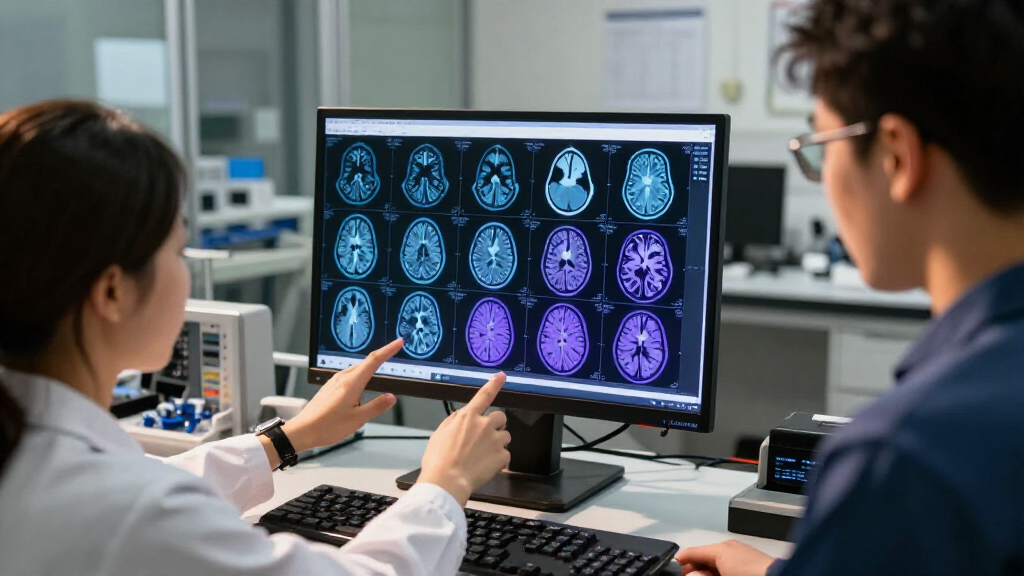
The scans capture several aspects of the brain. The dataset includes structural, functional and diffusion MRI, as well as PET imaging for amyloid and tau, proteins associated with Alzheimer’s disease. It also brings together genetic information, fluid biomarkers, demographic details and clinical and cognitive assessments. Raw images and processed measures, including anatomical segmentations and quantified biomarkers, are available to qualified researchers.
Of the imaging records, the paper reports 3,385 MRI sessions involving 1,571 participants, 2,684 amyloid PET scans from 1,370 participants and 1,113 tau PET scans from 826 participants. In total, 792 people had MRI, amyloid PET and tau PET imaging. The study also had clinical assessments for 1,643 participants within two years of scans, allowing researchers to compare imaging measures with clinical status near the time of imaging.
A Resource for Studying Early Brain Changes
Alzheimer’s-related changes can begin well before symptoms are apparent. The paper notes that amyloid and tau pathology may accumulate years or decades before noticeable cognitive symptoms, making this earlier period an area of interest for research into disease progression and possible intervention. Following people over time while measuring different brain features can help scientists examine how these measures relate to one another and to cognitive performance.
The dataset’s value lies in its combination of repeated imaging and clinical information, rather than in a single scan count alone. Researchers can study molecular imaging, brain structure and cognition in many of the same individuals. That may support analyses of patterns across aging and disease stages, but associations in a dataset do not by themselves establish what causes cognitive changes or predict an individual’s future health.
Most participants had no signs of cognitive impairment, according to the paper. That gives researchers substantial material for studying changes that may occur before symptoms are recorded. The resource is for research use; the paper does not report a new clinical screening method or a treatment result.
Alzheimer's disease research books brain imaging MRI PET
As an affiliate, we earn on qualifying purchases.
As an affiliate, we earn on qualifying purchases.
How the KARI Cohort Was Assembled
The study focuses on the Knight Alzheimer Research Imaging dataset, rather than reporting a clinical trial or testing a new therapy. Its authors set out to describe the resource and provide researchers with context and quality-assurance information for using it in future investigations. Data were collected at a single institution under uniform standards, which the authors say helps maintain consistency, although some equipment variation over time is inevitable.
The cohort spans a range of clinical status. Of 1,643 participants with available assessments, 1,120 had a maximum Clinical Dementia Rating score of 0, indicating no impairment on that scale; 362 reached 0.5, 150 reached 1 and 11 reached 2. The scale measures cognitive and functional impairment, with higher scores indicating greater impairment. These counts describe the cohort’s recorded assessments, not the prevalence of Alzheimer’s disease in the general population.
The mean participant age was 71.9 years. People with a Clinical Dementia Rating above 0 averaged 75.7 years, compared with 70 years among those scoring 0. The paper also reports differences between these groups in education, sex and APOE ε4 carrier status. Such cohort characteristics matter when interpreting analyses because age and other factors can relate both to cognitive scores and to brain imaging measures.
“the necessary context and quality-assurance metrics to utilize this expansive resource for their own investigations”
— The KARI study authors, as quoted in the paper’s stated aim
What the Dataset Cannot Establish Yet
The paper describes a research resource and examines relationships between imaging measures and clinical and cognitive status. The available source material does not provide detailed results for each imaging biomarker’s relationship with cognitive performance, nor does it specify the size or direction of every reported association. The dataset’s scan totals should not be read as proof that a particular imaging pattern predicts Alzheimer’s disease.
It is also unclear from the reported information how representative the cohort is of people outside this research center. Participants were recruited and assessed through a single institution, and the authors note that hardware variation can occur despite uniform data collection practices. These factors may affect how findings from future analyses apply to other populations or imaging settings.
Most participants were not clinically impaired, while fewer had mild or moderate impairment. The study therefore provides more observations from people without recorded impairment than from those at more advanced clinical stages. The dataset can support further work, but it does not settle how early imaging changes should be interpreted for an individual or whether they can guide treatment decisions.
Further Analyses of Longitudinal Data
The paper presents KARI as a resource for qualified researchers to use in their own investigations. Its repeated scans and accompanying cognitive assessments can support future studies of how amyloid, tau and brain structure change over time and how those changes relate to clinical measures. The source material does not identify a specific next study, release date or planned clinical application.
Researchers will need to examine the dataset’s composition and technical characteristics when designing analyses, including differences in age and clinical status and the possibility of imaging hardware variation. Any findings drawn from the resource will need to be reported with their methods and limitations, particularly when assessing whether observed associations can be applied beyond this cohort.
Key Questions
What is the KARI dataset?
The Knight Alzheimer Research Imaging dataset is a research resource developed by the Knight Alzheimer Disease Research Center at Washington University in St. Louis. It combines brain imaging with clinical, cognitive, genetic, fluid biomarker and demographic information.
How many people and scans are included?
The paper reports 1,645 participants aged 42 to 97 and 6,217 neuroimaging acquisitions. More than 800 participants had imaging at multiple time points, with some followed for more than 15 years.
What types of brain imaging does it include?
The dataset includes structural, functional and diffusion MRI, along with PET scans measuring amyloid and tau. Some participants had all three broad imaging types: MRI, amyloid PET and tau PET.
Does this study provide a new Alzheimer’s test?
No new diagnostic test is reported. The paper describes a research dataset and examines relationships between imaging biomarkers and measures of clinical and cognitive status; it does not establish a test for diagnosing an individual.
What remains unknown?
The source material does not give the full results for each imaging measure’s relationship with cognition or show that scan patterns cause or reliably predict decline. How findings from this single-center cohort apply to other populations also remains to be established.
Source: rss
Fall Picks
fall essentials
As an affiliate, we earn on qualifying purchases.