
TL;DR
A Mayo Clinic Q&A explains that balance relies on several body systems that can change with age, and that balance, strength and walking ability are linked to independence. The report describes symptoms and possible causes of unsteadiness, and outlines exercises while advising people with serious balance problems to consult a health care professional.
A Mayo Clinic Q&A published in 2025 says balance depends on several systems working together, and describes how age-related changes can affect steadiness, walking and independence. Kenton Kaufman, a Mayo Clinic researcher and clinician, outlines possible causes of balance problems and ways to practice, while advising people with serious difficulties to consult a health care professional before starting exercises.

Turn your wind-down time into listening time
- Thousands of audiobooks, podcasts and originals
- Listen on your phone, tablet or Echo — also offline
- Cancel anytime
The report says the muscles, eyes, inner-ear balance organ, nerves, heart and blood vessels all contribute to balance. Changes in these systems can affect coordination and steadiness. Research from Mayo Clinic’s Motion Analysis Laboratory, as described in the Q&A, examines how well a person can balance on one leg as a measure of how the nervous system and muscles work together with age.
Kaufman says balance, muscle strength and an efficient gait contribute to independence and well-being. The report identifies unintentional falls as the leading cause of injuries among adults 65 and older, and lists symptoms that can accompany balance problems: spinning sensations, lightheadedness, unsteadiness, falls or near-falls, dizziness and vision changes.
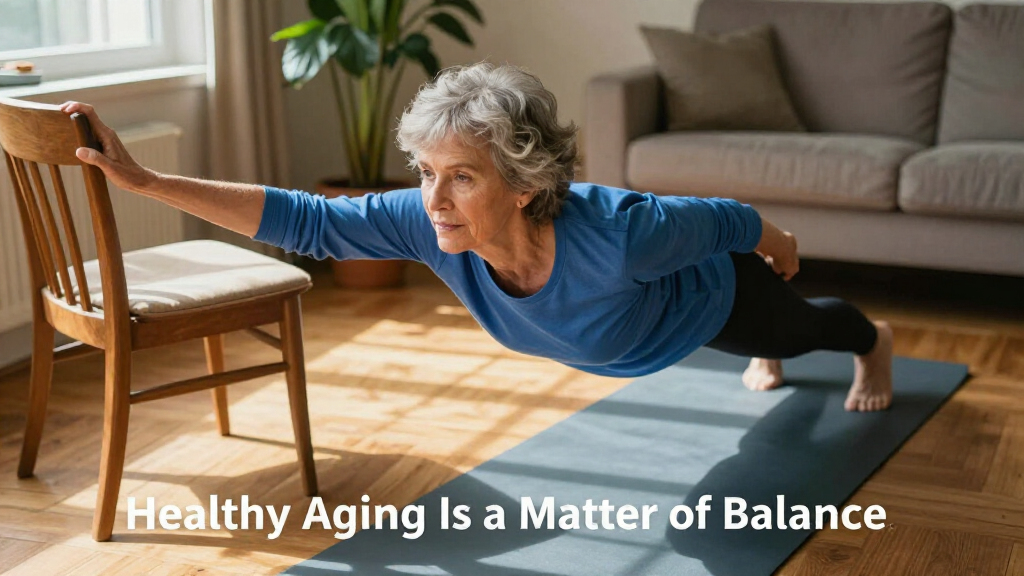
Possible causes include inner-ear disorders, nerve damage in the legs, vision problems, neurological conditions such as Parkinson’s disease or cervical spondylosis, and side effects of some medications. The Q&A recommends considering assessment by a physical therapist trained in balance issues, or activities such as tai chi, yoga and Pilates. It also suggests supported home practice, such as weight shifting or standing on one foot, but says people with serious problems should speak with a clinician first.
Balance and Everyday Independence
The report connects balance with walking ability, strength and independence, making changes in steadiness relevant beyond the risk of a fall. Difficulty maintaining balance may have different underlying causes, so the practical significance is not simply whether someone can complete an exercise: persistent or worsening symptoms may merit professional evaluation.
The advice also distinguishes between general practice and individualized care. Activities can help people work on balance, according to the Q&A, but exercises should be adapted to a person’s ability and safety needs. A physical therapist can design a program, while a health care professional can help evaluate serious symptoms or possible medical and medication-related causes.
Popular right now

Vitamix Touch & Go Advance 32-Ounce Bar Blender, White

Dyson V15 Detect Cordless Vacuum

Hisense 43-Inch S5 DécoTV Series 4K UHD Smart Fire TV with Hi-QLED Color, Dolby Vision and Atmos (43S5QF, 2026 Model)
As an affiliate, we earn on qualifying purchases.
How Balance Changes With Age
The article was published by Seniors Guide as a Mayo Clinic Q&A, responding to a reader in their early 60s who said their balance felt different with age. Kaufman, whose listed Mayo Clinic specialties include orthopedic surgery, physiology and bioengineering, answers by describing balance as a function of multiple interacting body systems.
The Q&A gives a rough self-check: standing unsupported on one foot for 30 seconds is described as good balance, while being unable to do so for five seconds is presented as a reason to work on balance. These are the report’s suggested benchmarks, not a diagnosis or substitute for an individual clinical assessment.
““In many ways, aging is a balancing act.””
— Kenton Kaufman, Ph.D., Mayo Clinic
Causes and Individual Risk Vary
The Q&A does not report new clinical trial results, quantify how much a specific exercise reduces falls, or establish that one-leg standing predicts an individual’s future health. Its one-leg benchmarks are presented as practical guidance, not as a diagnostic test. The report also does not say which cause applies to any particular reader.
Balance symptoms can have several possible explanations, including medical conditions and medication side effects. The article does not provide an individualized assessment or specify which exercises are appropriate for every person. Anyone with serious balance problems is advised to consult a health care professional before attempting the suggested exercises.
Discuss Persistent Symptoms With a Clinician
The report does not announce a scheduled follow-up or additional research milestone. For readers experiencing unsteadiness, its practical next steps are to seek professional guidance when problems are serious and consider a physical therapist trained in balance care for a customized exercise program. Those trying home practice are advised to use a stable support, such as a counter or table, when needed.
The source notes that the Mayo Clinic Q&A is educational material and does not replace regular medical care. It does not set out a treatment plan for a particular person; symptoms, their causes and suitable exercises remain matters for an individual health care discussion.
Key Questions
What systems contribute to balance?
The Mayo Clinic Q&A says balance relies on the muscles, eyes, inner ear, nerves, heart and blood vessels working together.
What can cause unsteadiness as people age?
The report lists possible causes including inner-ear problems, peripheral neuropathy, vision changes, neurological conditions and side effects of some medications. The cause for an individual cannot be determined from the article alone.
What exercises does the report suggest?
It mentions physical therapy, tai chi, yoga, Pilates and supported home practice such as weight shifting, standing on one foot or walking heel to toe. The report advises people with serious balance problems to consult a health care professional before exercising.
Does the one-leg test diagnose a balance disorder?
No. The Q&A offers one-leg standing times as general benchmarks, but does not describe them as a diagnosis. A health care professional can assess persistent or serious balance concerns.
Source: rss