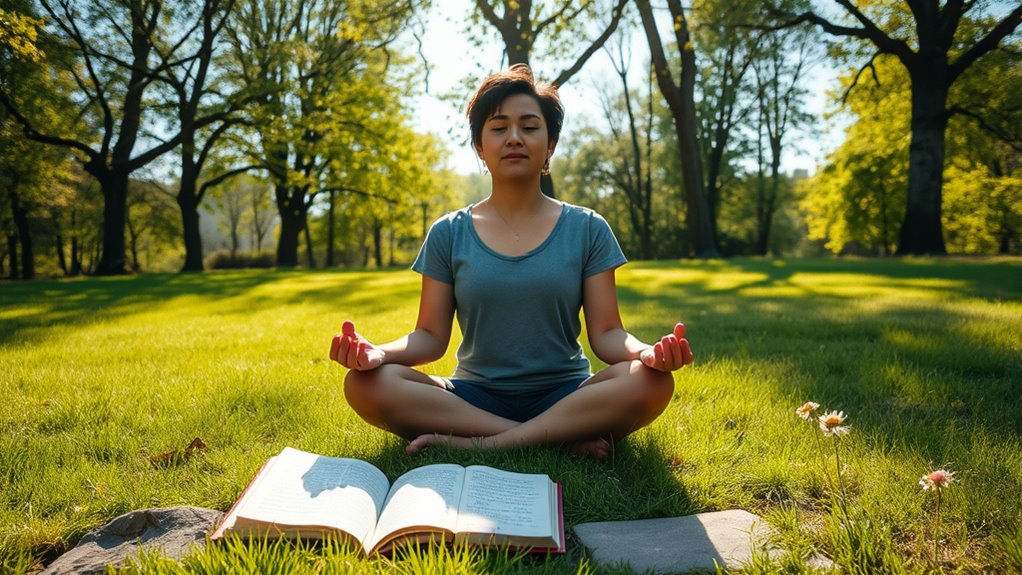

Exploring your personality combined with mindfulness practices can markedly boost your self-awareness and emotional intelligence. By understanding your traits, triggers, and patterns, you can manage your reactions better and foster healthier relationships. Mindfulness helps you stay present, reflect on your feelings, and align your actions with your values. Incorporating these strategies into your life can lead to personal growth and resilience, and there’s more to discover on how to make these practices work best for you.

Turn your wind-down time into listening time
- Thousands of audiobooks, podcasts and originals
- Listen on your phone, tablet or Echo — also offline
- Cancel anytime
Key Takeaways
- Combining personality exploration with mindfulness enhances self-awareness and emotional regulation.
- Mindfulness practices help identify personality traits through focused reflection and present-moment awareness.
- Regular mindfulness fosters deeper understanding of emotional responses linked to personality tendencies.
- Self-awareness techniques, like journaling and meditation, support personal growth and insight into personality traits.
- Integrating mindfulness into daily routines promotes balanced decision-making aligned with authentic personality insights.

Understanding your personality can be a powerful step toward personal growth, especially when combined with mindfulness practices. When you develop a clearer picture of your traits, tendencies, and emotional responses, you become better equipped to handle life’s challenges. One effective way to deepen this understanding is by enhancing your emotional intelligence. Emotional intelligence involves recognizing, understanding, and managing your own emotions while also empathizing with others. By improving your emotional intelligence, you can foster healthier relationships, reduce stress, and make more thoughtful decisions.
Deepening emotional intelligence enhances personal growth and strengthens relationships through better understanding of oneself and others.
Self-awareness techniques are essential tools in this process. These methods help you observe your thoughts, feelings, and behaviors objectively, without judgment. For example, keeping a journal of your emotional experiences allows you to identify patterns and triggers over time. You might notice that certain situations consistently evoke frustration or anxiety, giving you insight into areas for growth. Mindfulness practices like meditation or focused breathing also support self-awareness by anchoring your attention in the present moment. When you regularly pause to reflect on your internal state, you cultivate a habit of observing your emotional landscape with curiosity and compassion.
As you practice these techniques, you start to notice subtle shifts in how you respond to people and circumstances. Instead of reacting impulsively, you gain the ability to pause, assess your feelings, and choose a more constructive response. This deliberate approach enhances your emotional intelligence, allowing you to navigate social interactions with greater sensitivity and understanding. The more you engage in self-awareness exercises, the more intuitive your grasp of your personality becomes. You begin to see how your emotions influence your decisions and actions, giving you the opportunity to align your behavior with your values and goals.
Integrating mindfulness into your daily routine amplifies these benefits. By dedicating a few minutes each day to mindfulness practices, you create space for self-reflection and emotional regulation. Over time, you develop a stronger sense of self, which translates into increased confidence and resilience. Additionally, understanding the importance of AI security in safeguarding personal information can motivate you to implement mindful digital practices that protect your privacy. Remember, emotional intelligence and self-awareness are skills that grow with consistent effort. As you deepen your understanding of your personality, you release new possibilities for personal growth, healthier relationships, and a more balanced life. Embracing these practices empowers you to become more attuned to yourself and the world around you, paving the way for meaningful change.
Frequently Asked Questions
How Long Does It Typically Take to See Benefits From These Practices?
You might start noticing benefits from these practices within a few weeks, but it varies based on your practice duration and consistency. Typically, with regular effort—about 10-20 minutes daily—you could see improvements in your mood, focus, and stress levels within 4-6 weeks. The benefit timeline depends on your commitment, so sticking with it consistently helps you experience positive changes sooner rather than later.
Can Personality Traits Change Permanently Through Mindfulness?
Think of your personality as a sturdy oak, but even the strongest trees can sway. Yes, mindfulness can impact your personality traits, leading to lasting changes. While personality stability exists, consistent mindfulness practices can gently reshape traits like anxiety or openness. Over time, you might notice a more balanced, resilient version of yourself, proving that with dedication, your personality isn’t set in stone but can evolve through mindful awareness.
Are There Specific Mindfulness Techniques Suited for Different Personalities?
Yes, certain mindfulness techniques suit different personalities through mindfulness customization. For example, if you’re extroverted, practices like group meditation or mindful social interactions can enhance your experience. If you’re introverted, solo practices like guided imagery or body scans may work better. Understanding your personality compatibility helps you select techniques that resonate, making mindfulness more effective and personalized for your unique traits.
How Do I Choose the Right Personality Assessment Tools?
To choose the right personality assessment tools, focus on your goals and the specific traits you want to measure. Research different assessment options, considering their reliability and validity for accurate personality measurement. Look for tools suited to your context, whether for personal growth, hiring, or team building. Assessment selection should align with your needs, ensuring you get meaningful insights that help you understand yourself or others better.
What Are Common Challenges Faced When Starting These Practices?
When starting these practices, you might face initial resistance and self-awareness hurdles. It’s common to feel unsure or uncomfortable, but persistence helps you push through. You may also struggle to stay consistent or confront difficult truths about yourself. To overcome these challenges, set small, achievable goals, be patient, and remind yourself of the long-term benefits. Embracing a non-judgmental attitude can make the journey smoother and more rewarding.
Conclusion
By exploring your personality and embracing mindfulness, you open the door to greater self-awareness and inner peace. These practices help you navigate life’s ups and downs with clarity and calm. Remember, understanding yourself is a journey, not a destination—so don’t throw in the towel at the first hurdle. Keep pushing forward, and you’ll find that the more you invest in your growth, the more your true self will shine through.
Fall Picks
fall essentials
As an affiliate, we earn on qualifying purchases.