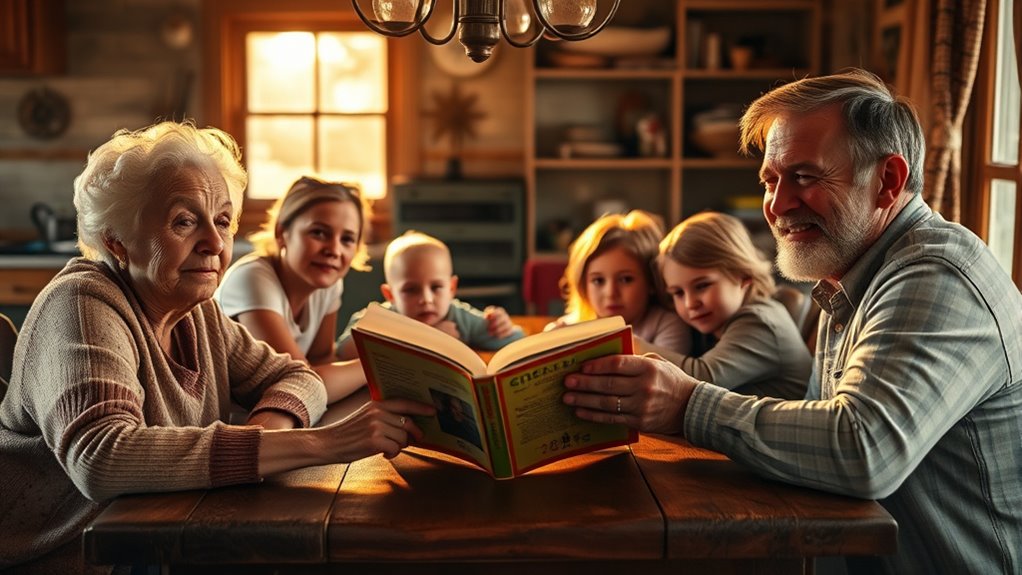

Family dynamics play a vital role in shaping your personality by influencing your self-esteem, emotional regulation, and social skills from an early age. The way your family interacts, manages conflicts, and shows warmth or discipline impacts how you trust others, handle emotions, and develop confidence. Supportive environments foster resilience and empathy, while conflicted or neglectful ones can lead to insecurities. To understand how these experiences shape you, keep exploring the deeper connections between family and personality.
Key Takeaways
- Parenting styles shape traits like confidence, emotional regulation, and social skills, influencing overall personality development.
- Sibling relationships foster social skills, empathy, rivalry, and conflict resolution, impacting emotional resilience.
- Family environment, including warmth and discipline, affects self-esteem, trust, and adaptability.
- Family conflict and support systems influence emotional growth and worldview.
- Early family interactions establish behavioral patterns and influence personality traits across life stages.

Your family environment plays a pivotal role in shaping your personality, influencing how you think, behave, and relate to others. The way your parents interact with you and each other sets foundational patterns that stick with you throughout life. Parenting styles, for instance, profoundly impact your self-esteem, emotional regulation, and social skills. Authoritative parents, who combine warmth with clear boundaries, often foster children who are confident, independent, and capable of forming healthy relationships. On the other hand, authoritarian parents, strict and less responsive, might produce individuals who are obedient but possibly less assertive or prone to anxiety. Permissive parenting, characterized by indulgence and a lack of discipline, can lead to issues with impulse control and boundary-setting later in life. Your experience with your parents’ approach shapes your worldview and influences how you navigate relationships outside the family.
Sibling relationships also play a vital role in your personality development. Growing up with siblings exposes you to a range of social interactions that teach cooperation, rivalry, empathy, and conflict resolution. These relationships can be a source of support and companionship or, at times, competition and jealousy. The way you and your siblings interact influences your ability to manage disagreements and develop emotional resilience. For example, siblings who share a close bond often learn effective communication and empathy early on, which helps in forming trusting friendships and romantic relationships later. Conversely, rivalry or neglect within sibling relationships might foster feelings of insecurity or competitiveness. These dynamics teach you about fairness, sharing, and how to handle disagreement, all of which shape your personality traits like patience, assertiveness, and social awareness.
The combination of parenting styles and sibling relationships creates a complex web of influences that mold your personality. A nurturing family environment that balances discipline with warmth encourages traits like self-confidence and adaptability. Conversely, inconsistent or overly strict parenting paired with strained sibling interactions can lead to traits such as mistrust or difficulty trusting others. The way your family manages conflicts, celebrates successes, and offers support all contribute to your emotional development. These early experiences also impact your capacity for empathy, your approach to authority, and your overall outlook on life. Recognizing how these family dynamics influence you helps you understand your behaviors and emotional responses better, and can guide you in fostering healthier relationships as you grow older.

Stress Relief: Adult Coloring Book with Animals, Landscape, Flowers, Patterns, Mushroom And Many More For Relaxation
As an affiliate, we earn on qualifying purchases.
Frequently Asked Questions
How Do Sibling Relationships Affect Personality Development?
Sibling relationships shape your personality by exposing you to sibling rivalry and shared experiences. When you face rivalry, you learn about competition and conflict resolution, which influences your emotional resilience. Shared experiences, like family traditions or conflicts, help you develop social skills and empathy. These interactions teach you about cooperation, boundaries, and self-awareness, ultimately molding how you approach relationships and challenges throughout your life.
Can Family Conflicts Influence Long-Term Personality Traits?
Family conflicts can shape your long-term personality traits, especially your emotional resilience and conflict resolution skills. For example, if you grow up in a household with frequent disagreements, you might develop strong coping mechanisms and become more adaptable. Conversely, unresolved conflicts can lead to anxiety or difficulty managing stress later in life. These experiences influence how you handle challenges, shaping your personality over time.
What Role Does Parenting Style Play in Shaping Personality?
Your parenting style plays a vital role in shaping your personality. When parents use positive parenting techniques, like consistent discipline and emotional bonding, they foster self-confidence and social skills. Conversely, overly strict or unresponsive parenting can lead to insecurity or rebellious tendencies. Your early experiences with emotional bonding help develop your trust and empathy, influencing how you relate to others later in life.
How Does Birth Order Impact Individual Personality?
Did you know that firstborns are 25% more likely to be conscientious and organized? Birth order markedly impacts your personality traits; as the eldest, you often develop leadership skills and responsibility. Middle children tend to be adaptable and diplomatic, while youngest siblings are more sociable and charming. Recognizing these patterns helps you understand yourself better and how your position in the family influences your behavior and traits.
Do Cultural Family Norms Alter Personality Outcomes?
Yes, cultural family norms do alter personality outcomes. You’re influenced by cultural values that shape your behaviors, beliefs, and attitudes. Familial expectations within your culture can reinforce specific traits or social roles, affecting how you develop emotionally and socially. These norms guide your interactions and perceptions, making your personality unique to your cultural background. Embracing these influences helps you understand yourself better and adapt within your community.
Conclusion
As you reflect on how family shapes you, remember that your personality is a mosaic crafted by those early interactions. Like a sculptor chiseling marble, your family molds your traits, strengths, and vulnerabilities. Recognize that understanding these roots empowers you to grow beyond them. Don’t let your past define you—use it as a foundation to build a future you choose. After all, your story is yours to shape, and the power to change begins within you.