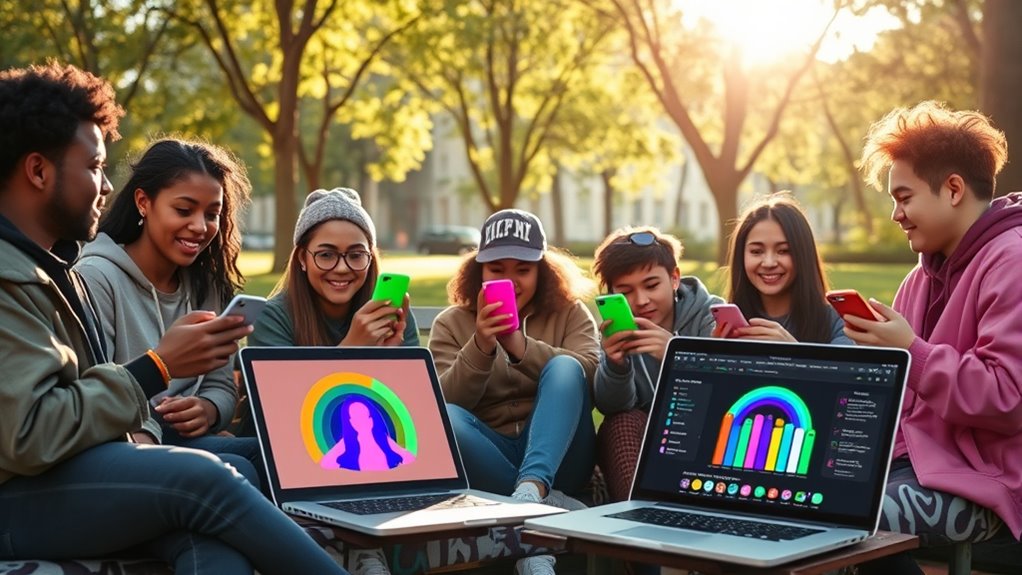

Gen Z popularized the color personality test through social media platforms like TikTok, Instagram, and Twitter, where fun and visually appealing quizzes spread rapidly. They share results, tag friends, and turn these tests into community trends, emphasizing self-expression and identity. This online culture makes personality quizzes more relatable and engaging, aligning with Gen Z’s values of authenticity and quick insights. Keep exploring to discover how this trend influences identity and self-discovery today.
Key Takeaways
- Social media platforms like TikTok and Instagram rapidly disseminated colorful personality quizzes, making them highly shareable and engaging.
- Gen Z embraced the tests for their visual appeal, quick results, and alignment with values of self-expression and individuality.
- Viral trends turned simple quizzes into community-driven phenomena, encouraging collective participation and conversation.
- The tests became tools for self-discovery and identity, linking colors to personality traits and mental health awareness.
- Digital culture elevated the quizzes from entertainment to meaningful symbols of personal growth and social connection.

As Generation Z continues to shape cultural trends, many are turning to fun and insightful tools like the color personality test to better understand themselves and others. These tests have gained popularity largely due to social media trends, where quick, engaging content spreads rapidly. Platforms like TikTok, Instagram, and Twitter have made it easy for Gen Z to share their results, compare different personality types, and discuss what their colors reveal about their identities. This online buzz fuels curiosity and invites collective participation, making the color personality test more than just a fun quiz—it becomes a way to explore personal identity within a community.
Generation Z’s social media buzz turns color personality tests into community-driven tools for self-discovery.
You might notice that a lot of your friends post their color results and tag each other, turning what was once a simple personality test into a social phenomenon. This trend is driven by the desire for authenticity and self-discovery, hallmarks of Gen Z’s approach to identity exploration. Instead of traditional personality assessments that feel formal or clinical, these colorful tests are easy, relatable, and visually appealing, fitting perfectly into the fast-paced content shared on social media. They provide a quick snapshot of who you are and invite others to reflect on their own traits, creating a shared language around personality types.
Moreover, the popularity of these tests aligns with Gen Z’s emphasis on individuality and self-expression. By identifying with a specific color, you can articulate qualities that resonate with you, whether it’s the calm of blue, the energy of red, or the creativity of purple. The visual and interactive nature of these quizzes makes self-discovery more accessible, especially in a digital age where instant gratification is king. Additionally, understanding the 16PF personality traits behind these colors can deepen self-awareness and offer a more nuanced view of personality. As a result, social media trends surrounding the color personality test aren’t just about entertainment—they serve as tools for identity exploration, helping you articulate your personality in ways that feel genuine and fun.
This widespread adoption also encourages conversations about mental health, emotional intelligence, and personal growth. When you see others sharing their results, it fosters a sense of belonging and normalizes exploring different facets of your personality. You start to see these colors as more than just labels; they become symbols of your evolving self-awareness. The popularity of the color personality test among Gen Z illustrates how digital culture has transformed simple quizzes into powerful instruments for understanding ourselves and connecting with others. It’s a reflection of how this generation values authenticity, creativity, and community in their journey of self-discovery.

The Big Book of Personality Quizzes: Fun Tests for Self-Discovery: Perfect for Curious Minds of all Ages who Love Playful Psychology.
As an affiliate, we earn on qualifying purchases.
Frequently Asked Questions
How Did Social Media Influence Gen Z’s Interest in Personality Tests?
Social media shaped your interest in personality tests through viral memes and social media challenges. You saw friends share their results, sparking curiosity and engagement. These trends made personality tests fun and relatable, encouraging you to participate and share your own. As viral content spread quickly, your generation embraced these quizzes, making personality tests a popular way to connect and express your identity online.
Are Color Personality Tests Scientifically Validated or Just for Fun?
You might be surprised to learn that only a few color personality tests have scientific validity, with most being designed mainly for entertainment value. While they can offer fun insights into your traits, experts warn against relying on them for serious self-assessment. About 65% of users find these tests entertaining, but don’t mistake their playful nature for scientifically proven results. Use them as a fun tool, not a definitive personality measure.
What Are Some Popular Color Personality Tests Among Gen Z?
You’re likely familiar with popular color personality assessments like the 16Personalities test, the Color Code, and the True Colors quiz. As you explore these tools, you’ll notice how they use color symbolism to help you understand your traits and preferences. These personality assessments appeal to Gen Z because they’re engaging, visually appealing, and offer insights that feel relevant and personalized, even if they lack rigorous scientific validation.
How Do Brands Leverage Gen Z’s Interest in Personality Testing?
You can leverage Gen Z’s interest in personality testing by integrating fun, interactive quizzes into your marketing strategies. They boost brand engagement by encouraging users to discover their personality types and share results on social media. Use personalized content and visuals that resonate with Gen Z’s values, making your brand relatable and memorable. This approach fosters genuine connections, increases brand loyalty, and drives organic growth through peer sharing and authentic interactions.
Can Personality Tests Help in Career or Relationship Decisions for Gen Z?
Personality tests are like a compass guiding your journey, helping you navigate career and relationship choices. They boost self-awareness benefits, making you more in tune with your strengths and preferences. By providing insights, these tests can improve decision-making accuracy, giving you clarity amid uncertainty. As a result, you feel more confident in your path, turning complex choices into manageable steps, and ultimately helping you find better alignment in your personal and professional life.
Conclusion
So, as you scroll through TikTok or swipe on Instagram, you realize how Gen Z turned the color personality test into a cultural phenomenon. They’ve made it as common as a Spotify playlist, blending self-discovery with viral trends. It’s like carrying a secret decoder ring from the 90s, but for understanding yourself better. Thanks to them, this simple quiz now colors our world—and maybe even helps us find our true hue in the chaos.